My Daughter-in-Law Excluded Me From the Family Reunion—Then She Came to Claim My Cottage
PART 3
I almost laughed.
Not because anything was funny.
Because five years earlier, I would have immediately tried to understand what she wanted. I would have offered coffee. I would have apologized for the inconvenience. I would have asked whether there was some misunderstanding.
Now I simply looked at the man holding the laser device.
“Mr. Peterson, did you receive written authorization from the property owner to be here?”
He hesitated.
Sarah answered for him.
“She doesn’t need to make everything so formal.”
“I wasn’t asking you.”
Mr. Peterson looked between us.
“No, ma’am. I was contacted by Mrs. Hale.”
“Mrs. Hale doesn’t own this property.”
“I understand that now.”
Sarah’s face tightened.
“Mom, that’s not fair.”
I stood up slowly.
“Fair?”
The word hung between us.
Emma looked at me but didn’t speak.
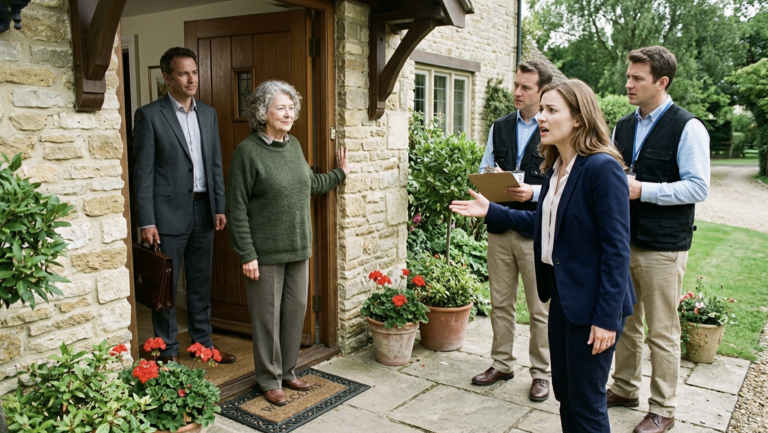
Sarah stepped onto the porch.
“We’re not here to fight.”
“Then why did you bring an assessor to my property without asking me?”
“We wanted to know what the property is worth.”
“Why?”
She opened her mouth.
Nothing came out.
David finally spoke.
“It’s complicated.”
“No,” I said. “It isn’t.”
I pointed toward the driveway.
“You excluded me from your family reunion. I accepted that. I bought myself a cottage. You found out about it and started telling people your husband had somehow funded it. Now you’re standing on my porch with a stranger carrying measuring equipment.”
I looked directly at David.
“What exactly am I supposed to think?”
He rubbed the back of his neck.
“Sarah was worried about what would happen if something happened to you.”
“That sounds like concern.”
“It is concern.”
“Then why didn’t either of you ask me how I was doing?”
David looked away.
Emma stood.
“My mother doesn’t owe you an explanation for buying her own house.”
Sarah turned sharply toward her.
“This isn’t your business.”
Emma laughed once.
“She’s my mother.”
“And she’s my mother-in-law.”
“No,” Emma said quietly. “That’s exactly the problem. You keep acting as though being her daughter-in-law gives you authority over her.”
Sarah’s expression hardened.
“Emma, you don’t live here.”
“I don’t have to.”
Emma stepped closer.
“I may live three states away, but at least I know my mother isn’t your unpaid babysitter, storage facility, grocery fund, or emergency bank account.”
David’s face changed.
“That’s not fair.”
Emma looked at him.
“Dad died five years ago. Mom spent those five years helping you because she thought that was what family did. And you two slowly turned her kindness into an expectation.”
I remained silent.
Because every word Emma said was something I had known but had never been brave enough to say myself.
Sarah crossed her arms.
“We’ve always appreciated everything she has done.”
“Have you?”
Emma looked toward me.
“Because from where I’m standing, appreciation ended the moment she stopped being useful.”
Sarah’s cheeks reddened.
“That is incredibly insulting.”
“So was sending her two cold ribs and a spoonful of potato salad after excluding her from a fifty-person family reunion.”
David closed his eyes briefly.
“Can we please stop talking about the reunion?”
“No,” I said.
Everyone looked at me.
I stepped down from the porch.
“The reunion wasn’t the real problem.”
Sarah stared at me.
“The real problem was that you thought I would accept anything as long as you called it family.”
I walked toward the assessor.
“Mr. Peterson, I don’t blame you. You were hired based on information you were given. But I am the owner of this property, and I am not authorizing an assessment today.”
He nodded immediately.
“Understood.”
He put the measuring device back into his case.
Sarah’s voice became sharp.
“You’re making a huge mistake.”
I turned toward her.
“What mistake?”
“You don’t understand what we’re trying to do.”
“Then explain it.”
She looked at David.
David looked at the ground.
Sarah finally said,
“We’re trying to protect the property.”
“From what?”
“From being wasted.”
I stared at her.
“Wasted?”
She gestured toward the land.
“You’re one person. You have three acres, a two-bedroom house, and all this maintenance. What are you going to do with it?”
“Live here.”
“For how long?”
“As long as I want.”
She shook her head.
“You’re being emotional.”
“No.”
I smiled faintly.
“I’m finally being practical.”
She looked frustrated.
Then she said the sentence that changed everything.
“David was always supposed to have this.”
Silence.
Even David looked startled.
I slowly turned toward him.
“Was he?”
David swallowed.
“Sarah didn’t mean—”
“Yes, she did.”
Sarah looked at him.
“David.”
He didn’t answer.
I looked at my son.
“Did you know she thought this property was supposed to become yours?”
He remained silent.
That silence was enough.
I nodded.
“Go home.”
“Mom—”
“Go home, David.”
He took one step toward me.
“Please.”
I raised my hand.
“No.”
His face fell.
“You have spent five years accepting things from me without asking what they cost me. You accepted childcare. You accepted money. You accepted storage. You accepted my time. And now, apparently, you’ve accepted an inheritance that doesn’t exist.”
“I never asked for this house.”
“No,” I said.
“You didn’t have to.”
That landed harder than anything else I could have said.
David looked at me for several seconds.
Then he turned away.
Sarah grabbed his arm.
“David, we’re not leaving like this.”
“Yes, we are.”
She stared at him.
“What?”
He looked exhausted.
“She’s asking us to leave.”
Sarah opened her mouth.
But David walked toward the car.
The assessor followed.
Sarah stood there for another moment.
Then she looked at me.
“This isn’t over.”
I didn’t answer.
She got into the SUV.
They drove away.
Emma waited until the sound of the engines disappeared.
Then she looked at me.
“You okay?”
I sat back down.
“I think so.”
She sat beside me.
“You’ve been carrying this for a long time.”
I looked across the yard.
“I didn’t know how much until today.”
She took my hand.
“I have something else to tell you.”
I looked at her.
“What?”
“Sarah didn’t just ask someone to assess the cottage.”
My stomach tightened.
“What else?”
Emma pulled out her phone.
“She contacted an attorney.”
I stared at her.
“Why?”
“She asked about what happens to the property if you become incapacitated.”
For a moment, I couldn’t speak.
Then something clicked.
The questions Sarah had asked.
The sudden interest in the deed.
The assessor.
The talk about security.
The stories about David funding the cottage.
It wasn’t simply curiosity.
They were preparing for something.
But Emma wasn’t finished.
“She also asked whether your city house was still in your name.”
I stood.
“I never told her that.”
“I know.”
“How did she find out?”
Emma hesitated.
“She didn’t have to.”
I looked at her.
“What does that mean?”
“She has been asking relatives questions for weeks. Apparently, she’s been trying to figure out how much you’re worth.”
I walked inside.
My hands were trembling.
Not because I was afraid.
Because I was angry with myself.
For years I had believed my family simply misunderstood me.
Maybe they hadn’t.
Maybe they understood me perfectly.
Maybe they simply believed I would never defend myself.
I went to my office and opened the bottom drawer.
I removed the manila folder I had placed there three days earlier.
Emma followed.
“What is that?”
I put it on the desk.
“Everything.”
She opened the folder.
Inside were copies of the cottage deed.
My city house deed.
Investment account statements.
Insurance documents.
A list of every loan I had made to David and Sarah.
Receipts.
Bank transfers.
Canceled checks.
Dates.
Amounts.
Notes.
Emma’s eyes widened.
“You kept all this?”
“I didn’t keep it for them.”
“Then why?”
I sat down.
“Because your father taught me something.”
“What?”
“He used to say that good relationships don’t require accounting.”
Emma smiled sadly.
“That sounds like Dad.”
“But after he died, I realized there was a difference between not keeping score and not keeping records.”
Emma looked through the pages.
Some of the transfers were small.
Groceries.
School clothes.
Medical copays for the twins.
Then she reached a larger number.
Her expression changed.
“Mom.”
“What?”
“This is a lot.”
I looked at the page.
It was a loan I had given David and Sarah three years earlier when their business was struggling.
They had promised to repay it within six months.
They had never repaid a cent.
“I forgot about that,” Emma whispered.
“I didn’t.”
She looked at me.
“Why didn’t you ever ask them for it?”
“Because I thought they were struggling.”
“And now?”
I closed the folder.
“Now I think they were counting on me never asking.”
The next morning, I called an attorney.
Not the family attorney.
Not someone recommended by David.
A completely independent estate attorney named Margaret Collins.
I brought every document.
She spent nearly two hours reviewing everything.
At the end, she leaned back in her chair.
“Mrs. Hale, may I ask you a question?”
“Yes.”
“Do you want to protect your children?”
“Yes.”
“Both of them?”
“Yes.”
She nodded.
“Then we need to separate protecting your children from rewarding their behavior.”
I stared at her.
She continued.
“Your son may be entitled to whatever you choose to leave him. But that does not mean he is entitled to control your assets while you’re alive.”
“I know.”
“No,” she said gently.
“I don’t think you did before this week.”
I smiled.
“You’re right.”
She looked through the documents again.
“You have enough assets to support yourself comfortably for the rest of your life. You don’t need to sell the cottage. You don’t need to add anyone to the deed. You don’t need to explain your finances to your daughter-in-law.”
“I know.”
“And I strongly recommend you change several things.”
“Such as?”
“Your estate plan.”
I nodded.
“And your financial powers of attorney.”
Another nod.
“And your medical directives.”
I looked at her.
“Why?”
“Because you need to decide who speaks for you if you’re ever unable to speak for yourself.”
That sentence stayed with me.
I suddenly remembered Sarah asking me three months earlier where I kept my important documents.
At the time, I had thought she was simply being helpful.
Now I wondered.
Margaret continued.
“And one more thing.”
“What?”
“Do not tell your family what you’re changing.”
I raised an eyebrow.
“Why?”
“Because once people know what they’re going to inherit, they sometimes start behaving differently.”
I laughed quietly.
“Mine already are.”
Margaret smiled.
“Then don’t give them another reason.”
I left her office with a strange sense of relief.
For the first time in years, my future felt like something I was allowed to control.
That evening, I sat on the cottage porch with Emma.
The forest was quiet.
A deer crossed the far edge of the property.
Emma looked at me.
“Are you going to tell David?”
“No.”
“About the documents?”
“No.”
“About the new estate plan?”
“No.”
“About what Sarah has been doing?”
I thought about it.
“Not yet.”
Emma nodded.
Then she asked,
“What happens if they come back?”
I looked toward the driveway.
“They will.”
“How do you know?”
“Because people who believe they are entitled to something rarely leave after being told no once.”
Three days later, my prediction came true.
But this time, Sarah didn’t come alone.
She arrived with David.
And with them was a woman in a navy suit carrying a leather briefcase.
I recognized her immediately.
She was the attorney who had apparently been asking questions about my property.
Sarah smiled when I opened the door.
“We need to talk.”
I looked at the woman beside her.
“No.”
Sarah’s smile disappeared.
“You haven’t even heard what we’re here about.”
“I don’t need to.”
David stepped forward.
“Mom, please.”
I looked at him.
“What is it?”
He hesitated.
Then Sarah answered.
“We think you need to make some changes to the way the property is structured.”
I almost laughed.
“Interesting.”
The attorney cleared her throat.
“Mrs. Hale, this is not intended to be adversarial.”
“Then why did you come to my home with an attorney?”
Sarah said,
“Because we care about your future.”
I looked behind them.
Then I looked at David.
“Do you?”
David’s eyes filled with something that might have been shame.
“I do.”
“Then tell me something.”
“What?”
“Did you know Sarah was trying to determine the value of this property?”
He didn’t answer.
I waited.
Finally, he said,
“Yes.”
“And did you know she was asking about my other assets?”
He looked down.
“Yes.”
I nodded.
“Thank you.”
Sarah frowned.
“Thank you for what?”
“For finally telling me the truth.”
Then I stepped aside.
“Come in.”
They looked surprised.
I walked into the living room and sat down.
They followed.
The attorney placed her briefcase on the coffee table.
She opened it.
I watched her carefully.
Then she removed a document.
“We’ve prepared a proposal that would allow David to become a co-owner of the cottage while preserving your right to live here.”
I looked at the paper.
Then I looked at Sarah.
“You brought me a deed transfer?”
She smiled.
“We’re only asking you to consider it.”
I pushed the paper back across the table.
“No.”
Sarah’s face hardened.
“You didn’t even read it.”
“I don’t need to.”
“Why?”
“Because I bought this house.”
I pointed toward the floor beneath our feet.
“With my money.”
Then I pointed toward the walls.
“With my name on the deed.”
Then I looked at David.
“And with no help from either of you.”
David whispered,
“Mom…”
I raised my hand.
“No more.”
The attorney sat very still.
I looked at Sarah.
“You excluded me from your family reunion.”
She shifted in her chair.
“You told people this property belonged to David.”
She opened her mouth.
“You brought an assessor here without my permission.”
Her face reddened.
“And now you’ve brought an attorney to persuade me to give my son part of a property I bought with my own money.”
Sarah snapped,
“You’re twisting everything.”
“No.”
I leaned back.
“For the first time, I’m not.”
Then I reached beneath the coffee table.
I pulled out the manila folder.
I placed it in front of them.
Sarah looked at it.
David stared at the folder.
“What is that?” he asked.
I opened it.
“The records.”
Sarah’s expression changed.
I turned to the first page.
“Every dollar I gave you.”
David froze.
I turned to the next page.
“Every month I watched your children.”
Another page.
“Every expense I covered.”
Another.
“The money you borrowed.”
Another.
“The promises you made to repay it.”
The room became completely silent.
Sarah reached for the folder.
I placed my hand over it.
“No.”
She looked at me.
“Why?”
“Because you don’t get to rewrite history anymore.”
Then I looked at David.
“I never wanted this money back.”
His eyes lowered.
“But I need you to understand something.”
I closed the folder.
“I wasn’t poor.”
His eyes lifted.
“I wasn’t helpless.”
I glanced around the cottage.
“And I was never waiting for you to rescue me.”
I paused.
“I was waiting for my family to love me without needing something from me.”
Nobody spoke.
Then the attorney slowly closed her briefcase.
She looked at Sarah.
“I think we should leave.”
Sarah stared at her.
“What?”
The attorney stood.
“I don’t believe this conversation is going in the direction you expected.”
Sarah’s face went pale.
David stood too.
He looked at me.
“Mom.”
I looked at him.
“I’m not done.”
He sat back down.
Sarah stared at me.
“What else could there possibly be?”
I smiled.
“Quite a lot.”
Then I opened the second folder.
And this time, David’s face went completely white.
CONTINUE READ NEXT PART… 👇