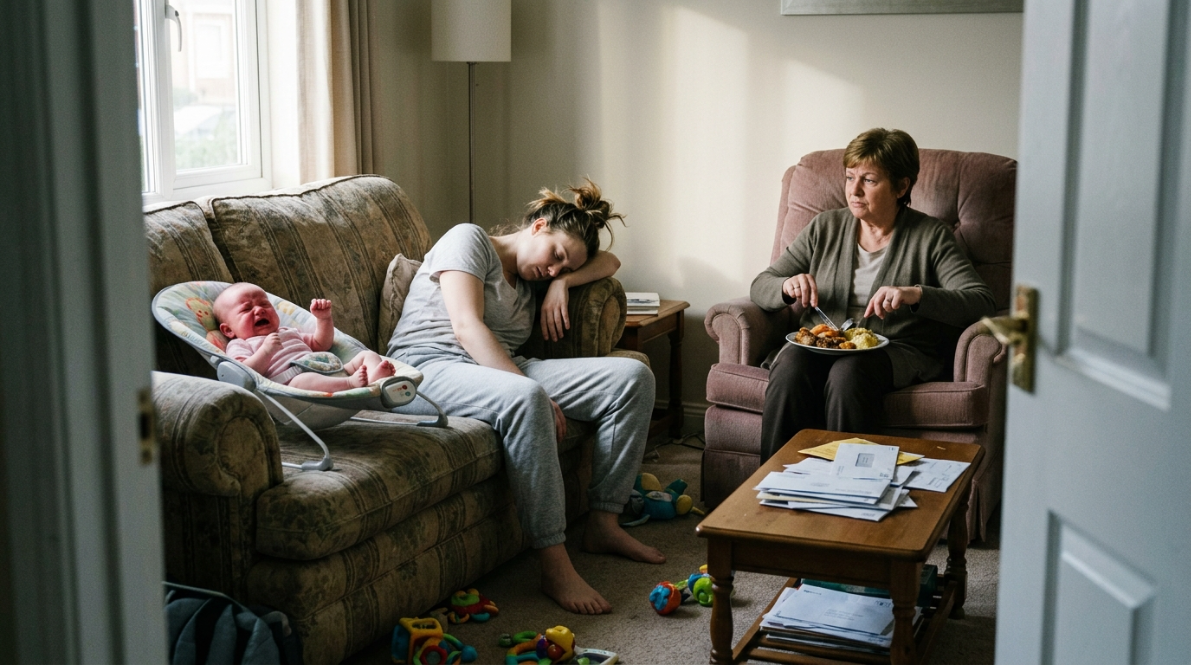
I Came Home Early and Found My Wife Unconscious—My Mother Called Her a “Drama Queen,” So I Made One Decision That Changed Our Family Forever
PART 3
She had said it whenever Emily and I made a decision she didn’t like.
And every time, I had felt guilty.
But standing there that afternoon, watching my wife being loaded into an ambulance because she had collapsed after cooking for my mother while sick, something inside me finally snapped.
“You’re leaving,” I repeated.
Mom stood slowly.
“You’re choosing her over your own mother?”
I looked at her.
“No.”
She blinked.
“I am choosing my family.”
“You’re my family.”
“You’re my mother.”
She seemed relieved.
Then I continued.
“But Emily is my wife.”
Her expression changed.
“And Noah is my son.”
I glanced toward the ambulance outside.
“And neither of them will ever again have to earn the right to be treated with basic kindness in their own home.”
Mom’s mouth opened.
No words came.
Then she pointed toward the ambulance.
“She manipulated you.”
I stared at her.
“Emily is unconscious.”
“She always does this.”
“Does what?”
“Creates drama.”
I felt my hands tighten.
“Stop.”
She looked startled.
“You don’t get to call this drama.”
I walked toward the door.
“You don’t get to tell me that my wife fainting is an inconvenience.”
“You’re being emotional.”
“Yes.”
I nodded.
“I am.”
“For once.”
She stared at me.
“For once,” I said, “I’m going to be emotional about the people I love instead of rationalizing the person hurting them.”
She picked up her purse.
“You’ll regret this.”
“Maybe.”
She walked past me.
Then stopped.
“You’ll come crawling back.”
I looked at her.
“No, Mom.”
She waited.
“I won’t.”
She left.
I closed the door.
And for the first time in my life, the house felt quiet.
Not peaceful.
Not yet.
But quiet.
I looked at the empty dining table.
My mother’s plate was still there.
Half-eaten chicken.
Mashed potatoes.
Green beans.
And beside it was Emily’s plate.
Untouched.
I stared at it.
Then I realized something that made me sick.
Emily hadn’t eaten.
She had been too busy cooking for my mother.
I walked into the kitchen.
The sink was full.
A pot was still warm.
There was a dish towel on the floor.
I picked it up.
And that’s when I noticed something on the counter.
A handwritten list.
I recognized Emily’s handwriting.
It wasn’t a grocery list.
It was a schedule.
6:00 — Feed Noah
7:00 — Nurse
8:00 — Laundry
9:00 — Call pediatrician
10:00 — Clean
11:30 — Prepare lunch
1:00 — Nurse
2:00 — Start dinner
At the bottom, written in smaller letters:
Try not to upset Diane.
I stared at those words for a long time.
Then I sat down.
My wife had been organizing her entire day around avoiding my mother’s anger.
And I hadn’t seen it.
Or maybe I had seen pieces of it.
I just hadn’t wanted to put them together.
My phone rang.
It was the hospital.
I stood immediately.
“Hello?”
“Mr. Carter?”
“Yes.”
“This is Lakeside Medical Center. Your wife has arrived.”
“How is she?”
“We’re still evaluating her.”
“Is she awake?”
“Not yet.”
My stomach dropped.
“Is the baby with her?”
“No. We have your son listed with you.”
“I’ll be there in ten minutes.”
I grabbed the diaper bag.
Then I stopped.
I looked around the house.
For years, this had been my mother’s house in disguise.
Her opinions.
Her rules.
Her expectations.
Her voice in every room.
But Emily lived here too.
Noah lived here.
And I suddenly realized I had been asking my wife to survive in a place where she never felt safe enough to relax.
I locked the door and drove to the hospital.
The emergency department smelled like disinfectant and cold coffee.
I rushed toward the desk.
“Emily Carter.”
The nurse looked at me.
“Family?”
“Husband.”
She checked the computer.
“She’s in examination room four.”
I followed her.
Emily was lying beneath a white blanket.
There was an IV in her arm.
A blood pressure cuff around her wrist.
Her face looked so small against the pillow.
I walked to her side.
“Em?”
Her eyelids fluttered.
I grabbed her hand.
“I’m here.”
She opened her eyes.
For a second, she looked confused.
Then she whispered:
“Where’s Noah?”
“He’s with me.”
She tried to sit up.
I gently stopped her.
“Stay still.”
“Is he okay?”
“He’s fine.”
She closed her eyes.
“I’m sorry.”
Those two words nearly destroyed me.
“You’re sorry?”
She nodded weakly.
“For dinner.”
I stared at her.
“Emily.”
“I couldn’t finish.”
“You don’t need to apologize.”
“I tried.”
“I know.”
“I thought she’d be angry.”
I looked away.
My eyes burned.
“Emily.”
She looked at me.
“I am so sorry.”
Her eyes filled with tears.
“I didn’t want to cause problems.”
“You didn’t.”
“I should’ve just rested.”
“You should never have had to ask permission to rest.”
She looked confused.
I squeezed her hand.
“My mother is gone.”
Her eyes widened.
“You sent her away?”
“Yes.”
“What did she say?”
“That I’d regret it.”
Emily stared at the ceiling.
Then whispered:
“Maybe she’s right.”
I felt something break inside me.
“No.”
She turned toward me.
“I’ve been telling myself that for six years,” I said. “Every time she hurt you, I told myself you were misunderstanding her. Every time she criticized you, I told myself she was trying to help. Every time you cried, I told you she loved you.”
I swallowed.
“But I was wrong.”
Emily’s eyes filled.
“I should have protected you.”
She didn’t answer.
“I should have protected our son.”
Still nothing.
“I should have seen what was happening.”
Emily squeezed my hand.
“You see it now.”
I nodded.
“Yes.”
She looked at me.
“Then that’s enough for today.”
I kissed her hand.
“No.”
She frowned.
“It’s not enough.”
I looked into her eyes.
“I don’t want to spend another day being the man who understands too late.”
The doctor eventually came in.
She explained that Emily had severe dehydration, low blood pressure, exhaustion, and an infection that had worsened because she hadn’t been eating or resting properly.
“She needs fluids, antibiotics, nutrition, and rest,” the doctor said.
I nodded.
“How long?”
“At least overnight.”
I looked at Emily.
“Whatever she needs.”
The doctor smiled.
“Good.”
After she left, Emily looked embarrassed.
“I hate being here.”
“You shouldn’t.”
“I feel weak.”
“You’re not weak.”
“I fainted.”
“You’ve been carrying a six-month-old baby, nursing him, barely sleeping, recovering from an infection, and trying to keep everyone happy.”
She looked at me.
“You don’t have to be strong every minute.”
A tear rolled down her cheek.
“I thought you liked my mother.”
I exhaled.
“I did.”
She raised an eyebrow.
I corrected myself.
“I thought I loved my mother enough to understand her.”
“And now?”
I looked at the floor.
“Now I think I confused loving someone with obeying them.”
Emily didn’t speak.
I continued.
“My mother taught me that if I disagreed with her, I was ungrateful.”
I paused.
“And for a long time, I believed her.”
Emily looked at me gently.
“You’re not responsible for what she taught you.”
“No.”
I looked at her.
“But I am responsible for what I do with it now.”
Around midnight, Emily finally fell asleep.
Noah slept in the chair beside me.
I sat between them.
My wife on one side.
My son on the other.
And I felt a strange kind of peace.
Then my phone buzzed.
A text from my mother.
You have embarrassed me.
Another arrived.
I sacrificed everything for you.
Then:
Your wife has turned you against me.
I stared at the screen.
For years, those words would have triggered guilt.
Tonight they didn’t.
I typed:
No one turned me against you. I watched you.
I stared at the message.
Then sent it.
Three dots appeared.
Her reply came immediately.
Watch your words.
I turned off the phone.
That was the last message I answered.
The next morning, Emily was awake.
Her color had improved.
Noah was smiling.
For the first time in days, I saw my wife’s real smile.
Not the nervous one she had learned around my mother.
A real one.
“Coffee?” she asked.
I laughed.
“You’re in a hospital bed and you’re asking me for coffee?”
“Yes.”
“Doctor said no caffeine for now.”
She sighed.
“Then I don’t like the doctor.”
I laughed.
She smiled.
And for the first time, I realized how much of Emily’s personality had been buried beneath anxiety.
She was funny.
She was stubborn.
She loved terrible reality television.
She sang to Noah when she thought nobody was listening.
She danced while cooking.
She put too much cinnamon in her coffee.
She laughed at her own jokes before finishing them.
I had known all those things once.
Then my mother’s criticism slowly turned my wife into someone who apologized for breathing.
I would never allow that again.
Emily came home two days later.
I had prepared everything.
Fresh sheets.
Clean kitchen.
Groceries.
Baby supplies.
And one more thing.
I had changed the locks.
Emily noticed immediately.
“You changed them?”
“Yes.”
“Why?”
“Because this is our home.”
She stared at me.
“Your mother has a key.”
“Not anymore.”
She looked at me for a long moment.
Then she hugged me.
Not carefully.
Not politely.
She wrapped both arms around me and held me tightly.
I held her.
And whispered:
“I’m sorry.”
She whispered back:
“I know.”
But my mother wasn’t finished.
Three days later, she showed up.
I was in the backyard with Noah when I heard knocking.
Emily froze inside the house.
I walked to the door.
My mother stood there.
She was carrying a casserole dish.
“I brought dinner.”
I didn’t open the door.
“Mom.”
“I thought we could talk.”
“No.”
Her face hardened.
“You won’t even let me see my grandson?”
I looked through the glass.
Noah was six months old.
He had no idea who was standing outside.
He didn’t need to.
“Not today.”
She leaned toward the glass.
“Daniel.”
“No.”
She lowered her voice.
“Your wife is manipulating you.”
I opened the door just enough to speak.
“You’re not coming inside.”
She stared at me.
“Why?”
“Because Emily needs peace.”
“She needs to stop pretending she’s fragile.”
I looked at her.
“She almost died.”
Mom rolled her eyes.
“She fainted.”
“She had dangerously low blood pressure.”
“She’ll be fine.”
“No.”
I shook my head.
“You don’t get to minimize this anymore.”
She put down the casserole.
“You’ve changed.”
“Yes.”
“You used to respect me.”
“I still respect you.”
She looked confused.
“I just don’t obey you.”
That sentence hit her harder than shouting would have.
She stared at me.
Then she whispered:
“Your father would be ashamed of you.”
I went completely still.
My father had died when I was nineteen.
He had been the quiet one.
The one who rarely argued with my mother.
The one who always told me:
“Daniel, when you have your own family, don’t make the mistakes I made.”
At the time, I hadn’t understood.
Now I did.
I looked at my mother.
“Don’t use Dad against me.”
She stepped back.
I closed the door.
Months passed.
Emily recovered completely.
But recovery wasn’t just physical.
We started marriage counseling.
Not because our marriage was broken.
Because we wanted to understand how we had allowed another person’s behavior to enter it.
There were painful conversations.
There were nights when Emily cried.
There were nights when I admitted things I was ashamed of.
One evening she said:
“I was afraid if I told you everything, you’d choose her.”
I looked at her.
“You were right.”
She didn’t respond.
“I probably would have.”
Her eyes filled.
“But not anymore.”
I took her hand.
“I’m learning.”
She nodded.
“Me too.”
My mother eventually stopped calling.
Then she started sending letters.
The first was angry.
The second was emotional.
The third was an apology.
I didn’t answer immediately.
I read it several times.
Then I gave it to Emily.
She read it.
“What do you think?”
“I don’t know.”
“Neither do I.”
The letter said:
I realize now that I crossed lines. I thought I was helping. I thought I was teaching Emily how to be a proper wife and mother. I didn’t realize how cruel I sounded.
Emily looked at me.
“Do you believe her?”
“I don’t know.”
“Do you want to forgive her?”
“I don’t know.”
She nodded.
“Then you don’t have to decide today.”
That was one of the most important lessons I learned.
Forgiveness doesn’t require immediate access.
You can forgive someone and still keep a door closed.
You can love someone and still say no.
You can understand why someone behaves badly without allowing them to hurt you again.
A year after the incident, I took Emily and Noah to the lake.
It was a beautiful summer afternoon.
Noah was running through the grass, laughing.
Emily sat on a blanket beside me.
She leaned her head against my shoulder.
“Do you ever think about that day?”
“All the time.”
“So do I.”
“What do you think about?”
She watched Noah.
“I think about how close I came to believing I was the problem.”
I turned toward her.
“You weren’t.”
“I know now.”
She smiled.
“Because you finally listened.”
I kissed her forehead.
“No.”
I shook my head.
“Because you finally stopped being afraid to tell me the truth.”
She squeezed my hand.
Across the grass, Noah laughed.
Our son.
The baby who had screamed that afternoon because nobody had listened to his mother.
He was running toward us now.
“Daddy!”
I opened my arms.
He crashed into me.
I lifted him.
Emily laughed.
And I realized something.
That day, I thought I was saving my wife.
But she had saved me too.
She forced me to confront the part of myself that had been afraid of disappointing my mother.
She taught me that being a good son did not mean being a bad husband.
And that being a good husband did not mean waiting until the person you loved was unconscious before you finally believed her.
Two years later, my mother met Noah again.
It happened slowly.
There were boundaries.
No surprise visits.
No criticism.
No controlling.
No comments about Emily’s cooking, clothes, parenting, or housekeeping.
My mother had to apologize.
Not once.
Many times.
And she had to prove that her behavior had changed.
The first time she came to our house again, she stood at the doorway.
She looked nervous.
Emily stood beside me.
Mom looked at her.
“May I come in?”
Emily looked at me.
I nodded.
She stepped aside.
My mother entered.
She looked around.
The house was different.
Not because we had renovated it.
Because the atmosphere had changed.
It was ours.
Our rules.
Our family.
Our peace.
My mother looked at Emily.
“I owe you an apology.”
Emily remained quiet.
“I was cruel.”
“Yes,” Emily said.
Mom nodded.
“I know.”
“I needed you to say that.”
“I should have said it years ago.”
Emily took a breath.
“I don’t know if I’ll ever forget what happened.”
“You don’t have to.”
“And I don’t know if I’ll ever trust you completely.”
“You don’t have to.”
My mother looked at her.
“But I’d like the chance to earn it.”
Emily nodded.
“Then we’ll see.”
That was all.
No dramatic hug.
No miracle.
Just a beginning.
And sometimes beginnings are better than apologies.
Years later, when Noah was old enough to understand the story, he asked me something.
“Dad?”
“Yes?”
“Why doesn’t Grandma live with us?”
I looked at Emily.
She smiled.
I looked back at my son.
“Because families sometimes need space.”
“Did Grandma do something bad?”
I thought carefully.
“She made mistakes.”
“Like me?”
I smiled.
“Yes. Like everyone.”
He thought about that.
“Did you forgive her?”
“Yes.”
“Then why doesn’t she live here?”
I smiled.
“Because forgiveness doesn’t mean you have to live with someone.”
He nodded slowly.
Then asked:
“Did you forgive Mom?”
I laughed.
“I never had to.”
“Why?”
“Because your mom didn’t do anything wrong.”
He smiled.
Then ran away to play.
Emily looked at me.
“You know he’s going to repeat that story someday.”
“I know.”
She laughed.
We sat quietly together.
And I thought about that afternoon.
The screaming baby.
The unconscious woman.
My mother eating dinner.
The words:
Drama queen.
Sometimes a single moment can reveal years of truth.
I had spent years believing that keeping peace meant avoiding conflict.
I was wrong.
Peace isn’t pretending nothing is wrong.
Peace is protecting what matters.
I had spent years believing that being a good son meant never saying no to my mother.
I was wrong.
A good son can love his mother without allowing her to destroy his marriage.
And I had spent years believing that Emily would always know how much I loved her.
I was wrong about that too.
Love isn’t only what you feel.
It’s what you defend.
It’s what you prioritize.
It’s what you do when someone you love is too exhausted to defend herself.
That day, I came home three hours early expecting to surprise my wife.
Instead, my wife surprised me.
She showed me exactly who I had become.
And forced me to decide who I wanted to be.
I chose her.
I chose Noah.
I chose our home.
And most importantly, I chose to become the man my family could trust.
Years later, Emily would sometimes tease me about the suitcase.
“You really threw your mother out with her suitcase?”
I’d smile.
“Yes.”
“And you weren’t scared?”
I would look at her.
“I was terrified.”
“Then why did you do it?”
I’d take her hand.
“Because for the first time in my life, I was more afraid of losing you than disappointing her.”
And every time she heard that, she’d smile.
Then she’d kiss me.
And somewhere in the background, Noah would complain:
“Can you two stop kissing?”
We’d laugh.
Because our house was finally filled with something it had been missing for years.
Not silence.
Not obedience.
Not fear.
Love.
Real love.
The kind that doesn’t demand perfection.
The kind that doesn’t require you to suffer quietly.
The kind that doesn’t ask you to choose between people.
And when a choice must be made, the kind that gives you the courage to protect the family you promised to build.
That was the day I finally understood what being a husband meant.
And I never forgot it.
CONTINUE READ NEXT PART… 👇