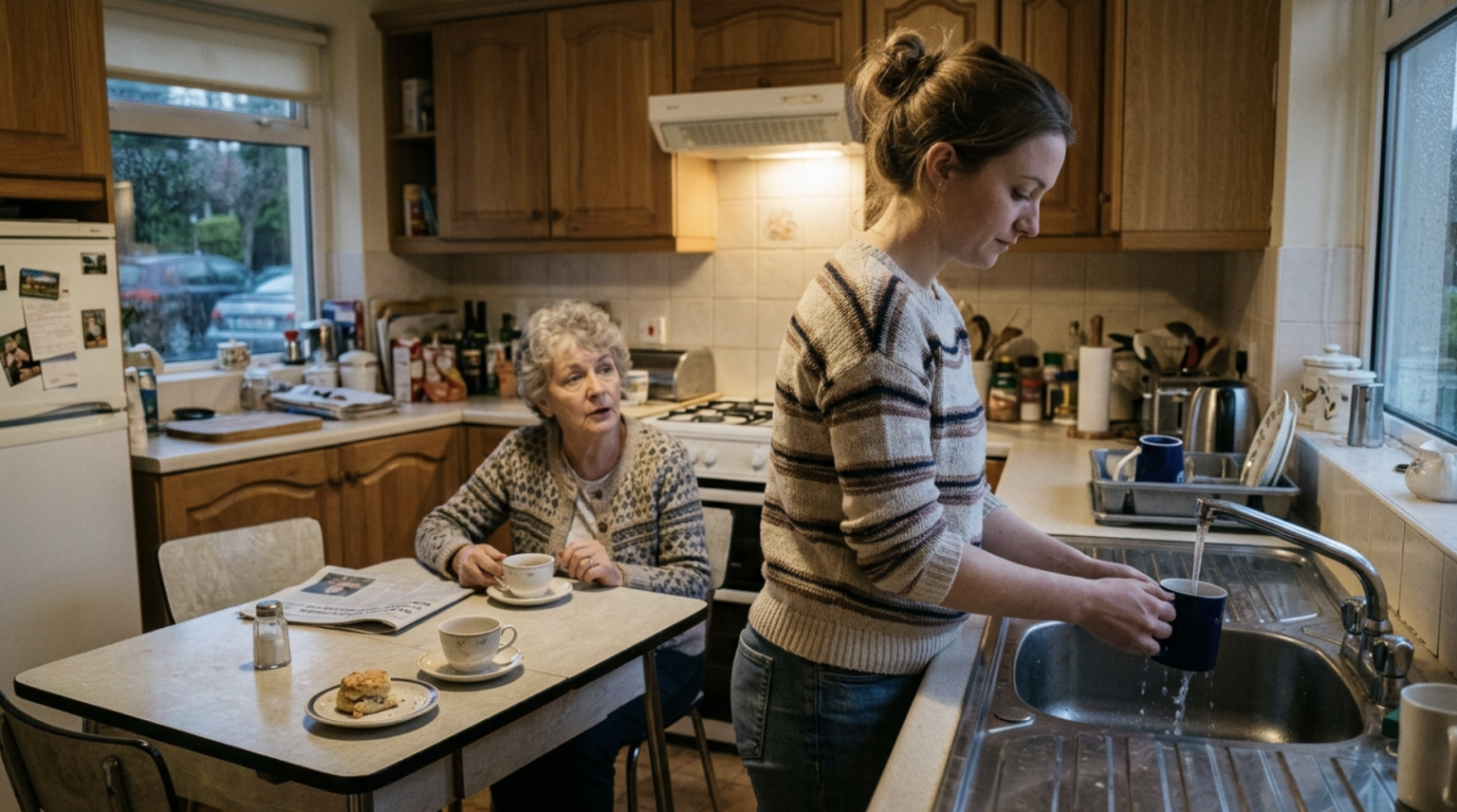
My Mother Told Me to Leave Her House—Then the Title Company Revealed My Name Was on the Deed
PART 3
“Ms. Farrow,” I whispered, “are you certain?”
“I’m looking at the recorded instrument right now. I can send you a certified copy.”
“Please do.”
“I also recommend that you don’t sign anything your family brings you Sunday.”
“I wasn’t planning to.”
“And don’t allow anyone to pressure you into signing a quitclaim deed.”
The words landed heavily.
“A quitclaim deed.”
“That’s what your brother filed an application for. Your mother is listed as grantor, and your brother and his wife are listed as the new grantees.”
“But my mother isn’t the only owner.”
“Correct.”
“And I never agreed to transfer my interest.”
“Then they cannot simply transfer yours.”
I looked through the office window toward the parking lot.
Cars moved past.
People carried coffee.
Somebody laughed near the reception desk.
The world continued as though mine hadn’t just tilted on its axis.
“Why would my mother do this?”
“I can’t answer that.”
“And the mortgage?”
“That’s another issue. The mortgage and the deed are separate documents. Whoever is obligated on the loan and whoever owns the property are not necessarily the same people.”
I swallowed.
“So I’ve been paying a mortgage on a house that legally belongs to me and my daughter?”
“That’s what the recorded deed appears to show.”
“And my mother knew?”
“Your mother signed the original closing documents.”
I stared at the floor.
Then something even colder occurred to me.
“If my mother knew my name was on the deed, why has she spent nine years telling everyone this is her house?”
Ms. Farrow was quiet.
“I think that’s a question you should ask her.”
The call ended shortly afterward.
I remained in the hallway for several minutes.
Then my phone buzzed.
An email.
Subject: Recorded Deed — Larkin Street Property
I opened the attachment.
The first page was filled with legal language.
Then I saw it.
GRANTEE: MICHELLE DUNN
Below it:
GRANTEE: EMILY DUNN, minor child
My daughter’s name.
Her name had been there since she was seven.
I kept scrolling.
The signatures appeared near the bottom.
My mother’s signature.
The closing attorney’s signature.
And mine.
My signature was shaky.
I remembered that day.
I remembered crying.
I remembered my divorce.
I remembered my mother holding my hand.
“Don’t worry, Michelle. I’m doing this for all of us.”
I had thought she meant putting the house in her name because my credit was damaged.
But apparently, she had done something very different.
I printed the deed.
Then I printed every mortgage statement I had saved.
For nine years, I had kept them in a folder because my mother always told me that if I ever needed proof of payments, I should keep everything.
I had never asked why.
Now I knew.
There were 108 monthly payments.
$1,412 each.
I pulled out my calculator.
$1,412 × 108.
$152,496.
I stared at the number.
More than $150,000.
I had paid it while believing I was simply helping my mother.
And now my brother wanted me out because he thought I’d been living there for free.
I laughed.
Not because anything was funny.
Because sometimes the truth is so absurd that your body doesn’t know how else to react.
At 4:30, I left work early.
When I reached home, my mother was sitting at the kitchen table.
She looked up.
“You’re home early.”
“Yes.”
Her eyes narrowed.
“Did something happen?”
I placed the folder on the table.
She looked at it.
Then at me.
“What is that?”
“The deed.”
Her face changed.
Not dramatically.
Just enough.
A tiny pause.
A flicker in her eyes.
Then she reached for the folder.
I put my hand over it.
“Don’t.”
“What are you doing?”
“I want to ask you something first.”
She pulled her hand back.
“What?”
“Who owns this house?”
She stared at me.
“You know who owns it.”
“I want you to say it.”
“It’s my house.”
“No.”
Her lips tightened.
“Michelle.”
“Who owns it?”
She stood.
“I don’t have time for this.”
“You’ve had nine years.”
That stopped her.
I slid the deed across the table.
She looked down.
I watched her eyes move over the page.
When she reached my name, her face went pale.
Then she saw Emily’s.
She sat down slowly.
“You weren’t supposed to find that.”
The sentence was so quiet that I almost missed it.
I felt something inside me break.
“Find what?”
She didn’t answer.
“You weren’t supposed to find out?”
“Michelle, listen—”
“No. You listen.”
My voice shook, but I didn’t raise it.
“For nine years, I’ve paid your mortgage.”
She said nothing.
“For nine years, you’ve told me this was your house.”
Silence.
“For nine years, you watched me sleep in a guest room with my daughter while you knew her name was on the deed.”
“Your daughter was a minor.”
“That doesn’t explain anything.”
“I was protecting you.”
“From what?”
She looked away.
“From your brother.”
My heart stopped.
“What?”
“Shane was angry.”
“Shane?”
“He always believed this house should eventually be his.”
I stared at her.
“Then why did you tell me I was paying for your house?”
“Because if Shane knew you owned it, he would have demanded it.”
“He already demanded it.”
“I didn’t know he would go this far.”
“He filed paperwork to steal it.”
“He didn’t steal anything.”
“He tried.”
She stood and began pacing.
“You don’t understand how difficult Shane has been.”
I almost smiled.
“Mom, Shane has been difficult his entire life.”
“He has children.”
“So do I.”
“You only have Emily.”
The words hit harder than she probably intended.
I looked at her.
“She’s your granddaughter.”
“I know.”
“Then why does having fewer children make us worth less?”
My mother sat again.
“I thought you would eventually understand.”
“Understand what?”
“That family has to make sacrifices.”
I nodded slowly.
“I made them.”
She looked at me.
“More than anyone knows.”
“No,” I said. “You made me make them.”
She didn’t respond.
Then she whispered something that made my stomach turn.
“Your father would have wanted Shane to have the house.”
I pushed the deed toward her.
“Then why did Dad sign this?”
Her eyes widened.
I had found something she didn’t expect.
My father had been listed on the original closing documents as a witness.
He had signed.
And beside his signature was a handwritten note.
I had never noticed it before.
“For Michelle and Emily. No transfer without Michelle’s written consent.”
My mother stared at the page.
“Where did you get that?”
“It was attached to the recorded deed.”
She closed her eyes.
For the first time, she looked old.
Not tired.
Not angry.
Old.
“Mom,” I said softly, “what happened nine years ago?”
She didn’t answer.
Then the front door opened.
Emily came home.
She stopped when she saw us.
“Mom?”
I quickly folded the papers.
“Hey, sweetheart.”
She looked between us.
“Why is Grandma crying?”
My mother wiped her face.
“I’m fine.”
Emily didn’t believe her.
Neither did I.
That night, after my daughter went to bed, I sat alone at the kitchen table.
I read the deed again.
Then I noticed something I hadn’t seen earlier.
A second page.
An attached declaration.
I read it twice.
Then a third time.
My father had written it before he died.
He had known about the house.
He had known my mother wanted to keep it under her control.
And he had left instructions.
There was one final sentence.
“If Michelle ever discovers the truth, she is to be provided the complete closing file.”
I stared at those words.
The complete closing file.
I called the title company.
“Ms. Farrow?”
“Yes?”
“I need everything.”
“Everything?”
“Every document from that closing.”
There was a pause.
“I was hoping you’d say that.”
“Why?”
“Because there’s something else in the file.”
My heart began pounding.
“What?”
“A letter.”
“From whom?”
She hesitated.
“Your father.”
I sat upright.
“What does it say?”
“I think you need to read it yourself.”
She emailed it immediately.
I opened the attachment.
The first line made my hands go numb.
Michelle, if you’re reading this, it means your mother finally tried to take the house from you.
I stopped breathing.
My father had known.
He had expected this.
And suddenly, Sunday didn’t feel like a family meeting anymore.
It felt like a trial.
And for the first time in nine years, I wasn’t walking into that kitchen as a daughter asking for permission to stay.
I was walking in as the owner.
But I still had no idea why my father had hidden the truth from me.
And what I read in the next paragraph would change everything.
PART 4
The next paragraph began with four words.
I need you to forgive me.
I read the sentence again.
Then again.
My father’s handwriting was unmistakable. Slightly slanted. Careful. The same handwriting he’d used on birthday cards, grocery lists, and notes he’d left beside my coffee when I was still married.
I kept reading.
I need you to forgive me for something I did not have the courage to tell you while I was alive.
My throat tightened.
Your mother did not buy this house for you. I did.
I stared at the page.
The room suddenly felt too quiet.
I continued.
After your divorce, you were determined to use the money to pay off your debts and start over. Your mother told me you needed somewhere safe to live. I agreed, but I did not trust her judgment about the house.
I stopped.
My mother.
My father hadn’t trusted her.
That alone felt impossible.
They had been married for thirty-seven years.
I’d grown up believing they were inseparable.
The letter continued.
I knew Shane would eventually expect the house. He has always believed that because he is my son, everything I own should eventually become his. I also knew your mother had a habit of promising him things she didn’t have the right to promise.
I covered my mouth.
I thought about every Christmas.
Every Thanksgiving.
Every time my brother had said, “Dad always told me this place would be mine someday.”
I’d believed him.
Everyone had.
Even me.
Then I reached the next paragraph.
So I arranged the purchase differently.
My eyes moved down the page.
The $48,000 you brought from your divorce was used as the down payment. I contributed the rest through the trust. The mortgage was placed in your mother’s name because at the time your credit history was damaged from the divorce. But the deed was never intended to belong to her.
My hands began trembling.
I put you and Emily on the deed because I wanted the house protected from anyone who might try to take advantage of you.
I looked toward the hallway.
My daughter was asleep.
Nine years ago, she had been seven.
She’d been small enough to curl into my side during thunderstorms.
She had no idea that her grandfather had quietly secured her future.
Then came the sentence that made me sit back.
Your mother agreed to this arrangement. I made her promise that she would never tell Shane.
I stopped reading.
My mother had agreed.
She knew.
She had known from the beginning.
I kept reading.
If she has honored that promise, then perhaps she will never need to explain this letter to you. But if she has not, then I suspect Shane will eventually try to force you out.
My heart pounded.
If that happens, Michelle, do not fight with your mother. Do not scream. Do not beg. Take the documents to a lawyer and protect yourself and Emily. Your mother may tell you that I wanted Shane to have the house. That is not true.
I closed my eyes.
My mother had said exactly that.
Your brother has three kids. You have one. It’s what your father would have wanted.
She had used my father’s name.
She had used his memory.
And she’d lied.
The final paragraph was short.
A home should be given to the person who will make it a home, not the person who believes they are entitled to it. I hope you and Emily are happy there. I hope one day you understand that everything I did was because I loved you.
At the bottom was his signature.
Dad.
I didn’t cry immediately.
I just sat there.
Then something inside me finally gave way.
I bent forward and covered my face.
For nine years, I’d wondered why my father had seemed distant during the final months of his life.
Why he’d once asked me, “Do you trust your mother?”
I’d laughed.
Of course I trusted her.
She was my mother.
He hadn’t laughed.
He’d simply said, “Then keep copies of everything.”
I had forgotten that conversation.
Now I remembered.
Every word.
The next morning, I didn’t confront my mother.
I went to an attorney.
I brought the deed.
The mortgage statements.
The title company’s email.
My father’s letter.
And the documents from the original closing.
The attorney’s name was Daniel Reeves.
He spent nearly an hour reviewing everything without interrupting.
Finally, he leaned back.
“Michelle, based on these documents, your mother did not own this property outright.”
“I know.”
“Your brother has no right to transfer your interest.”
“I know.”
“And because your daughter is also listed as a joint owner, this is even more serious.”
“Can my mother transfer her own interest?”
“Potentially, depending on the exact deed language and state law. But she cannot transfer yours or your daughter’s interest without the necessary authorization.”
I nodded.
“Can she make us leave?”
“No.”
The word came quickly.
For the first time in days, I felt like I could breathe.
“Then why has she been telling everyone it’s her house?”
Daniel looked at the documents.
“That’s something we need to determine.”
“What do you mean?”
“I’d like to know where the mortgage payments actually went.”
“To the mortgage company.”
“Yes. But I’d also like to know who has been claiming the property on taxes, insurance, and other documents.”
I frowned.
“My mother handled property taxes.”
“With whose money?”
I froze.
“I don’t know.”
He looked at me.
“Find out.”
That afternoon, I started going through bank statements.
I found the mortgage payments.
Then the property tax payments.
Then insurance.
For nine years, I’d paid almost everything.
But there were strange withdrawals from my mother’s account too.
Small ones.
$300.
$500.
$750.
Then larger ones.
$2,400.
$1,900.
$4,100.
They were all labeled with vague descriptions.
I couldn’t tell what they were for.
Then I found something worse.
My mother’s debit card had been used repeatedly at places I’d never visited.
A gas station near Shane’s house.
A grocery store near Shane’s neighborhood.
A hardware store.
A children’s clothing store.
A private medical clinic.
I stared at the statements.
My daughter had asked me about the declined card.
My mother had immediately blamed me.
But I’d never had her card.
Someone else had.
I called Daniel.
“I found transactions.”
“Whose?”
“My mother’s.”
“Do you have access to the account?”
“No. Just old statements she kept in a drawer.”
“Bring them tomorrow.”
I looked at the clock.
Sunday was tomorrow.
The family meeting was still happening.
And now I wanted it to happen more than ever.
That evening, Shane texted me.
Don’t make Sunday difficult. Mom is already upset.
I stared at the message.
Then another came.
Misty thinks you should apologize before everyone gets there.
I laughed quietly.
I typed a response.
Deleted it.
Typed another.
Deleted that too.
Finally, I sent only:
See you Sunday.
He replied almost immediately.
Good.
I put the phone down.
Emily came into the kitchen.
“Mom?”
“Yeah?”
“Are we moving?”
I looked at her.
“No.”
She studied my face.
“Are you sure?”
“Yes.”
“Grandma said we’re going to have to.”
“Grandma was mistaken.”
Emily smiled for the first time in days.
“Does that mean I can keep my room?”
“Yes.”
She hugged me.
I held her tightly.
Then she pulled back.
“Why are you crying?”
“I guess I’m just happy.”
She nodded as though that made perfect sense.
“Me too.”
Sunday arrived.
At eleven in the morning, Shane’s SUV pulled into the driveway.
Then another vehicle.
Then another.
My mother had invited nearly everyone.
Shane.
Misty.
Their three children.
My aunt Linda.
Two of my mother’s church friends.
And, unexpectedly, the pastor.
I stood at the kitchen counter making coffee.
Emily was upstairs.
I had told her to stay there until I called for her.
The door opened without anyone knocking.
Shane walked in first.
He looked around.
Then smiled.
“This will be nice once we get everyone’s stuff in here.”
I said nothing.
Misty followed him.
She glanced toward the stairs.
“Emily upstairs?”
“Yes.”
“She’ll have to get used to sharing space.”
I turned slowly.
“Sharing space with whom?”
Misty smiled.
“Don’t start.”
My mother entered last.
She looked nervous.
Shane sat down at the table.
“Okay,” he said. “Let’s get this done.”
My aunt Linda sat beside him.
The pastor remained standing.
I poured myself coffee.
Shane tapped the table.
“Mom wants to talk about the money.”
“Go ahead.”
“You’ve lived here for nine years.”
“Yes.”
“Without paying rent.”
“I’ve paid the mortgage.”
“That’s not the same thing.”
I placed a folder on the table.
“No.”
Shane frowned.
“What is that?”
“Proof.”
“Proof of what?”
“Everything.”
He laughed.
“Michelle, nobody is attacking you.”
I looked at him.
“You filed a deed transfer application Monday.”
His smile disappeared.
Misty looked at him.
My mother lowered her eyes.
Shane recovered quickly.
“That’s Mom’s house.”
“Is it?”
“Yes.”
“Then why didn’t you file the transfer from Mom to you?”
“I did.”
“No.”
I slid a copy of the title record across the table.
“You filed a transfer claiming Mom was the sole owner.”
He looked at the document.
Then at me.
“So?”
“She isn’t.”
The room became silent.
My aunt Linda frowned.
“What are you talking about?”
I pushed the recorded deed into the center of the table.
“My mother is not the sole owner.”
Shane looked down.
His face changed.
I watched him read.
Then I said quietly:
“Neither is Shane.”
He looked up.
“What’s your point?”
I tapped the page.
“My daughter and I own this house.”
Misty laughed.
Actually laughed.
“Oh, please.”
I turned the document toward her.
“Read it.”
She did.
Her smile disappeared.
Shane picked it up.
He read it twice.
“No.”
“Yes.”
“This is wrong.”
“It’s a recorded deed.”
“My mother bought this house.”
“With my money.”
“You gave her the money.”
“And then I paid the mortgage for nine years.”
He looked at my mother.
“Mom?”
She said nothing.
“Mom, tell her.”
My mother stared at the table.
“Tell her this is your house.”
She remained silent.
Shane’s voice rose.
“Mom!”
She finally looked at him.
“It’s not that simple.”
His face turned red.
“What do you mean it’s not that simple?”
I watched my brother realize, perhaps for the first time, that the person he had trusted to give him this house could not actually give it to him.
Then I opened another folder.
“I think we should talk about the card too.”
My mother’s head snapped up.
Shane went still.
Misty looked at him.
I placed the bank statements on the table.
“Someone has been using Mom’s card.”
My mother whispered:
“Michelle…”
“Not me.”
Shane stared at the papers.
I turned one page.
“Gas station.”
Another.
“Hardware store.”
Another.
“Children’s clothing.”
Another.
“Medical clinic.”
Then I looked directly at him.
“All within a few miles of your house.”
No one spoke.
The pastor slowly sat down.
Misty’s face went pale.
Shane pushed his chair back.
“You went through Mom’s private records?”
“No.”
I looked at my mother.
“Mom showed them to me.”
She hadn’t.
But she could have.
And Shane knew it.
“That’s a lie.”
“Is it?”
I slid the final statement across the table.
There was a charge from the previous week.
The exact day my mother claimed her card had been declined.
A gas station.
Then another charge.
A restaurant.
Then one for $1,800.
I looked at my mother.
“Who has your card?”
She didn’t answer.
Shane stood.
“We’re not doing this.”
“Sit down.”
He stared at me.
I had never spoken to him that way before.
He slowly sat.
Then I pulled out one final document.
The title company’s notice.
“Your transfer application has been flagged.”
Shane’s face drained.
“Flagged?”
“Yes.”
“By who?”
“The title company.”
“Why?”
“Because you attempted to transfer property you don’t own.”
He looked at my mother.
She looked terrified.
And then, for the first time, Shane said something I had never heard from him.
“Mom, what did you do?”
My mother began to cry.
But before she could answer, someone knocked on the front door.
Three times.
Everyone turned.
I walked over and opened it.
Daniel Reeves stood on the porch.
Beside him was Ms. Farrow from the title company.
Shane’s face went completely white.
Daniel looked at me.
“Michelle, we need to talk.”
Then he glanced at everyone gathered around the kitchen table.
“Preferably before anyone signs anything.”
I stepped aside.
They entered.
And as the door closed behind them, I realized something.
My mother had spent nine years convincing everyone that I was the person who owed this family something.
But tomorrow, the question would no longer be what I owed.
It would be what they owed me.
And the answer was about to become much bigger than the house.
PART 5
Daniel placed his briefcase on the table.
Ms. Farrow remained beside him, holding a thick file against her chest.
Nobody moved.
Nobody spoke.
For the first time since I could remember, Shane wasn’t the loudest person in the room.
Daniel looked around the kitchen.
“Before we begin, I want everyone to understand something. This isn’t a family argument anymore.”
Shane crossed his arms.
“Then what is it?”
“A property matter.”
He looked at me.
“And potentially a financial matter.”
My mother lowered her head.
Misty whispered, “This is ridiculous.”
Daniel ignored her.
He opened the file.
“The recorded deed for this property lists Michelle Dunn and Emily Dunn as joint grantees.”
Shane shook his head.
“My mother paid for this house.”
“That isn’t what the recorded title says.”
“But the mortgage is in Mom’s name.”
“Correct.”
“So Mom owns it.”
“No.”
Daniel’s answer was so calm that it seemed to anger Shane even more.
“A mortgage creates a debt obligation. A deed establishes ownership. They are different legal instruments.”
Shane looked at my mother.
“Did you know this?”
My mother didn’t answer.
“Mom.”
She wiped her eyes.
“Yes.”
The room froze.
Shane stared at her.
“You knew?”
My mother nodded.
“For nine years?”
Another nod.
His chair scraped backward.
“You knew Michelle owned this house?”
“She and Emily.”
“And you let me believe it was going to be mine?”
My mother covered her face.
“I didn’t know what else to do.”
Shane laughed bitterly.
“You promised me.”
“I know.”
“You promised me this house.”
“I shouldn’t have.”
His voice rose.
“You told me Dad wanted me to have it!”
My mother started crying.
“I know.”
I sat quietly.
I had expected this moment to feel satisfying.
It didn’t.
It felt sad.
Because I finally understood something.
My mother hadn’t been protecting Shane.
She had been feeding him promises because she was afraid of disappointing him.
And every time she gave him another promise, she took something from me.
My peace.
My security.
My dignity.
My trust.
Daniel placed another document on the table.
“This is the letter from your father.”
Shane looked at it.
“What’s that?”
“My father’s final instructions.”
He picked it up.
I watched his eyes move across the page.
Then his expression changed.
He read the sentence where Dad explicitly said the house was intended for me and Emily.
He read the part about Shane eventually trying to claim it.
He read the final line.
Then he slowly put the paper down.
“He knew.”
I nodded.
“He knew.”
Shane looked toward the ceiling.
“Why didn’t he tell me?”
I answered honestly.
“Maybe because he knew exactly what you’d do.”
Shane’s jaw tightened.
“You think you’re better than me now?”
“No.”
I looked at him.
“I think Dad wanted me to have one thing that nobody could take from me.”
He stared at me.
“After everything I’ve done for this family?”
I almost laughed.
“Name one thing.”
He opened his mouth.
Nothing came out.
I didn’t need to say anything else.
Then Ms. Farrow opened her file.
“There is another issue.”
Everyone looked at her.
She removed several pages.
“When the transfer application was submitted Monday, the application stated that your mother was the sole fee-simple owner.”
Shane said nothing.
“That representation was inconsistent with the recorded deed.”
She looked directly at him.
“Because of that discrepancy, the transfer has been placed on hold.”
Misty interrupted.
“But it can still be transferred, right?”
“Not without the signatures of the actual owners.”
Her eyes moved toward me.
“And because one of those owners is a minor beneficiary under the original instrument, additional legal requirements may apply.”
Emily.
My daughter.
Misty’s face fell.
Shane stood.
“So Michelle can just refuse?”
Daniel looked at him.
“She doesn’t have to refuse. She simply has to decline to sign away her property.”
Shane’s face reddened.
“You can’t do this to family.”
I looked at him.
“That’s exactly what you’ve been trying to do to me.”
He didn’t answer.
Daniel closed his folder.
“There is one more matter.”
He placed the bank statements on the table.
“We’ve reviewed the documents Michelle provided.”
My mother looked frightened.
Daniel turned toward her.
“Your bank statements indicate numerous transactions from locations associated with Shane’s household.”
Shane immediately said, “I didn’t take anything.”
“I didn’t accuse you.”
“You think I stole Mom’s card?”
“I said the transactions need to be explained.”
Misty suddenly stood.
“We’re leaving.”
“Sit down,” Shane told her.
She stared at him.
He looked nervous.
Very nervous.
Daniel continued.
“Michelle is not accusing anyone of theft at this moment. But your mother reported her card missing, and there are transactions that she says she did not authorize.”
My mother whispered:
“I didn’t.”
Shane looked at her.
“You told me I could use it.”
The room went silent.
My mother’s head snapped up.
“What?”
“For groceries.”
“I never said you could use my card.”
“You said you would help us.”
“I said I would help with the children.”
“You gave me the card.”
“No.”
Shane’s face changed.
Misty grabbed his arm.
“Shane.”
He looked at her.
“What?”
“Stop.”
That one word changed everything.
I looked at Misty.
She looked terrified.
Daniel noticed it too.
He quietly gathered the statements.
“We don’t need to resolve that today.”
Shane sat down.
For several seconds, nobody spoke.
Then my mother said something I never expected.
“Michelle.”
I looked at her.
“I’m sorry.”
Two words.
After nine years.
Two words that should have meant everything.
Instead, they felt incredibly small.
“Why?”
She looked at me.
“I was afraid.”
“Of what?”
“Of losing Shane.”
I felt tears forming.
“You were afraid of losing him, so you were willing to lose me?”
She cried.
“I didn’t think you’d leave.”
“I almost did.”
“I know.”
“No, Mom. You don’t.”
I stood.
“I stayed because I thought you needed me. I paid the mortgage because I thought I was protecting you. I gave up privacy because I thought family meant making sacrifices.”
I pointed toward the deed.
“But you knew.”
She nodded.
“You knew I was the owner.”
“Yes.”
“You watched me ask where I should go.”
She covered her mouth.
“You watched me think I had nowhere to live.”
“I’m sorry.”
“You watched Shane tell me I’d been living there for free.”
“I know.”
“And you said nothing.”
My mother broke down.
“I was ashamed.”
That stopped me.
“Ashamed?”
She nodded.
“I kept telling myself I would fix it.”
“When?”
“I don’t know.”
“Before you died?”
She looked at me.
“I hoped.”
I sat down again.
“Hope isn’t a plan, Mom.”
She nodded through her tears.
“No. It isn’t.”
For a while, the only sound in the kitchen was her crying.
Then my daughter appeared at the stairs.
“Mom?”
Everyone turned.
I stood immediately.
“Emily, go back upstairs.”
She shook her head.
“I heard Grandma crying.”
My mother looked at her.
“Come here, sweetheart.”
Emily hesitated.
Then she walked over.
My mother reached for her hand.
“I’m sorry.”
Emily looked confused.
“For what?”
My mother smiled sadly.
“For making your mother worry.”
Emily looked at me.
“Are we moving?”
I shook my head.
“No.”
Her eyes widened.
“Really?”
“Really.”
She smiled.
Then she hugged me.
I closed my eyes.
For the first time in nine years, I realized what it felt like to tell my daughter that we were staying.
Not because my mother allowed us to.
Not because Shane didn’t need the house.
Not because we had nowhere else to go.
Because it was ours.
Ours.
The word felt strange.
But it also felt right.
The following weeks were not easy.
The family stopped talking to me.
At first.
Shane told relatives that I had “stolen Mom’s house.”
Misty told people I had manipulated the paperwork.
Someone at church apparently said I was greedy.
I stopped explaining myself.
Daniel advised me to keep everything documented and let the official records speak for themselves.
So I did.
The title was corrected.
The attempted transfer was withdrawn.
The mortgage continued to be paid until the remaining balance was resolved.
And then something unexpected happened.
The bank reviewed the account history.
Because my payments had been made consistently for nine years, they allowed me to refinance the remaining balance in my name.
My mother agreed to sign the necessary paperwork.
For the first time, I walked into a bank as the homeowner.
Not the daughter.
Not the woman helping her mother.
The homeowner.
And when the final documents were signed, I felt something inside me settle.
The house was finally what my father had intended it to be.
A safe place.
Not a battlefield.
Not a bargaining chip.
A home.
Shane didn’t speak to me for almost six months.
Then one rainy afternoon, he knocked on the door.
I opened it.
He stood there alone.
No Misty.
No children.
No anger.
Just Shane.
“Can I come in?”
I considered it.
Then stepped aside.
He entered the living room and looked around.
“You changed the curtains.”
“Emily picked them.”
He nodded.
“Looks nice.”
“Thanks.”
He sat down.
I remained standing.
He looked uncomfortable.
“I owe you an apology.”
I said nothing.
“I was wrong.”
Still nothing.
“I believed Mom’s story because it was convenient.”
That was probably the most honest thing he’d ever said to me.
“I thought I deserved the house because Dad was my father.”
I looked at him.
“He was your father.”
“I know.”
He looked down.
“But he trusted you with it.”
I sat across from him.
“What changed?”
He took a long breath.
“Misty left.”
I wasn’t surprised.
“She moved to her sister’s.”
“I’m sorry.”
He shook his head.
“Don’t be.”
He rubbed his hands together.
“She said she was tired of fighting about money.”
I almost smiled.
“She wasn’t wrong.”
“No.”
He looked at me.
“She also told me something.”
“What?”
“She said I spent my entire life believing Dad owed me something because I was his son.”
He laughed bitterly.
“Then she said maybe I was angry because I knew he didn’t.”
I didn’t know what to say.
Shane stared out the window.
“I’ve been angry at you for years.”
“I know.”
“But the truth is, I was angry because you kept succeeding without needing anyone’s permission.”
I looked at him.
“You don’t have to compete with me.”
“I know that now.”
He stood.
“I don’t expect you to forgive me.”
I nodded.
“Good.”
He smiled slightly.
“That’s fair.”
He walked toward the door.
Then stopped.
“Michelle?”
“Yeah?”
“Dad would have been proud of you.”
My eyes filled with tears.
“Thank you.”
He left.
I watched him walk down the driveway.
I didn’t know whether we’d ever be close.
Maybe we wouldn’t.
Forgiveness didn’t mean pretending nothing happened.
Sometimes forgiveness meant simply refusing to carry the anger anymore.
My mother stayed in the house.
But things changed.
Not because I punished her.
Because we finally stopped pretending.
She moved out of the master bedroom and into the downstairs room because she wanted fewer stairs.
Emily got her own bedroom.
I converted the old guest room into an office.
And for the first time, I hung photographs on the walls without asking anyone if they minded.
My father’s photograph went above the fireplace.
Underneath it, I placed a small wooden plaque.
It said:
A home should be given to the person who will make it a home.
My mother saw it one morning.
She stood there for a long time.
“I remember him saying that.”
I turned.
“You remember?”
She nodded.
“He said it before the closing.”
“Why didn’t you tell me?”
She looked at the photograph.
“Because I thought I had more time.”
I walked over.
“You still do.”
She looked at me.
“Do you forgive me?”
I thought about the question.
“I forgive you for being afraid.”
She waited.
“But I won’t forget what happened.”
She nodded.
“I don’t want you to.”
“And I won’t let you use fear to control my life again.”
“I understand.”
Then she hugged me.
It wasn’t a perfect hug.
There were too many years between us.
Too many things that couldn’t be undone.
But it was real.
And sometimes real is enough.
A year later, Emily graduated from middle school.
We held a small celebration in the backyard.
There were balloons.
Food.
Music.
Neighbors.
My mother sat under the tree with a blanket over her legs.
Shane came with his children.
He brought a gift for Emily.
She opened it.
A small silver bracelet.
She smiled.
“Thank you, Uncle Shane.”
He smiled.
“You’re welcome.”
Then he looked at me.
I nodded.
Not forgiveness.
Not complete reconciliation.
Something quieter.
Acceptance.
That evening, after everyone left, I stood alone on the porch.
The house was quiet.
I looked at the front door.
Nine years ago, I’d walked through that door believing I was a guest.
Tonight, I walked through it knowing I was home.
I thought about the $48,000 from my divorce.
The $1,412 mortgage payments.
The guest room.
The trundle bed.
The Thanksgiving when Misty had inspected my closet.
The Sunday meeting.
The deed.
My father’s letter.
Everything I’d endured.
And I finally understood something.
The house had never really been the thing I was fighting for.
I had been fighting for the right to believe that I mattered.
My father had understood that before I did.
He hadn’t given me a mansion.
He hadn’t given me wealth.
He had given me something far more important.
A place where nobody could tell me I didn’t belong.
Emily came outside and stood beside me.
“What are you thinking about?”
I smiled.
“Your grandfather.”
“Do you miss him?”
“Every day.”
She leaned against me.
“What do you think he’d say if he could see the house now?”
I looked through the window at the family photographs.
“I think he’d say we finally made it a home.”
Emily smiled.
Then she asked:
“Mom?”
“Yeah?”
“Are we going to stay here forever?”
I looked at the house.
Then at my daughter.
“Maybe.”
She smiled.
“I like that answer.”
I kissed the top of her head.
“So do I.”
Inside, my mother’s laughter drifted through the open window.
For years, I’d thought the house represented everything my family had taken from me.
But standing there with my daughter beside me, I realized I’d been wrong.
The house represented something else.
It represented the moment I stopped asking for permission to belong.
My mother had told me to leave by the first.
She had believed the house was hers to give away.
My brother had believed he deserved it because he had three children.
Everyone had spent years deciding who needed the house more.
But my father had understood something they didn’t.
A home isn’t awarded to the person who demands it.
It isn’t inherited by the loudest voice.
And it isn’t made valuable by its price.
A home belongs to the people who protect it, care for it, and fill it with love.
Nine years earlier, I had signed a document I didn’t understand.
Nine years later, I finally understood what it had given me.
Not just a house.
A future.
For my daughter.
For myself.
And, perhaps most importantly, the courage to never again confuse being needed with being loved.
I closed the front door.
Locked it.
And for the first time in my life, I didn’t feel like I was locking anyone out.
I felt like I was finally locking something in.
Peace.
And this time, nobody could take it from me.
The house was never something I had stolen from my family.
It was the home my father had quietly protected for me all along.