Scientists Await Evidence After SpaceX Rocket Debris Is Believed to Have Crashed Into the Moon
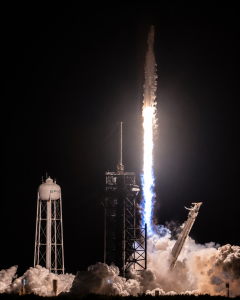
Scientists are waiting for new observations of the Moon after a large piece of a SpaceX Falcon 9 rocket is believed to have struck the lunar surface following more than 18 months drifting through space.
The impact was expected to occur at around 07:35 BST, with the rocket stage travelling at approximately 2.43 kilometres per second — roughly 5,400 mph (8,700 km/h) — when it reached the Moon.
The object is believed to be the upper stage of a Falcon 9 rocket. Unlike the reusable first stage that can return to Earth, the upper stage continues into space after completing its mission. The section involved is roughly comparable in size to a five-storey building and has a mass of about 4,000 kilograms (8,800 pounds) on Earth.
The rocket stage had been associated with a January 2025 mission that launched two lunar landers, Firefly Aerospace’s Blue Ghost and ispace’s Resilience. Over the following months, the combined influence of gravity and sunlight gradually altered the discarded stage’s path, eventually putting it on a collision course with the Moon.
The impact is believed to have taken place near Einstein Crater on the Moon’s northern side. However, because the crater is more than 180 kilometres (112 miles) across, scientists do not yet know the exact location of the collision or the size of any new crater it may have created.
NASA has said the event poses no danger to Earth.
Astronomers and space agencies are now interested in studying the suspected impact site. Observations could reveal how much debris was produced and whether the collision created a fresh crater on the lunar surface.
NASA’s Lunar Reconnaissance Orbiter, South Korea’s Danuri lunar probe and telescopes in the Americas have been among the instruments expected to help scientists investigate the event. Before-and-after images of the area could eventually provide clearer evidence of where the rocket struck and what happened during the collision.
Concerns About Future Space Debris
Although this particular event is not considered a threat to Earth, some space-safety researchers say it highlights a growing issue as more spacecraft, rockets and equipment travel between Earth and the Moon.
Professor Hugh Lewis, a space-safety expert at the University of Birmingham, has warned that future uncontrolled impacts could become more serious as human activity around the Moon increases.
If the Moon becomes a regular destination for astronauts, scientific missions and commercial operations, more infrastructure may eventually be placed both on its surface and in lunar orbit. Uncontrolled rocket debris could then potentially threaten spacecraft, scientific equipment or even people.
The incident therefore raises a broader question about whether stronger international standards and guidelines will eventually be needed for missions travelling to the Moon.
For scientists, however, the suspected Falcon 9 impact also presents a rare research opportunity. Once spacecraft obtain detailed images of the area, researchers may be able to determine the precise impact location, measure any newly formed crater and better understand how a large human-made object affects the lunar surface at extremely high speed.
For now, astronomers are waiting for the clearest evidence from the Moon itself.