
My Mother Gave My Renovated $1.2 Million House to My Brother—So I Took Everything I Paid For

PART 3

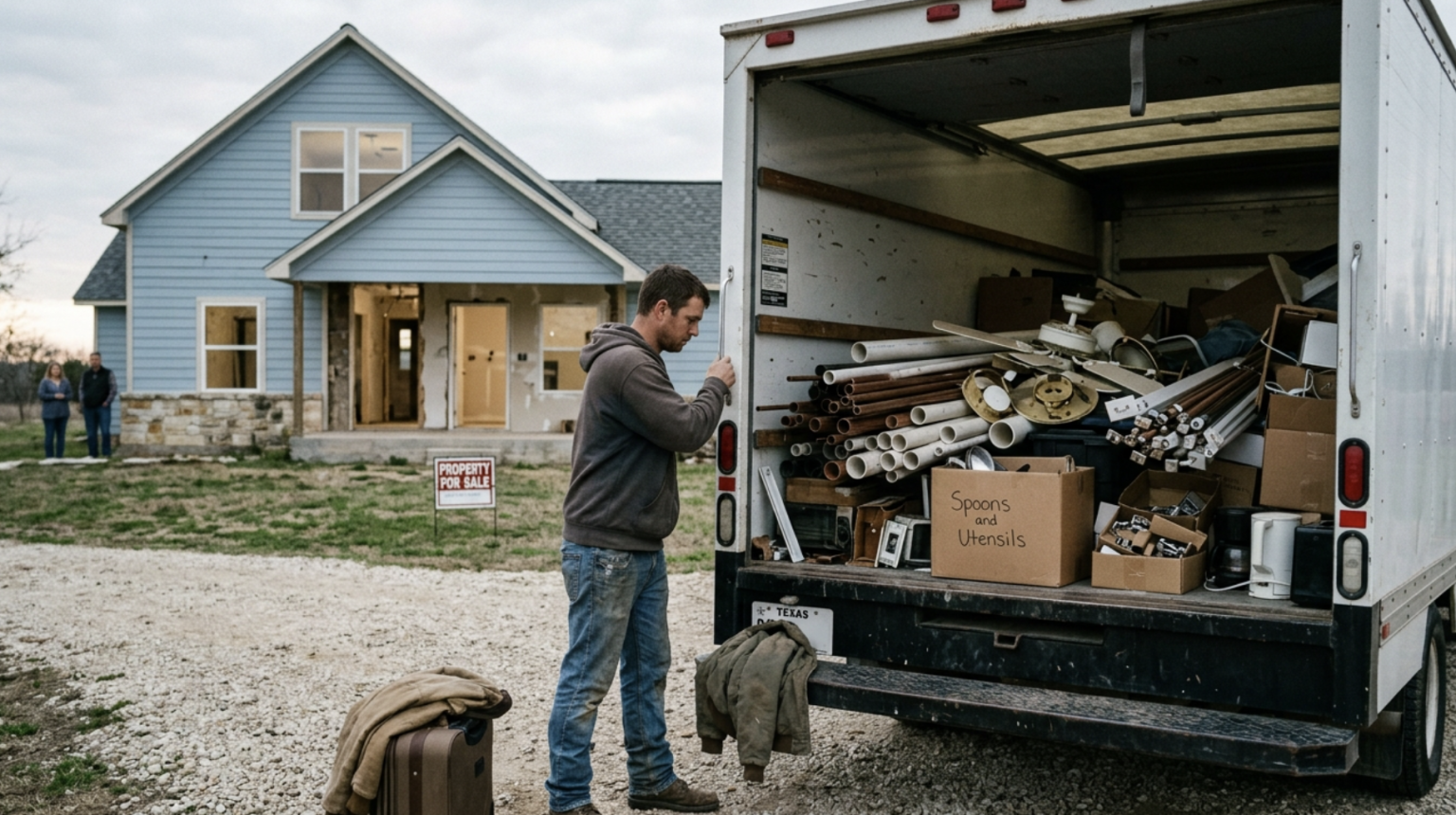
The copper faucets, the water heater, the bathroom vanity, every light fixture, every ceiling fan, every shelf, every curtain rod, even the antique brass doorknobs I had spent weeks restoring—they all had my name on the invoices.

I hadn’t renovated my mother’s property.

I had installed my property into her building.

There’s a difference.

Before removing anything, I had even hired an attorney for a one-hour consultation.

His advice had been simple.

“Don’t damage the structure. Don’t remove anything that legally belongs to the real estate itself. But if you purchased removable fixtures and can document ownership, you’re on solid ground. Take photographs before and after.”

So I did.

Hundreds of them.

Every room.

Every wall.

Every pipe connection.

Every electrical outlet.

I documented everything more carefully than a crime scene investigator.

Then the work began.

My friends didn’t hesitate.

Emma arrived with her toolbox before sunrise Saturday.

Jake brought two licensed plumbers.

Miguel showed up with a trailer and laughed when he saw my checklist.

“You really numbered the spoons?”

I shrugged.

“They told me to leave. They didn’t say I had to leave gifts.”

For two straight days, the cottage became a carefully organized operation.

The kitchen disappeared first.

Cabinet doors came off their hinges.

The marble island detached in one solid piece.

The refrigerator rolled onto a dolly.

Every drawer was emptied, labeled, and wrapped.

By Saturday afternoon, the once magazine-worthy kitchen looked strangely naked.

Then came the bathrooms.

The mirrors.

The heated towel racks.

The rainfall showerheads.

The vanity lights.

Even the toilet paper holders.

Jake grinned while removing the last chrome fixture.

“You know they’re going to lose their minds.”

I smiled for the first time all weekend.

“I know.”

The only things I refused to touch were the original walls, roof, windows, and structural flooring.

I wasn’t trying to destroy the house.

I was returning it to the abandoned shell I had originally been given.

Nothing more.

Nothing less.

Before locking the door for the final time, I walked slowly through every room.

Three years earlier, there had been mold climbing the walls.

Rats had nested beneath the kitchen sink.

The roof leaked every time it rained.

I remembered sleeping in a sleeping bag during the first winter because there was no heating.

I remembered eating instant noodles while saving every paycheck to buy insulation.

I remembered crying with happiness the day the electricity finally worked.

That cottage hadn’t been handed to me.

I had built my home with blistered hands.

I rested my palm against the empty doorway.

“Thank you,” I whispered.

Then I closed the door.

At 8:17 Monday morning, the voicemails began.

Voicemail 1 — Mom

“Julie! What have you done? Call me immediately!”

Delete.

Voicemail 2 — Mark

“You’ve crossed a line.”

Delete.

Voicemail 3 — Chloe

“You’re actually insane!”

Delete.

Then came the text messages.

Mom: Where are the kitchen cabinets?

Mark: Put everything back today.

Chloe: The baby furniture delivery is in two hours!

I typed exactly five words.

I moved my belongings.

Nothing else.

Three dots appeared.

Then disappeared.

Then my phone rang again.

I silenced it.

Around noon, Emma sent me a photo.

She lived only five minutes from the country property.

The picture showed three moving trucks parked outside, my mother standing in the driveway with both hands on her head while Chloe cried dramatically beside her.

The caption read:

You should probably frame this.

I laughed so hard I nearly spilled my coffee.

Ten minutes later, another picture arrived.

Mark was standing inside the empty kitchen.

There were no cabinets.

No sink.

No stove.

Only capped plumbing pipes sticking out of the wall.

Someone had written on painter’s tape above the water line:

Water safely disconnected.

That had been Jake’s little joke.

I thought the worst was over.

I was wrong.

At three o’clock, there was a knock on my apartment door.

Not my mother.

Not Mark.

A police officer.

For one terrifying second, my stomach dropped.

I opened the door.

“Ms. Harper?”

“Yes.”

“We received a report regarding alleged theft from a family residence.”

I nodded calmly.

“I’ve been expecting this.”

His eyebrows lifted.

“You have?”

I invited him inside and placed the accordion folder on the coffee table.

Receipts.

Bank statements.

Photographs.

Dated contractor permits.

Even before-and-after images showing the cottage before I touched it.

He spent nearly twenty minutes flipping through everything.

Finally, he closed the folder.

“Did you remove any structural components?”

“No.”

“Did you damage the property?”

“No.”

“Did you purchase these items yourself?”

“Yes.”

He nodded once.

“I believe this is a civil family dispute, not a criminal theft matter.”

Relief flooded my chest.

As he stood to leave, he gave me a sympathetic smile.

“One piece of advice?”

“Yes?”

“Keep every document. Families tend to rewrite history.”

After he left, I locked the door and cried.

Not because I was scared.

Because a complete stranger had shown me more fairness in twenty minutes than my own family had shown me in years.

By evening, my mother abandoned the angry messages.

She switched tactics.

Mom: Julie, sweetheart… maybe we both overreacted.

Five minutes later:

You know I’m under so much stress.

Another message.

Chloe is pregnant. Can’t you think about the children?

I stared at the screen.

There it was.

The guilt.

The same weapon she had used my entire life.

Whenever Mark broke something, I had to forgive him.

Whenever he borrowed money, I had to understand.

Whenever he forgot birthdays, I had to be mature.

Being the responsible child had never been a compliment.

It had been a job description.

I finally replied.

The children deserve loving parents. They do not deserve an aunt who is treated like an ATM.

She read it instantly.

No response came.

That night, I began unpacking my belongings into my small rental apartment.

The space was less than half the size of the cottage.

But every cabinet fit perfectly.

The copper faucet looked beautiful against the tiny kitchen sink.

My dining table barely squeezed into the living room.

It wasn’t luxurious.

It was mine.

I had just finished assembling the bookshelf when my laptop chimed.

A new email.

Subject: Urgent Property Valuation – Harper Country Estate

I frowned.

I had never subscribed to property alerts.

Curious, I opened it.

Attached was a real estate appraisal addressed to my mother.

The estimated market value stopped me cold.

$1,280,000.

Below it was another document.

A proposed sale agreement.

Closing date: Two weeks away.

Buyer: Confidential.

My heart began pounding.

They hadn’t wanted the cottage because Mark needed space.

They wanted me out because they were planning to sell the entire property—and the renovations I paid for had increased its value by nearly half a million dollars.

I was never supposed to find out.

And sitting at the bottom of the email was one sentence that changed everything:

Please confirm that all improvements were completed by the legal owner without outstanding ownership claims.

I looked at my folder of receipts.

Then back at the contract.

Slowly, I reached for my phone.

This time, I wasn’t calling my mother.

I was calling my lawyer.

PART 4

The realtor smiled and said, “Congratulations on the sale.” My lawyer slid one folder across the table and replied, “Not until we discuss who actually paid for half the value of this house.”

The silence that followed was louder than any argument my family and I had ever had.

I hadn’t planned to fight.

When Mom told me to leave, I had accepted that the cottage itself legally belonged to her. I took my belongings and walked away. That should have been the end of it.

But discovering they intended to sell the property—while pretending every improvement had been funded by the owner—changed everything.

It wasn’t about revenge anymore.

It was about the truth.

The next morning I met my attorney, Daniel Brooks, in his downtown office.

He was calm, methodical, and the complete opposite of my family’s emotional chaos.

He spread my receipts across the conference table like puzzle pieces.

Kitchen: $18,420.

Bathroom renovations: $9,870.

Electrical upgrades: $6,315.

Plumbing: $5,940.

Insulation, flooring, lighting, landscaping…

By the time we finished adding everything together, the total came to $51,284.63.

Daniel leaned back.

“You documented this better than most construction companies.”

“I always kept receipts.”

“Good thing you did.”

I swallowed hard.

“Can I stop the sale?”

He shook his head.

“Probably not directly. Your mother owns the land. But we can absolutely challenge any false representation that she alone funded those improvements. More importantly, we can pursue reimbursement under unjust enrichment.”

I had heard the legal phrase before.

Unjust enrichment.

One person benefits from another’s money or labor without fairly compensating them.

For three years, that had been my entire relationship with my family.

Daniel sent one formal letter.

Just one.

No threats.

No insults.

Only facts.

It listed every documented improvement, attached copies of invoices, and requested reimbursement before closing.

The final paragraph read:

“Failure to resolve this matter may require notifying interested parties that substantial improvements were privately funded by a non-owner with documented evidence.”

Professional.

Polite.

Devastating.

Within four hours my phone exploded.

Mom called seventeen times.

Mark called nine.

Chloe even sent a voice message crying.

I ignored every one.

Then Dad’s old friend, Uncle Peter, called.

I almost declined.

Instead, I answered.

“Julie…”

His voice sounded tired.

“I just came from your mother’s house.”

I stayed quiet.

“She’s furious.”

“I’m sure she is.”

“She says you’re destroying the family.”

I laughed softly.

“No, Peter. I think the family was already broken.”

He didn’t argue.

Instead, he sighed.

“I told her something she didn’t want to hear.”

“What?”

“That your father would be ashamed.”

Those words hit me harder than I expected.

Dad had died five years earlier.

The country cottage had belonged to his parents before passing to Mom.

He was the one who taught me how to use a hammer.

How to install drywall.

How to measure twice and cut once.

Every shelf in that cottage carried his fingerprints as much as mine.

Sometimes I still heard his voice whenever I picked up a drill.

Three days later, Daniel called.

“They want mediation.”

I stared out my apartment window.

“Will Mark be there?”

“Yes.”

“And Mom?”

“Yes.”

I closed my eyes.

“Okay.”

The mediation took place in a neutral office instead of a courtroom.

A long oak table separated us.

Mom arrived wearing pearls, as if looking respectable could erase what she had done.

Mark avoided eye contact.

Chloe rubbed her pregnant belly dramatically every few minutes.

The mediator smiled politely.

“Thank you all for coming. Our goal is to reach a fair resolution.”

Mom spoke first.

“Julie is punishing us because she’s jealous her brother has children.”

I actually blinked.

Daniel didn’t even react.

He simply slid my receipt folder across the table.

The mediator opened it.

Page after page.

Invoice after invoice.

Cancelled checks.

Photographs.

Contractor permits.

The room grew noticeably quieter.

Then the mediator looked at Mom.

“Mrs. Harper… did your daughter pay for these improvements?”

Mom hesitated.

“Well… she wanted to.”

Daniel spoke for the first time.

“Did you reimburse her?”

“No.”

“Did you tell the prospective buyer that these renovations were privately funded?”

Silence.

Mark suddenly leaned forward.

“This is ridiculous! She lived there rent-free!”

Daniel nodded.

“Excellent point.”

He pulled out another document.

“My client also paid the annual property taxes for three consecutive years on behalf of Mrs. Harper.”

Mark’s face drained of color.

I had forgotten about that.

Dad used to ask me to handle the taxes before he passed away.

Afterward, Mom simply kept letting me do it.

Another $8,700.

The mediator looked genuinely surprised.

“So your daughter paid taxes… renovated the home… and was later removed without compensation?”

Nobody answered.

Because nobody could.

After two exhausting hours, the mediator proposed a settlement.

Mom rejected it immediately.

“She deserves nothing!”

Daniel calmly packed his briefcase.

“In that case, we’ll proceed with litigation and notify the buyer’s legal team of the ownership dispute regarding improvements.”

That finally broke Mark.

“Mom!”

He turned toward her.

“Just stop!”

Everyone froze.

For the first time in years, my brother actually raised his voice at our mother.

“You told us Julie said she didn’t care about the money!”

Mom’s eyes widened.

“I—I thought—”

“No!” Mark shouted. “You said she wanted us to have the house!”

I looked at him in disbelief.

He honestly hadn’t known.

Mom had lied to all of us.

Different stories for different children.

She had manipulated everyone until the lies collided.

Chloe whispered quietly,

“Mark… you told me Julie offered to move.”

He slowly turned toward his wife.

“I know.”

The room fell into complete silence.

For the first time, nobody blamed me.

The truth was sitting in the middle of the table.

That evening the buyer postponed closing.

Not because of me.

Because their attorneys wanted every financial claim resolved first.

Mom called me one last time.

I answered.

She didn’t yell.

Her voice sounded smaller than I had ever heard it.

“You really would let the sale fall apart?”

I took a deep breath.

“No, Mom.”

“Then what do you want?”

I looked around my little apartment.

My reclaimed cabinets.

My tiny kitchen.

The life I had rebuilt with my own hands.

“I want exactly what you taught me to earn.”

“What?”

I answered quietly.

“Pay me for my work.”

She didn’t speak.

Neither did I.

After a long pause, the call ended.

And for the first time since she asked me to leave, I realized something important.

I no longer needed my mother’s approval.

I only needed justice.

PART 5

The morning of the final settlement, my mother pushed a cashier’s check across the table without looking at me. Then she said the one sentence I had waited my entire life to hear—but it came ten years too late.

“I was wrong.”

The words were barely louder than a whisper.

If someone had asked me a month earlier what victory would look like, I would have imagined shouting, tears, maybe even revenge. Instead, it happened inside a quiet law office with fluorescent lights, lukewarm coffee, and a stack of legal documents.

There was nothing dramatic about justice.

Sometimes it arrived wearing a gray suit.

The buyer had made their position clear.

They loved the property.

They were willing to pay the asking price.

But they would not close until every financial dispute had been resolved in writing.

That gave my mother only two choices: fight me in court for months and risk losing the buyer, or settle fairly.

For the first time, she couldn’t simply guilt me into surrendering.

Facts had replaced feelings.

Daniel reviewed the final agreement one page at a time.

“Mrs. Harper will reimburse Ms. Julie Harper for documented renovations totaling fifty-one thousand two hundred eighty-four dollars and sixty-three cents.”

He continued.

“She will also reimburse property tax payments previously made on her behalf.”

Another page.

“In exchange, Ms. Harper waives future financial claims regarding improvements to the property.”

I signed first.

Not because I was eager.

Because I was ready to move on.

Mom signed last.

Her hand shook.

The mediator slid a cashier’s check toward me.

$59,984.63

Almost sixty thousand dollars.

It wasn’t a gift.

It wasn’t an inheritance.

It was simply money I had already earned years ago.

As we stood to leave, Mark stopped me in the hallway.

“Julie…”

I turned.

He looked exhausted, older somehow.

“I owe you an apology.”

I waited.

“I really believed Mom. She told me you said the cottage was temporary. She said you wanted us to raise our kids there.”

I searched his face.

For the first time in years, I didn’t see arrogance.

I saw embarrassment.

“She lied to both of us,” he admitted.

I nodded slowly.

“She did.”

He rubbed the back of his neck.

“I should’ve asked you instead of believing what was easier.”

Those words mattered more than he realized.

Families don’t usually fall apart because of one huge betrayal.

They fall apart because people stop talking directly to each other.

They let someone else tell the story.

The property sale closed the following week.

The renovated country house sold for $1.28 million.

Neighbors later told me the new owners were a retired couple who had dreamed of opening a small lavender farm.

Oddly enough, that made me smile.

The cottage deserved people who actually loved it.

Not people who fought over it.

Life became surprisingly peaceful.

I bought a modest townhouse instead of another fixer-upper.

My friends joked that I had developed renovation trauma.

Emma laughed.

“If I ever see you carrying drywall again, I’m calling your therapist.”

“I don’t have a therapist.”

“You will.”

For once, everyone laughed.

The townhouse was smaller than the cottage, but every room carried intention instead of obligation.

I painted the kitchen sage green.

Installed the same copper faucet.

Hung Dad’s old woodworking tools above my workbench.

Home wasn’t a location anymore.

It was the place where I never had to earn the right to stay.

Two months later, an unexpected envelope arrived.

No return address.

Inside was a handwritten letter.

Recognizing the handwriting made my chest tighten.

Mom.

Julie,

I have started this letter a dozen times.

Every version tried to explain my decisions. None of them sounded honest.

The truth is uglier.

After your father died, I became terrified of losing Mark. I worried he would move away with the grandchildren, so I kept choosing him—even when it meant sacrificing you.

I convinced myself that you were stronger, more independent, and needed less.

That became my excuse for treating you unfairly.

You never deserved that.

I know money cannot repair trust.

I am not asking you to come back.

I only hope one day you will remember me for more than my worst decision.

Love, Mom

I read it three times.

Then I folded it carefully.

People love stories where forgiveness happens instantly.

Real life is slower.

An apology is a beginning, not an ending.

I wasn’t ready to hug her.

But for the first time, I believed she understood what she had done.

Winter arrived.

On Christmas Eve, I hosted dinner in my new home.

Not because anyone expected me to.

Because I wanted to.

Emma came.

Jake brought homemade bread.

Miguel burned the pie exactly like he did every year.

Halfway through dinner, the doorbell rang.

Mark stood outside holding a small box.

Behind him were Chloe and their two children.

“I know we weren’t invited,” he said nervously.

“You weren’t.”

“I know.”

He handed me the box.

Inside was Dad’s old tape measure.

The yellow one he carried on every project.

“I found it in Mom’s garage,” Mark said. “Dad always said it belonged to the best builder in the family.”

Tears blurred my vision.

Not because of the tool.

Because for the first time, my brother wasn’t taking something from me.

He was giving something back.

I stepped aside.

“It’s freezing,” I said.

“You’d better come in.”

The kids ran straight toward the Christmas tree.

Chloe quietly whispered,

“I’m sorry too.”

I nodded.

No speeches.

No dramatic music.

Just people trying to become better than they had been yesterday.

Later that night, after everyone had gone home, I stood alone on my back porch as snow began falling over the neighborhood.

Dad’s tape measure rested in my pocket.

I looked at the warm lights glowing through my kitchen window and smiled.

My mother had once told me I had to leave because I didn’t have a family.

She was wrong.

Family was never the house someone gave you.

It was the people who helped you build a home—and the courage to walk away from those who only wanted what you had built.
The End.

Leave a Reply

Your email address will not be published. Required fields are marked *