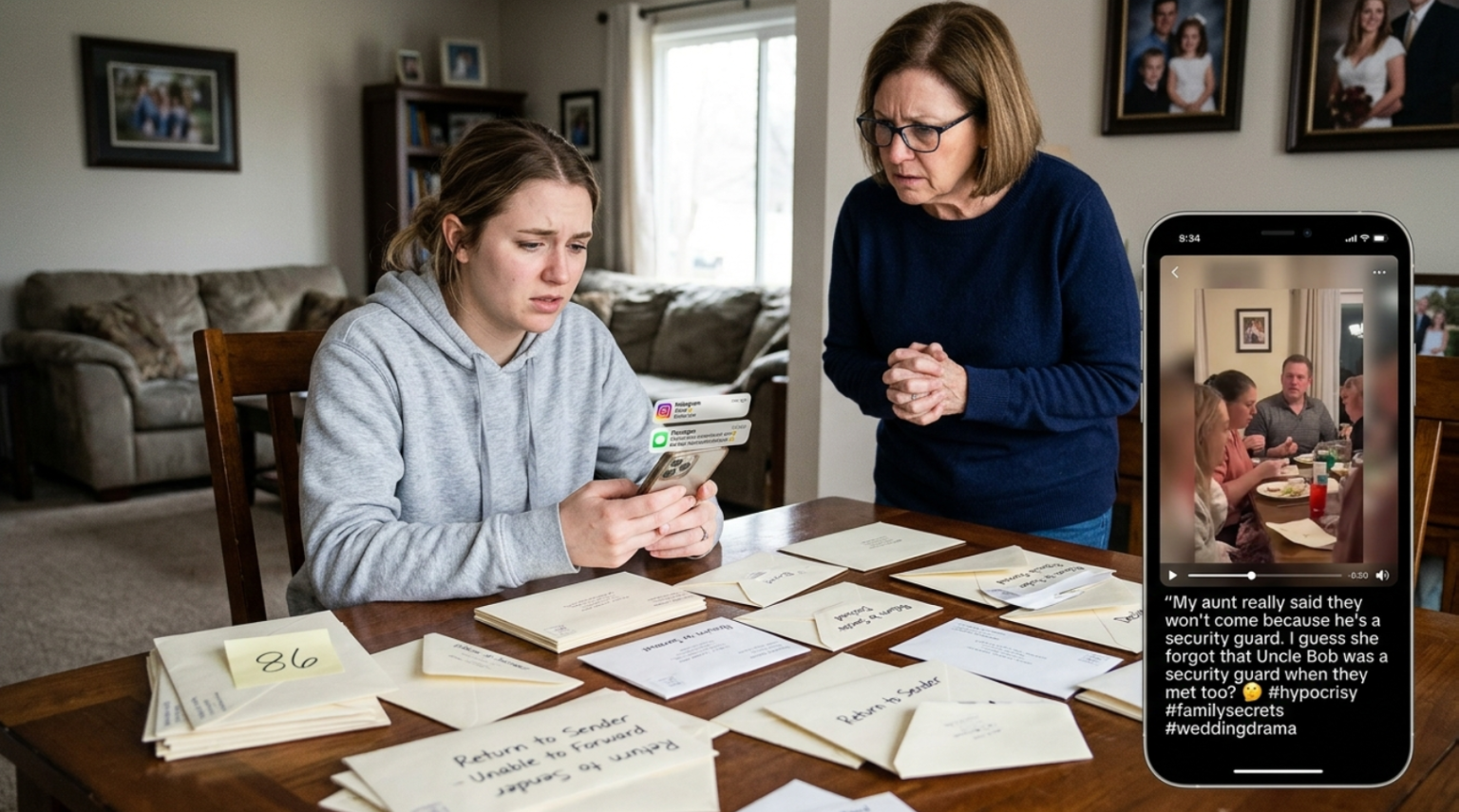
My Family Abandoned My Wedding Because I Married a Security Guard—Then a 12-Second Video Revealed Who He Really Was
PART 4
I stared at the signature at the bottom of the page.
My signature.
Except it wasn’t mine.
I had never seen the document before.
I had never signed it.
And yet there it was.
My full legal name.
Abigail Rose Mercer.
Underneath it was my father’s signature.
Howard Mercer.
And beneath both names was the name of a law firm I recognized.
The same firm that had handled my parents’ estate planning.
I looked at Lincoln.
“What is this?”
He didn’t answer immediately.
That frightened me more than anything.
“Lincoln.”
He stepped closer.
“Sit down.”
“I don’t want to sit down.”
“Abby—”
“I want an answer.”
He nodded.
“You deserve one.”
He glanced at the woman who had brought the folder.
“Claire?”
She stepped forward.
“My name is Claire Bennett. I’m an attorney who represents several entities connected to Mr. Hayes.”
“Connected to him how?”
She looked at Lincoln.
He nodded.
Then she turned back to me.
“Your father established a family trust eighteen years ago.”
“Okay.”
“You were named as the primary beneficiary.”
I frowned.
“That doesn’t make sense.”
“It does if you understand what happened next.”
She opened another folder.
“Your grandfather died eighteen years ago.”
I remembered.
Barely.
I had been fourteen.
My grandfather had been the only member of my family who ever made me feel like I mattered.
He used to call me his little statistician because I loved numbers even as a child.
After he died, Dad told me the family had experienced financial difficulties.
He said Grandfather’s assets had been complicated.
He said everything had been placed into long-term arrangements.
I had never questioned it.
I was fourteen.
I trusted my father.
Claire placed a document in front of me.
“Your grandfather left substantial commercial properties and investment assets.”
I looked at the number.
My hands began to shake.
“What?”
Claire pointed to the total.
“Approximately thirty-eight million dollars at the time of his death.”
I stared at her.
Thirty-eight million.
I looked at Lincoln.
He didn’t look surprised.
“Where did it go?”
Claire turned another page.
“The trust was established to protect those assets until you reached thirty years of age.”
I swallowed.
“I’m thirty-two.”
“Yes.”
“So why don’t I have them?”
Claire looked at me.
“Because you were never informed that the trust existed.”
I couldn’t breathe.
I looked down at the document again.
There was a clause.
If I married before thirty, the trust would remain under management.
If I married after thirty, control would transfer to me immediately.
My eyes moved to the date.
I had turned thirty two years ago.
Nothing had happened.
No call.
No letter.
No lawyer.
Nothing.
I looked at Lincoln.
“Who has been managing it?”
Claire answered.
“Your father.”
My stomach dropped.
I didn’t say anything for several seconds.
Then I laughed.
Not because anything was funny.
Because sometimes the truth is so impossible that your mind doesn’t know what else to do.
“My father?”
Claire nodded.
“He was appointed temporary trustee.”
“Temporary?”
“Yes.”
“For how long?”
“Until you reached thirty.”
I looked at the document.
“Then why was he still managing it?”
Claire hesitated.
“Because the trust records were amended.”
“By whom?”
She slowly slid another page across the table.
I saw my father’s signature again.
Then another.
And another.
There were amendments.
Loans.
Asset transfers.
Management fees.
Payments.
My eyes scanned the numbers.
Millions had been moved.
Some into my father’s brokerage.
Some into companies controlled by Kendrick.
And a large amount had been used to purchase properties connected to Chelsea.
I looked up.
“Did my father steal from me?”
Claire didn’t use the word.
“Several transactions appear to have been made without the beneficiary’s informed consent.”
“That’s a yes.”
She remained silent.
I felt something inside me crack.
Not because of the money.
Because suddenly every memory I had of my childhood looked different.
Every time Dad told me there wasn’t enough money.
Every time Chelsea got the better car.
Every time I was told to understand that “family businesses require sacrifice.”
Every time Dad said I needed to make my own way.
I had believed him.
I had worked.
I had studied.
I had taken student loans.
I had driven an old car.
I had rented apartments.
I had built my life from scratch.
Meanwhile, my father had apparently been managing an inheritance that belonged to me.
I looked at Lincoln.
“How did you find this?”
His face softened.
“Your grandfather was one of the first investors in a company my family acquired years ago.”
I blinked.
“Your family?”
“Yes.”
“So you knew my grandfather?”
“No.”
“Then how?”
“My father knew him.”
Lincoln paused.
“After my father died, I inherited several old corporate records. Your grandfather’s name appeared in them.”
I frowned.
“And you started investigating?”
“I noticed something unusual.”
“What?”
“The assets your grandfather transferred into the trust were generating income, but the beneficiary records didn’t match the public filings.”
I stared at him.
“You investigated my family.”
“I investigated the trust.”
“Why?”
“Because I wanted to understand why your family was always telling you that they couldn’t afford certain things while your grandfather’s assets were producing millions.”
My eyes filled with tears.
“And you never told me?”
“I didn’t know enough.”
“Then when did you know?”
“About six months after we met.”
I stepped back.
“You knew?”
“Yes.”
“And you still dated me?”
His expression changed.
“Abby, I fell in love with you before I knew anything about the trust.”
I looked away.
He continued.
“I didn’t want to become another person telling you who you were supposed to be.”
My eyes met his.
“I didn’t need you to rescue me.”
“I know.”
“Then why did you?”
“Because you weren’t asking for rescue.”
He took a breath.
“You were being robbed.”
The words hit me harder than anything else.
A vehicle pulled into the driveway.
My father stepped out.
My mother followed.
Chelsea came behind them.
They were no longer dressed for a celebration.
Chelsea’s face was pale.
Dad looked furious.
Mom looked frightened.
They walked toward us.
Dad pointed at Claire.
“You have no authority to be here.”
Claire remained calm.
“I disagree.”
“This is a private family matter.”
“No,” she said.
“It is a trust matter.”
Dad’s eyes moved to me.
“Abby, don’t listen to them.”
I held up the document.
“Is this your signature?”
He stopped.
Mom looked at him.
Chelsea looked at him.
For the first time in my entire life, I saw my father lose control of his expression.
“Where did you get that?”
“Is it your signature?”
“Abby, there are explanations.”
“Then explain.”
He looked around.
People were watching.
My coworkers.
Lincoln’s colleagues.
Guests.
Musicians.
Even the caterers had gone quiet.
Dad lowered his voice.
“Not here.”
“You made it here.”
“Come with me.”
“No.”
“Abigail.”
“No.”
My voice surprised even me.
“You don’t get to call me into another office and close another door.”
Dad stared at me.
I held up the papers.
“You hid this from me.”
“We protected the family.”
“No.”
I shook my head.
“You protected yourself.”
Mom stepped forward.
“Abby, please.”
I looked at her.
“Did you know?”
She began crying.
That was answer enough.
I felt my chest tighten.
“You knew.”
“I didn’t understand everything.”
“But you knew.”
“I knew there was a trust.”
I closed my eyes.
“How long?”
“Years.”
I nodded slowly.
Then I looked at Chelsea.
“Did you know?”
Chelsea’s eyes filled with tears.
“No.”
Dad turned toward her.
“Chelsea—”
She stepped back.
“No.”
Her voice shook.
“Don’t look at me.”
Dad froze.
Chelsea looked at me.
“I swear I didn’t know.”
I believed her.
For once, I did.
But then she said something that changed everything.
“I knew Dad was using money to help Kendrick.”
I stared at her.
“How much?”
“I don’t know.”
“How much?”
She started crying.
“Millions.”
Kendrick, who had been standing behind her, suddenly turned away.
I looked at him.
“Did you know about the trust?”
He didn’t answer.
“Did you know the money belonged to me?”
His silence was enough.
Chelsea looked at him.
“You knew?”
Kendrick’s face tightened.
“I knew there was family money.”
“Whose money?”
He didn’t answer.
“Whose?”
He finally whispered,
“Yours.”
Chelsea covered her mouth.
Then she slapped him.
The sound echoed across the lawn.
“You told me it was your investment money.”
Kendrick touched his cheek.
“I was trying to build something.”
“With her money?”
“I was going to pay it back.”
Chelsea stared at him.
“You knew she was struggling.”
“I said I would pay it back.”
“You let her drive that awful car.”
“Chelsea—”
“You let her believe Dad couldn’t help her.”
He had no answer.
Dad suddenly shouted.
“Enough!”
Everyone went silent.
He turned toward me.
“You want the truth?”
I stared at him.
“Yes.”
“You weren’t supposed to know.”
My heart sank.
“Why?”
“Because the trust was complicated.”
“No.”
He shook his head.
“You wouldn’t understand the business.”
“I understand numbers.”
“You were fourteen.”
“I am thirty-two now.”
He looked away.
“And by the time you turned thirty, it was already too late.”
“For what?”
He didn’t answer.
Claire stepped forward.
“The trust became fully vested in Abigail two years ago.”
Dad glared at her.
“You don’t know the entire situation.”
“I know the records.”
Claire opened the folder.
“Mr. Mercer, there are at least seventeen unauthorized transfers.”
Mom gasped.
Dad looked at her.
“Diana—”
She stepped away.
“I didn’t know it was that much.”
I looked at her.
“How much did you know?”
She shook her head.
“I thought Howard was borrowing against it.”
“Borrowing?”
“Yes.”
“Did he pay it back?”
She didn’t answer.
Claire did.
“No.”
I looked at my father.
He had nothing left to say.
Then something unexpected happened.
Lincoln walked toward me.
He didn’t touch me.
He simply stood beside me.
“Abby.”
I looked at him.
“I don’t want you making any decisions today because you’re angry.”
I blinked.
“What?”
“About the trust.”
He looked at Claire.
“We can freeze everything.”
Claire nodded.
“All transfers can be halted immediately.”
Lincoln looked back at me.
“You don’t need to decide what happens to your family today.”
I understood what he was doing.
He wasn’t telling me what to do.
He was giving me room to choose.
I took a deep breath.
“Freeze everything.”
Claire nodded.
“Effective immediately.”
Dad stepped forward.
“You can’t do this.”
I looked at him.
“No.”
I pointed to the documents.
“You can’t do this.”
The wedding ceremony began at noon.
Not because the family conflict was resolved.
It wasn’t.
Not because I had forgiven anyone.
I hadn’t.
But because I had finally understood something.
My wedding wasn’t supposed to prove that my family had accepted Lincoln.
It was supposed to celebrate that I had chosen my own life.
I walked down the aisle.
Alone.
At first.
Then, halfway down, something happened.
The elderly man Lincoln had helped years ago stood up.
He walked toward me.
“May I?”
I smiled through my tears.
“Yes.”
He offered his arm.
“I’ve known your husband longer than you think.”
I laughed.
“Really?”
“He saved my life once.”
Lincoln looked surprised.
The old man continued.
“Not literally.”
He smiled.
“But he treated me like a human being when everyone else treated me like an inconvenience.”
I took his arm.
Together, we walked the rest of the way.
When I reached Lincoln, he took my hands.
“You okay?”
I smiled.
“For the first time in a long time.”
The ceremony began.
The vows were simple.
No speeches about wealth.
No mention of family status.
No grand promises about luxury.
Just two people standing beside the water.
When it was time for Lincoln to speak, he looked directly into my eyes.
“I loved you when you thought I was nobody.”
My lips trembled.
“I loved you when you thought you had to earn your family’s approval.”
He squeezed my hands.
“And I will love you when you finally understand that you never had to earn it.”
I cried.
He smiled.
“You were already enough.”
Then it was my turn.
I looked at him.
“I don’t know what the future holds.”
I glanced toward my family.
“But I know this.”
I looked back at Lincoln.
“I don’t want a life built on appearances.”
He nodded.
“I want a life where kindness counts.”
His eyes filled with tears.
“And I want someone who sees me when everyone else decides they already know my value.”
He whispered,
“I see you.”
We kissed.
The guests applauded.
And for the first time that day, I stopped thinking about the people who weren’t there.
Three months later, the investigation was complete.
The trust contained far more than I had known.
Properties.
Commercial buildings.
Investment accounts.
Shares.
Cash reserves.
My grandfather had built something intended to protect his granddaughter.
My father had treated it as a family resource.
The court-appointed trustee reviewed every transaction.
Some assets were recovered.
Some had to be sold.
Kendrick was required to repay funds transferred to his businesses.
Chelsea separated herself from the companies involved.
My parents lost control of the trust.
And my father had to face the consequences of decisions he had spent years hiding.
But something surprised me.
I didn’t want revenge.
I wanted distance.
There was a difference.
I didn’t destroy my family.
I simply stopped allowing them to define my life.
My mother eventually wrote me a letter.
She didn’t ask for money.
She didn’t ask me to forgive her.
She simply admitted that she had spent years being afraid of what people would think.
She said she had mistaken social approval for security.
I read the letter twice.
Then I put it away.
I wasn’t ready to answer.
But I wasn’t angry anymore.
Not entirely.
Chelsea changed too.
Six months after the wedding, she came to my apartment alone.
No designer car.
No expensive handbag.
No Kendrick.
She stood outside my door holding a paper bag.
“What is that?” I asked.
“Coffee.”
I laughed.
“You came all the way here with coffee?”
“I didn’t know what else to bring.”
I let her inside.
We sat at the kitchen table.
For a while, neither of us spoke.
Then she said,
“I was jealous of you.”
I looked at her.
“Why?”
“Because you didn’t care.”
“About what?”
“About what everyone thought.”
I smiled sadly.
“You cared enough for both of us.”
She laughed.
Then she cried.
“I thought you were wasting your life.”
“I know.”
“I thought marrying Lincoln would embarrass us.”
“I know.”
She wiped her face.
“Then I met some of the people at your wedding.”
I looked at her.
“They told me stories about him.”
She smiled.
“They told me stories about you too.”
I raised an eyebrow.
“What did they say?”
“That you were the only person in the office who remembered the janitor’s birthday.”
I laughed.
“That isn’t true.”
“It is.”
She leaned back.
“I spent my entire life trying to impress people who couldn’t remember my birthday.”
The room became quiet.
“I don’t want to live like that anymore,” she said.
I didn’t know whether we would ever be the sisters we might have been.
But for the first time, I believed we might become something better.
Something honest.
One year after our wedding, Lincoln and I returned to the same coastline where he had proposed.
The ocean was calm.
The sky was pink.
I leaned against him.
“Do you ever miss being a security guard?”
He laughed.
“Sometimes.”
“Really?”
“Yes.”
“Why?”
“People expected very little from me.”
I smiled.
“And now?”
“Now my wife knows everything.”
I laughed.
“Not everything.”
He looked at me.
“Oh?”
I reached into my purse.
“There’s one thing I never told you.”
“What?”
I handed him an envelope.
He opened it.
Inside was a photograph.
My grandfather.
Young.
Standing beside a much younger man.
Lincoln stared.
“That’s my father.”
I nodded.
“I found it in the old family records.”
He looked at me.
“They knew each other.”
“Yes.”
“Why didn’t you tell me?”
“Because I wanted to surprise you.”
He laughed.
“You’re getting better at this.”
I leaned against his shoulder.
“I learned from you.”
He looked toward the ocean.
“Do you regret anything?”
I thought about the returned invitations.
The empty chairs.
My father’s office.
The hidden trust.
The wedding.
The twelve-second video.
Everything that had happened.
Then I shook my head.
“I regret believing I needed their approval.”
He kissed my forehead.
“That isn’t the same as regretting your family.”
“No.”
I smiled.
“I don’t regret loving them.”
I paused.
“But I finally learned that loving someone doesn’t mean handing them control of your life.”
Lincoln took my hand.
The sun disappeared below the horizon.
And I realized something my fourteen-year-old self could never have understood.
My grandfather’s greatest inheritance hadn’t been the money.
It had been the chance to choose my own life.
The money had simply been hidden behind it.
For years, my family had measured people by income, titles, cars, houses, and connections.
They thought Lincoln was worthless because he stood behind a security desk.
They thought I was foolish because I chose him.
They thought Chelsea was valuable because she could fill a ballroom with powerful people.
But on the day I got married, the ballroom didn’t matter.
The invitations didn’t matter.
The family name didn’t matter.
The money didn’t matter.
What mattered was who showed up.
And when I looked back at the photographs from that day, I realized something beautiful.
The people sitting in those chairs weren’t there because they wanted something from me.
They were there because they loved me.
And that was worth more than eighty-six acceptance cards ever could have been.
I rested my head on Lincoln’s shoulder.
“Ready to go home?”
He smiled.
“Home?”
I looked at him.
“Yes.”
He squeezed my hand.
“Wherever you are.”
We walked back toward the car together.
No cameras.
No reporters.
No family drama.
No need to prove anything.
Just us.
And for the first time in my life, I understood that sometimes losing the people who refuse to value you is not the end of your story.
Sometimes it is the moment you finally become free enough to write it yourself.
And that was the inheritance my family could never take from me.
THE END