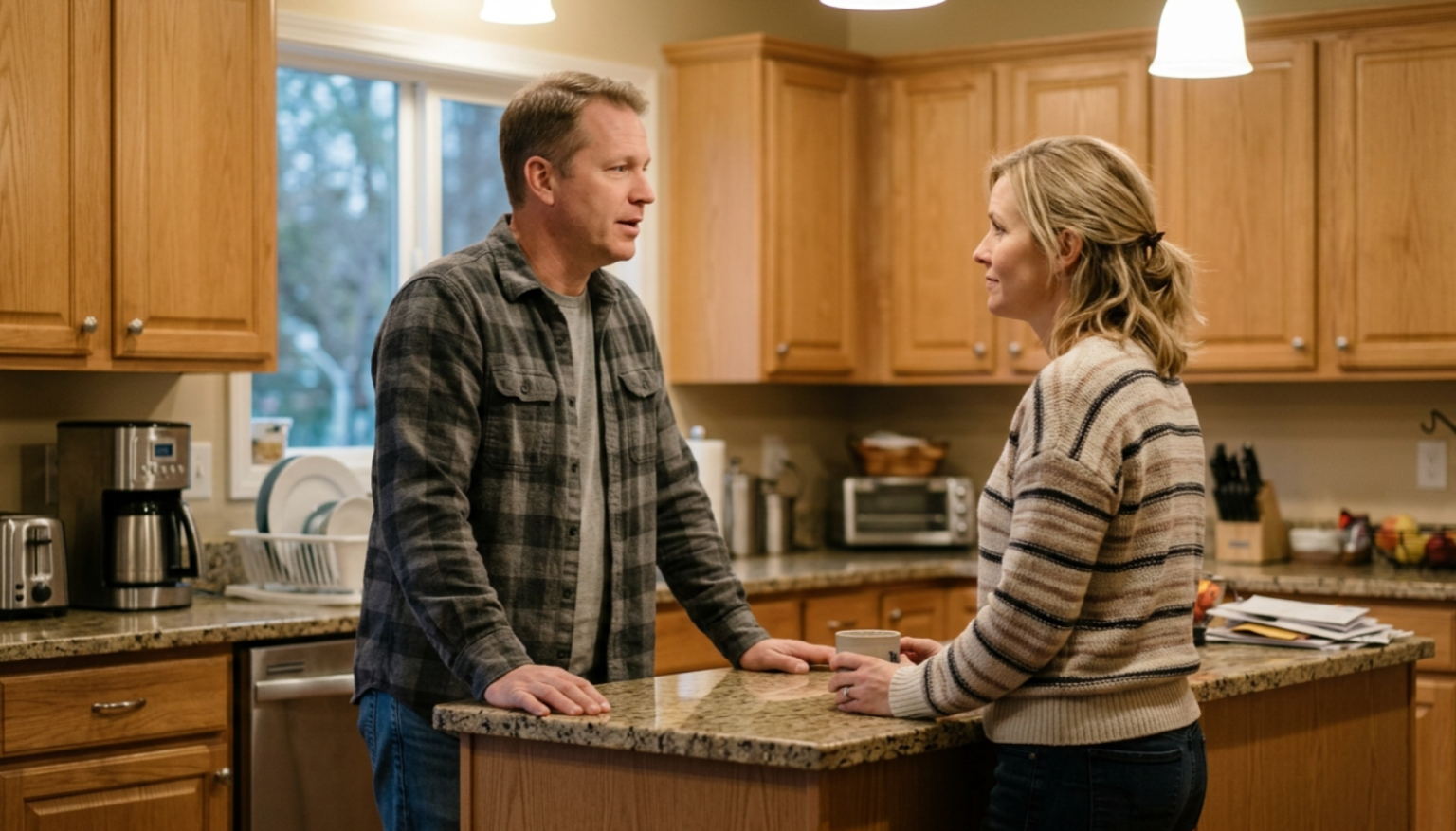
My Husband Said I Was “Bad With Money”—Then I Discovered He Had Been Stealing My Paycheck for Six Months
PART 6
The loan had been opened after Cliff was served with divorce papers—and the signature looked exactly like mine.
For several seconds, I couldn’t speak.
“Yesterday?” I finally asked.
“Yes.”
“Where was Cliff?”
Denise paused.
“At his attorney’s office. We have records proving he was there from 1:10 until nearly 4:00.”
I sat down on the edge of my bed.
“So someone else did it.”
“That’s what we need to determine.”
“What was the loan for?”
“A personal loan. $18,000.”
My stomach turned.
“Where did the money go?”
“That’s the problem.”
I waited.
“It was deposited into an account at the same bank.”
“The account you froze?”
“No. A different account.”
I closed my eyes.
“Whose?”
Denise didn’t answer immediately.
Then she said,
“Elaine’s.”
The next morning, Denise and I met with the bank’s fraud investigator.
The loan application had been submitted online.
My name.
My date of birth.
My Social Security number.
My old address.
Even the security questions were answered correctly.
But the device used to submit the application wasn’t Cliff’s.
It belonged to Elaine.
The investigator showed us the login information.
She had used the Wi-Fi at her home.
And the money had been transferred to her personal account less than twenty minutes later.
I stared at the screen.
I had spent weeks thinking Elaine was simply protecting her son.
She wasn’t.
She had become part of the machinery.
“What did she need eighteen thousand dollars for?” I asked.
The investigator pulled up the transaction history.
Mortgage payment.
Credit cards.
Two personal loans.
Medical bills.
Then one transfer caught my attention.
$7,500 — Cliff Mercer.
I looked at Denise.
“That’s impossible.”
“Why?”
“Cliff told me he had no money.”
Denise enlarged the transaction.
The money had been transferred into an account belonging to Cliff.
Not our old joint account.
His private account.
The account I hadn’t known existed.
For the first time, everything lined up.
The missing money.
The forged payroll form.
The fake joint account.
The truck.
The checks to Dawn.
The secret account.
And now the new loan.
This wasn’t one desperate mistake.
It was a system.
A system built around the assumption that I would never look closely enough.
That afternoon I went to Elaine’s house.
I didn’t knock twice.
She opened the door and immediately knew.
“You found out.”
“Yes.”
Her shoulders dropped.
“Come in.”
I stayed on the porch.
“I don’t want to.”
She nodded.
“I understand.”
“Why?”
She looked toward the living room.
There were family photographs everywhere.
Cliff as a child.
Cliff graduating.
Cliff holding trophies.
Cliff at Christmas.
Not one photograph showed a mistake.
Not one showed failure.
Not one showed the consequences of anything.
“He was going to lose everything,” she whispered.
“He already lost it.”
“He was scared.”
“So was I.”
“You had a good job. You had savings.”
“Because I worked for them.”
She looked down.
“I know.”
“You used my identity.”
“I know.”
“You watched him use my paycheck.”
“I know.”
“And you still opened another loan after the police were involved.”
Her face crumpled.
“I thought I could fix it.”
“With my name?”
She began crying.
“I didn’t know what else to do.”
I looked at her for a long moment.
Then I said the sentence I wished someone had told her decades earlier.
“You don’t protect your family by teaching them that another person’s boundaries don’t matter.”
She covered her face.
I turned to leave.
“Tara.”
I stopped.
“I’m sorry.”
I didn’t turn around.
“I believe you,” I said.
“But I’m still going forward.”
The court hearing came three weeks later.
Cliff sat across the room with his attorney.
He looked older than thirty-eight.
I wondered if I looked older too.
Maybe I did.
Some experiences age you.
Others simply remove the parts of you that were willing to tolerate things.
The judge reviewed the financial documents.
The forged payroll form.
The bank records.
The credit applications.
The dealership records.
The surveillance footage.
The statements from Bernice and the bank investigator.
Then came the part I wasn’t prepared for.
Cliff’s attorney asked for a private conversation between the two of us before the final settlement.
I agreed.
We met in a small conference room.
Cliff closed the door.
“I know you’re not coming back.”
I said nothing.
“I finally understand that.”
He sat across from me.
“I loved you.”
“I loved you too.”
He looked down.
“Do you still?”
That question hurt more than anything else.
Because the truthful answer wasn’t simple.
“I love the man I thought you were.”
His eyes filled.
“But I don’t trust the man you chose to become.”
He nodded slowly.
“I deserve that.”
“You deserve the consequences of what you did.”
“I know.”
“I don’t hate you, Cliff.”
He looked up.
“Why?”
“Because I don’t want to carry you around in my life anymore.”
That sentence seemed to break something in him.
He wiped his face.
“I wish I could go back.”
“So do I.”
“What would you change?”
I thought about it.
Then I answered.
“I would have listened to myself the first time you told me I was bad with money.”
He frowned.
“I didn’t mean—”
“I know.”
I smiled sadly.
“But I should have asked why a man who loved me needed me to believe I was incapable.”
He had no answer.
Neither of us did.
The divorce was finalized four months later.
The house was sold.
The truck was sold.
The fraudulent debts connected to my identity were challenged and removed from my credit file.
The bank returned the funds it could verify as fraud.
The remaining money Cliff had transferred to himself was ordered into the settlement.
Elaine was required to cooperate with the investigation.
Cliff accepted financial responsibility for the accounts he had created.
I didn’t celebrate.
I simply moved forward.
There was no dramatic courtroom victory.
No shouting.
No champagne.
Just paperwork.
And sometimes that’s what freedom looks like.
A signature.
A folder.
A door closing behind you.
Six months later, I moved into a small townhouse with huge windows and a kitchen that had only one bank statement sitting on the counter.
Mine.
No one checked my receipts.
No one questioned what I bought.
No one told me how much money I was allowed to keep.
On Sundays, instead of sitting across from Cliff while he reviewed my spending, I started making pancakes.
Sometimes Megan came over.
Sometimes Dawn and Lila did.
The first time Lila visited, she ran through the front door carrying a painting.
“Tara!”
I laughed.
“Hi, sweetheart.”
She handed me the painting.
It was another sunflower house.
But this time there were four people.
Lila.
Her mother.
Her father.
And me.
I looked at it carefully.
“Who’s this?”
She pointed to the fourth figure.
“You.”
My eyes burned.
“Why am I in the picture?”
“Because you’re family.”
Dawn stood behind her, looking nervous.
I looked at her.
She smiled.
“She’s been drawing you for months.”
I hugged Lila.
“Thank you.”
She whispered,
“Daddy says you’re very good with money now.”
I laughed so hard I almost cried.
“Your dad should know that I always was.”
A year after the divorce, I received a letter from Cliff.
I almost threw it away.
Instead, I opened it.
It was only one page.
He wrote that he had completed counseling.
That he was working two jobs.
That he was paying back what he owed.
That Lila was doing well.
Then he wrote something I never expected.
“I used to think controlling money meant keeping my family safe. Now I understand that trust is what makes a family safe.”
I folded the letter.
I didn’t reply.
Not because I was angry.
Because some chapters don’t need another conversation.
Two years later, I was promoted to lead hygienist at the dental practice.
Bernice was still there.
One Friday afternoon, she walked into my office holding a stack of payroll forms.
“Remember these?”
I laughed.
“I remember.”
She smiled.
“You want to know something?”
“What?”
“You’re the only person in this building who checks every line before signing.”
“Experience.”
“Wisdom.”
I looked down at the form in my hand.
My signature.
My handwriting.
My choice.
Something so ordinary had once been taken from me.
Now I treated it like something sacred.
On my thirty-ninth birthday, Megan gave me a small wooden box.
Inside was a brass key.
“What is this?”
“Your new front-door key.”
I laughed.
“You already gave me one.”
“This one’s different.”
She pointed to the engraving.
It said:
YOUR LIFE. YOUR NAME. YOUR CHOICE.
I ran my thumb across the letters.
And for the first time, I understood something I hadn’t understood when I was thirty-six.
I had spent years thinking independence meant proving I didn’t need anyone.
It didn’t.
Independence meant choosing who I trusted without being afraid of what would happen if I said no.
It meant having my own voice.
My own account.
My own signature.
My own life.
And, most importantly, knowing that love should never require me to surrender any of them.
That evening, I stood in my kitchen making dinner.
My phone buzzed.
A message from Dawn.
Lila got an A on her math test. She says it’s because you taught her how to budget her allowance.
I smiled.
Then another message appeared.
From an unknown number.
I opened it.
It was a photograph.
Lila was holding a sunflower painting.
Underneath it, Cliff had written:
“She still thinks of you as family.”
I stared at the picture.
Then I saved it.
Not because I wanted Cliff back.
I didn’t.
But because somewhere between the forged signature and the locked bank account, there had been a little girl who had never done anything wrong.
And I wanted her to know that none of the adults’ mistakes had changed how much she deserved to be loved.
I put the phone down.
Outside my window, the evening sun fell across the kitchen floor.
For years, I had thought the worst thing Cliff had stolen from me was money.
I was wrong.
He had stolen my confidence in my own judgment.
And the best thing I ever did wasn’t getting the money back.
It was getting myself back.
I picked up my dinner plate, sat at my own table, and smiled.
My paycheck went into my account.
My name was on every document.
My door locked from the inside.
And nobody—not my husband, not my mother-in-law, not anyone—was ever going to tell me again that I wasn’t capable of managing my own life.
Because I finally understood the truth:
I had never been bad with money.
I had simply been married to someone who needed me to believe I was.