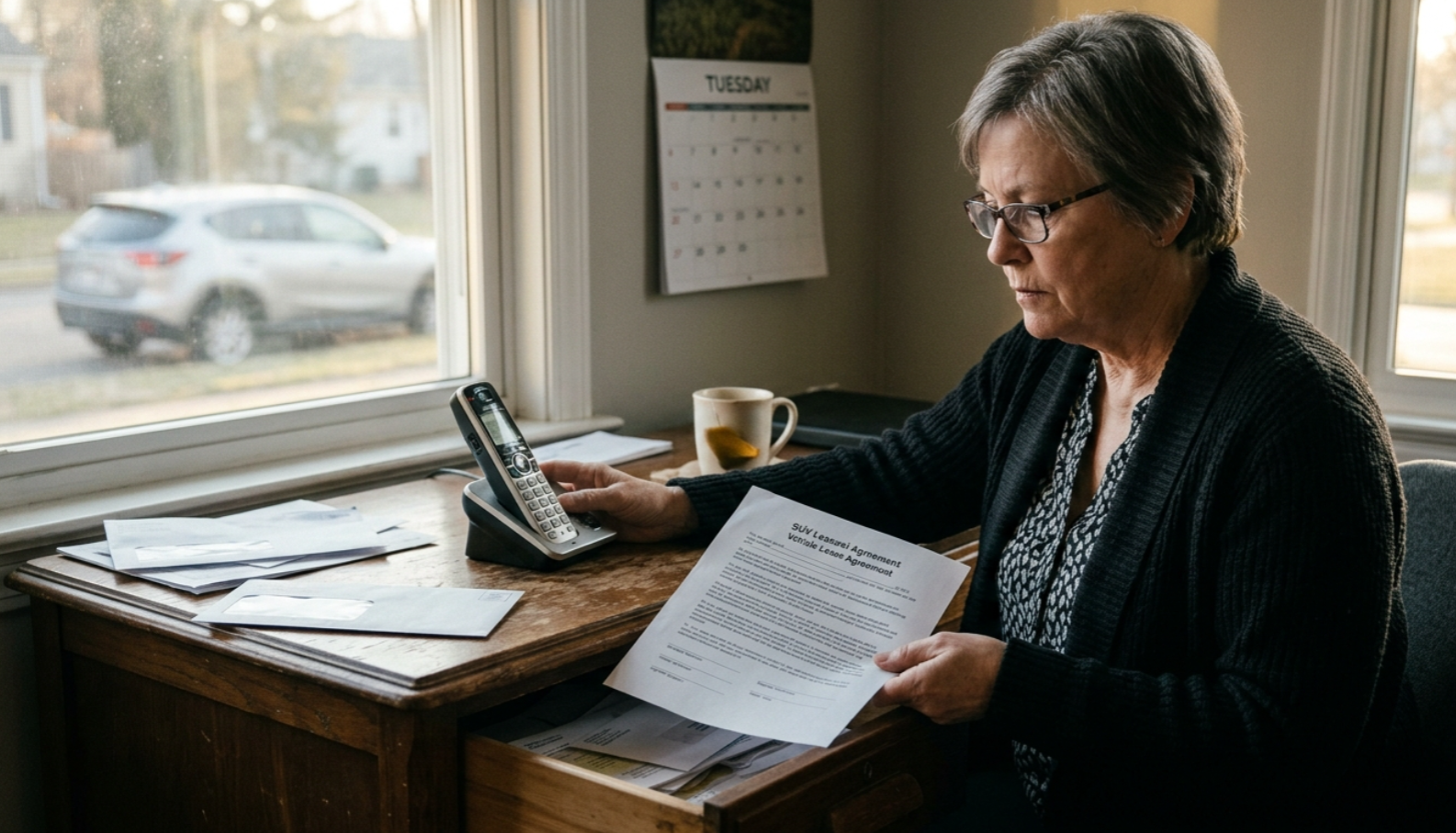
My Son Said “It’s Nothing Personal”—Then I Found Out What His Wife Had Been Hiding
PART 5
I didn’t drive home. I called the police from the hospital parking lot, and for the first time in my life, I was grateful that my years at the county assessor’s office had taught me one thing better than anything else: when something doesn’t add up, don’t touch it—document it.
I stayed in my locked car while officers arrived.
Grady came ten minutes later.
Alone.
Kelsey wasn’t with him.
He ran toward my car, but I held up my hand before he could open the door.
“Stop there.”
“Mom, please.”
“Is someone in my house?”
“I don’t know.”
“You told me someone was.”
“Kelsey told me.”
“Where is she?”
He looked away.
“She left.”
“Where?”
“I don’t know.”
That answer told me more than he intended.
The police searched the house.
No one was there.
Nothing appeared stolen.
The doors were intact.
The windows were locked.
But upstairs, one officer noticed something.
The attic hatch was open.
I had not opened that hatch in eleven years.
The officer climbed up.
A few minutes later, he called down.
“Ma’am?”
I looked up.
“There are boxes up here.”
“Mine?”
“Some of them.”
Then he paused.
“And there’s a file cabinet.”
I frowned.
“I don’t have a file cabinet in my attic.”
The officer climbed down carrying a thin folder.
“Then you should probably see this.”
I opened it.
Inside were copies of my tax returns.
Bank statements.
Property records.
Insurance documents.
And photographs of me.
Not family photographs.
Photographs taken from outside my house.
My hands began to shake.
“When were these taken?”
The officer pointed to dates written on the back.
Some were from months earlier.
Some from years earlier.
One was from three days ago.
Someone had been watching my house.
I looked at Grady.
He looked sick.
“Did you know about this?”
“No.”
I believed him.
For the first time that day, I believed him.
Then the officer found something else.
A small black envelope.
My name was written across the front.
KAREN M. WHITLOW
I opened it.
Inside was one sentence.
You were never supposed to look closely.
And beneath it was a photograph.
It showed Kelsey sitting at a restaurant with a man I recognized.
Nathan.
But the photograph was dated two years ago.
Long before Grady said he had met him.
The next morning, detectives interviewed me.
They asked about my finances.
My son.
Kelsey.
Nathan.
The SUV.
The unauthorized transactions.
I gave them everything.
Every document.
Every message.
Every payment.
Every memory I had.
Then one detective asked:
“Mrs. Whitlow, did you ever give Kelsey access to your financial records?”
“Yes.”
“How much?”
“Everything she asked for.”
He looked at me carefully.
“Why?”
I swallowed.
“Because she was my daughter-in-law.”
He nodded.
“And because I trusted my son.”
That sentence hurt more than anything else.
Not because I regretted helping him.
Because I finally understood the difference between helping someone and protecting them from the consequences of their choices.
I had crossed that line years ago.
By noon, Nathan’s condition had improved enough for investigators to speak with him.
His story was complicated.
He wasn’t a stranger.
He had met Kelsey through a medical equipment company.
She had approached him about financing a resale operation.
She borrowed money.
Then more money.
Then she started using Grady’s name.
When Grady discovered what she had done, he confronted her.
But by then, the debt was enormous.
Nathan had threatened legal action.
That’s when Kelsey changed tactics.
She told Nathan that Grady’s mother had millions in assets.
She showed him property records.
She told him I was wealthy enough to absorb the debt.
Nathan didn’t believe her.
So Kelsey used my identity.
She created accounts.
Submitted applications.
Transferred money.
And when someone questioned the transactions, she told them I was an elderly woman who didn’t understand online banking.
I was furious.
But there was something I still didn’t understand.
“Why did Nathan add his name to my son’s vehicle lease?”
The detective looked at me.
“He didn’t.”
“What?”
“He never authorized it.”
I felt cold.
“Then who did?”
The detective slid a document across the table.
“That’s what we’re trying to determine.”
The electronic authorization had been created from Kelsey’s phone.
But the IP address belonged to a public Wi-Fi network near the dealership.
Someone had deliberately tried to make it look as though Nathan was involved.
Nathan wasn’t trying to steal my son’s SUV.
He was trying to expose the person who was.
Three days later, Kelsey disappeared.
She didn’t answer her phone.
She didn’t return to the townhouse.
She didn’t contact Grady.
The police eventually found her at a motel two counties away.
She had two suitcases.
Three phones.
A laptop.
And copies of dozens of financial documents.
Including mine.
She was arrested.
Grady was devastated.
Not because she was arrested.
Because he finally saw the truth.
He had spent years believing he was protecting his wife.
In reality, he had been protecting the person who was destroying him.
The hardest conversation came afterward.
Grady came to my house alone.
He sat at my kitchen table.
The same table where I had signed checks for him.
The same table where I had once helped him fill out college applications.
He looked older.
“Mom?”
“Yes.”
“I owe you an apology.”
I didn’t answer.
“I thought you were controlling.”
“I know.”
“I thought every time you helped us, you were trying to control us.”
“I know.”
“I didn’t understand that you were trying to keep me from drowning.”
I looked at him.
“And I didn’t understand that by throwing you a rope every time, I was teaching you not to swim.”
His eyes filled.
“I lost everything.”
“No.”
He looked at me.
“You lost your wife.”
He nodded.
“You lost money.”
He nodded again.
“You lost trust.”
He lowered his head.
“But you didn’t lose everything.”
“What do I have left?”
“You have the chance to become someone who doesn’t need his mother to rescue him.”
He cried.
So did I.
But I didn’t give him a check.
I didn’t offer to pay his debts.
I didn’t offer another apartment.
I didn’t offer another car.
For the first time, I simply hugged my son.
And that was enough.
The SUV became the strangest part of the entire story.
The dealership gave me three options.
Return it.
Buy it.
Renew it.
I chose none of them.
I sold it.
The proceeds covered the legitimate expenses associated with the lease, and the remaining money went into an account Grady couldn’t access.
His name wasn’t on it.
Kelsey’s name wasn’t on it.
It was mine.
I told Grady:
“If you ever need help again, call me before you borrow money from someone else.”
He nodded.
“And if you ask me for money?”
“I’ll tell you no if giving it would hurt you.”
He smiled sadly.
“That might be the hardest thing you’ve ever done.”
“No.”
I smiled back.
“The hardest thing I’ve ever done was learning that being your mother doesn’t mean fixing every mistake you make.”
Months passed.
The investigation continued.
Kelsey eventually accepted responsibility for the financial fraud and identity theft charges.
Nathan cooperated with investigators.
The unauthorized accounts connected to my identity were closed.
My credit was repaired.
Every fraudulent transaction was documented.
And slowly, my life became quiet again.
One Saturday morning, I was drinking coffee when someone knocked on my door.
I expected Grady.
Instead, it was a delivery driver.
He handed me a small package.
No return address.
Inside was an envelope.
I opened it.
There was a photograph.
It was the old photograph from the attic.
Me.
Grady.
And Kelsey.
Taken at Grady’s wedding.
On the back, someone had written:
You were right to look closely.
There was no signature.
I stared at it for a long time.
Then I noticed something.
There was another envelope inside.
I opened it.
A handwritten note from Nathan.
Karen,
I owe you more than an explanation.
I spent a long time believing that exposing the truth would fix everything.
It didn’t.
But you did something I didn’t expect.
You gave your son the opportunity to tell the truth instead of protecting him from it.
That’s why he has a chance now.
And that’s why I believe you’ll be okay.
I folded the letter.
For once, I didn’t wonder what would happen next.
I knew.
A year later, Grady came to visit.
He had a new job.
A small apartment.
An old used car he had bought entirely with his own money.
He was paying his debts one month at a time.
He didn’t complain.
He didn’t ask me for anything.
He brought groceries.
Then he fixed the loose cabinet door in my kitchen.
Before leaving, he stood at the doorway.
“Mom?”
“Yes?”
“Can I come Sunday?”
I smiled.
“You don’t have to ask.”
He smiled.
“I know.”
Then he paused.
“But I want to.”
That sentence meant more to me than any apology.
Because once upon a time, my son had treated my home like a place he came to when he needed something.
Now he came because he wanted to see me.
That was the difference.
One evening, I found the original SUV lease renewal packet in the bottom drawer.
Unsigned.
I held it for a moment.
Then I tore it in half.
Not because I was angry.
Not because I wanted revenge.
But because it represented something I no longer wanted to carry.
The belief that love meant paying for everything.
The belief that saying no meant abandoning someone.
The belief that a mother had to save her child from every consequence.
I threw the pieces away.
Then I made myself another cup of coffee.
I sat by the window.
My house was quiet.
My money was mine.
My name was mine.
My life was mine.
And for the first time in years, helping my son didn’t mean carrying him.
It meant standing beside him while he learned to carry himself.
I smiled when my phone buzzed.
A text from Grady.
“Sunday dinner? I’ll cook.”
I typed back:
“You’re cooking?”
Three dots appeared.
“Don’t worry. I watched six videos.”
I laughed.
And for the first time since that Tuesday phone call, I realized something.
The SUV had never been the real story.
The money wasn’t the real story either.
The real story was what happened when a mother finally stopped confusing sacrifice with love.
I had spent years giving my son everything I thought he needed.
Then, when I finally stopped giving, I discovered something far more valuable.
He learned how to stand on his own.
And I finally learned how to let him.