Part 3
A second folder opened on the screen.
Advertisement
This time, it wasn’t just video. It was financial records, encrypted emails, and offshore transfers—clean, precise, and devastating.
Julian Vance hadn’t just stolen from me. He had been using Vance Medical Technologies as a laundering pipeline for years. Fake clinical trials. Ghost patients. Fraudulent device approvals pushed through private hospitals in exchange for silent kickbacks.
And Nora wasn’t just a mistress.
She was inside the system.
Advertisement
Her name appeared repeatedly in internal communications—approvals, signatures, compliance bypass requests. Always under different titles. Always just close enough to legality to avoid scrutiny.
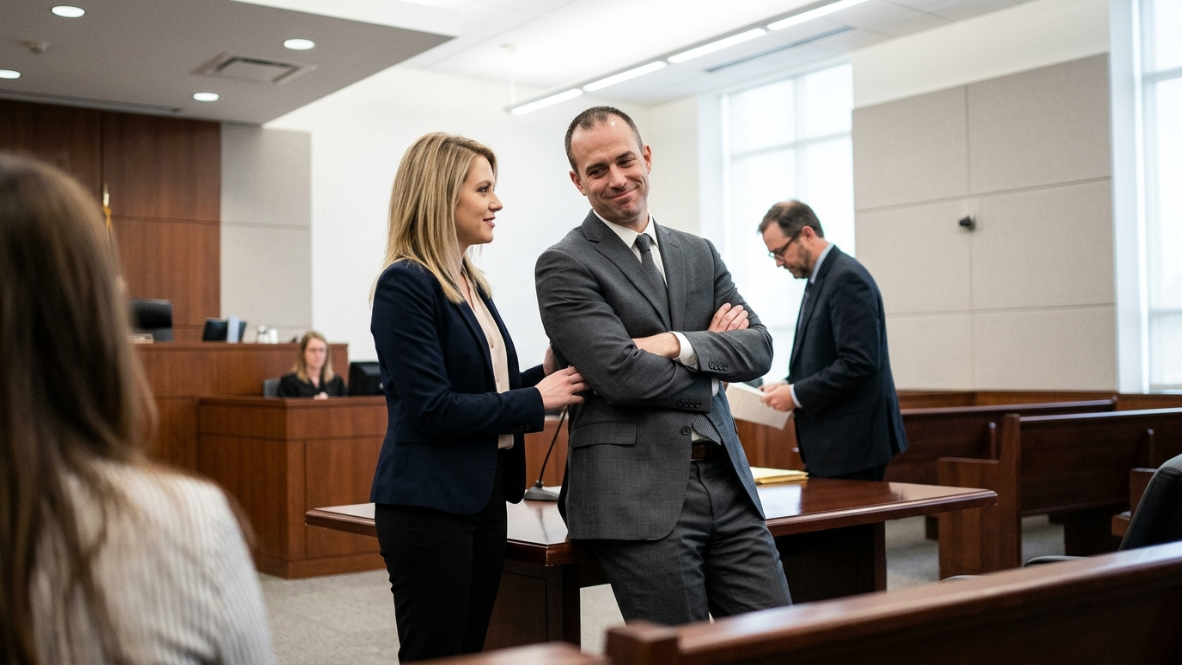
The murmurs in the courtroom grew louder.
A journalist in the back row stood up instinctively before being forced back down by security.
Julian finally snapped.
“This is forged!” he shouted. “She built this! She’s been planning this since the beginning!”
I stepped forward slightly.
“No,” I said quietly. “You built it. I just stopped pretending not to see it.”
For the first time, Nora looked at Julian instead of the floor.
“You said this was safe,” she whispered.
Julian turned on her instantly. “Shut up.”
But it was too late. The way he said it—cold, sharp, dismissive—changed something in her expression. Fear gave way to calculation.
Marcus pressed a button.
A new file appeared.
“Your Honor,” Marcus said, “this next part was obtained through court-authorized digital recovery. It includes communications between Mr. Vance, Ms. Nora Ellis, and an external entity tied to ongoing federal investigations.”
Julian’s breathing changed.
He knew that part.
The screen showed messages.
Not just business fraud—but discussions about me.
My name appeared again and again.
“She trusts you completely. That’s why it works.”
“If she signs the secondary asset release, we can finalize everything.”
“Keep her stable. Don’t push too hard yet.”
Then a voice recording played.
Julian’s voice filled the courtroom.
Soft. Calm. Intimate.
“She won’t resist. She never does. People like Iris… they don’t fight back. That’s why I chose her.”
A sound escaped the room—not a gasp this time, but a collective shift. Something heavier. Recognition of cruelty too precise to deny.
The judge removed his glasses slowly.
“This court is now adjourned for emergency review,” he said. “And I am issuing a temporary freeze on all Vance assets pending federal transfer of evidence.”
Julian finally lost control.
“You can’t do this!” he shouted, stepping forward. “She’s nothing without me!”
That’s when I spoke again.
My voice was quieter than his—but it cut deeper.
“I was nothing with you.”
Silence.
Even Nora didn’t move.
Julian looked at me like he was seeing something unfamiliar. Not the woman he thought he broke. Not the wife he thought he owned.
Something else.
Something finished.
Two weeks later, the headlines didn’t use my name as a footnote anymore.
They called it The Vance Collapse Case.
Julian was taken into federal custody during a sealed hearing. Nora disappeared from public records before charges fully surfaced—her cooperation agreement filed quietly, without ceremony or mercy.
The company board dissolved itself within forty-eight hours.
But none of that was what I remembered most.
It was the silence after everything ended.
The first morning I woke up without checking if someone was going to punish me for breathing.
Marcus called me that afternoon.
“It’s done,” he said. “You’re clear.”
I looked out of the window of my small temporary apartment. No mansion. No guards. No glass walls filled with trophies I was never allowed to touch.
Just light.
“Not clear,” I replied softly. “Free.”
And for the first time in a very long time, there was no one left in my life who could turn that word into a threat.
Freedom, I learned, is not loud.
It doesn’t arrive with celebration. It doesn’t come with music or applause. It comes quietly, like an empty room after a storm—where you’re not sure if you should sit down or run.
For the first three days after the court decision, I barely slept.
Every time I closed my eyes, I saw the courtroom again.
Julian’s face.
The screen.
The silence before everything broke.
And then I would wake up in my small rented apartment, staring at a ceiling that did not belong to him, and remind myself: It’s over. It’s real. It’s finally over.
But trauma doesn’t believe in endings.