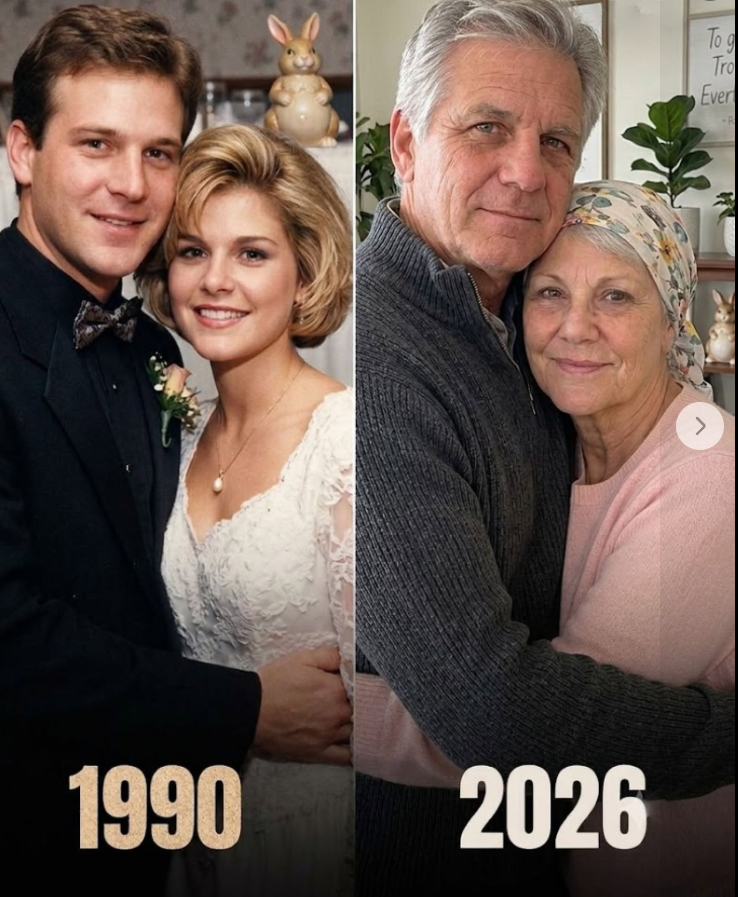
My wife, Doreen, and I had been married for thirty-six years when the doctor told us her cancer had spread too far for treatment to help anymore. He spoke carefully, pausing between sentences as if softer words might somehow make the truth easier to hear, but there was only one thing I understood clearly.
We were running out of time.
During the final week of her life, I barely left her hospital room. I slept in the chair beside her bed, ate whatever our daughter brought from the cafeteria, and spent hours holding Doreen’s hand while the machines around us filled the silence with their steady sounds.
One evening, after sleeping most of the afternoon, she opened her eyes and looked at me.
“Russell, I need you to promise me something.”
I moved closer to the bed and took her hand between both of mine.
“Anything, Doreen. You know that.”
Her expression changed then. There was fear in her eyes, but also something else I couldn’t understand at the time.
“Find Sylvia,” she whispered. “Please find her.”
For several seconds, I honestly believed I had misheard her.
“Sylvia?”
Doreen nodded slowly.
“You’ll understand once you find her. And when you do, please try to forgive me.”
I stared at my wife, completely confused.
Sylvia had been my first love.
I hadn’t seen her in almost forty years.
“Doreen, what are you talking about? Why would I need to find Sylvia? What am I supposed to forgive you for?”
She closed her eyes and shook her head.
“I can’t explain it properly anymore. Just promise me you’ll look for her.”
Before I could question her further, a nurse came in and gently reminded me that Doreen needed to rest. I told myself there would be another opportunity to ask.
There wasn’t.
Three days later, my wife died.
For the first few weeks, grief swallowed everything else.
The house felt strangely empty, even though nothing in it had changed. Doreen’s slippers were still beside the bed. Her reading glasses were still on the kitchen counter, next to a half-finished crossword puzzle. A grocery list remained attached to the refrigerator with a magnet.
Milk. Apples. Coffee.
Ordinary things written by someone who had expected to be alive long enough to need them.
Our daughter, Taryn, came over almost every day. She was thirty-seven, married, and had two children of her own, but she still worried about me the way Doreen always had.
“Dad, come stay with us for a while. You shouldn’t be alone here.”
I kept telling her I was fine, though neither of us believed it.
As painful as losing Doreen was, one thing refused to leave my mind.
Find Sylvia.
Please forgive me.
Eventually, I realized that if I ignored Doreen’s final wish, I would spend the rest of my life wondering what she had been trying to tell me.
Sylvia and I had met in college when we were both twenty.
She was studying education, and I was finishing an engineering degree. We were young enough to believe love could solve almost anything, and for a while, I thought it would.
During our final year, I proposed.
Sylvia said yes.
Then I received a job offer three states away. It was a good opportunity, and I assumed we would move together once we married.
Instead, two weeks before I was supposed to leave, Sylvia sent me a letter.
She told me she couldn’t follow me.
She said she wasn’t ready to leave her family and asked me not to come looking for her.
I was devastated.
For months afterward, I went through every conversation we’d ever had, trying to understand how a woman who had promised to marry me could suddenly decide she no longer wanted the future we’d planned.
About a year later, I met Doreen through my mother.
Doreen knew I had been hurt before, but she never pushed me to talk about Sylvia. She simply stayed close enough that, over time, my life stopped feeling like it had ended.
Eventually, I fell in love with her.
Doreen told me early in our relationship that she couldn’t have children. I accepted it without hesitation, and a few years after we married, she suggested adoption.
That was how Taryn came into our lives.
She was only six weeks old when we brought her home.
I still remembered standing beside her crib that first night, terrified by how tiny she was. Doreen had slipped her arm through mine and whispered, “She’s ours now.”
And she had been ours in every way that mattered.
Birthday parties.
School plays.
Broken bones.
Teenage arguments.
College graduation.
Her wedding.
Then our grandchildren.
Never once had I considered Taryn anything other than my daughter.
About three weeks after Doreen’s funeral, I began searching for Sylvia.
It wasn’t easy.
Eventually, an old college friend gave me the married name of Sylvia’s sister. One call led to another until I finally got a phone number.
I stared at it for nearly an hour before dialing.
A woman answered.
“Hello?”
Even after almost four decades, I recognized her voice.
“Sylvia?”
There was a long silence.
“Russell?”
We spoke awkwardly for a few minutes before I finally told her why I had called.
“Doreen died a few weeks ago.”
“I’m sorry,” Sylvia said quietly.
“Before she died, she asked me to find you.”
Another silence followed.
This one felt heavier.
“Did she?”
“Yes. She said I’d understand everything once I found you.”
Sylvia took a slow breath.
Then she gave me her address.
“Come Saturday. I think this is something we should discuss in person.”
The drive took nearly four hours.
When I finally reached her house, I sat in the car for almost forty minutes, asking myself what kind of man visited his first love so soon after burying his wife.
Eventually, I forced myself to knock.
Sylvia opened the door.
Her hair was silver now, and the face I remembered had softened with age, but I knew immediately that it was her.
What struck me most were her eyes.
Green.
They seemed strangely familiar in a way that had nothing to do with my memories of college, though at the time I couldn’t understand why.
She stepped aside.
“Come in, Russell. I think you’d better sit down.”
We sat at her kitchen table while she poured coffee. Neither of us drank much of it.
After a few uncomfortable minutes, I finally asked the question that had brought me there.
“Why did Doreen send me to you?”
Sylvia lowered her eyes.
“Because what you believe happened between us isn’t what actually happened.”
My stomach tightened.
“What do you mean?”
“I didn’t leave you because I was afraid to move away.”
I stared at her.
“That’s exactly what your letter said.”
“I know. I wrote it because your mother came to see me.”
For a moment, I thought she had to be mistaken.
“My mother?”
“Bernice came to my apartment not long after you proposed.”
My mother had spent most of her life being admired by everyone in our town. She volunteered at church, organized charity drives, and brought meals to neighbors whenever anyone was sick.
“What did she want from you?”
“She wanted me gone.”
Sylvia explained that my mother believed her family wasn’t respectable enough for mine. Her father had struggled financially, and her younger brother had gotten into trouble more than once.
“She told me that if I married you, I’d ruin your future. Then she said your uncle could make sure my father lost his job.”
I frowned.
“She couldn’t have done that.”
Sylvia held my gaze.
“Your uncle owned the company where my father worked.”
That ended my argument.
Sylvia continued.
“She also made it clear that if I told you what she had done, things could get worse for my family. I was twenty, Russell. I was scared, and I believed she had the power to do exactly what she threatened.”
“So you wrote the letter.”
She nodded.
“I cried through the whole thing.”
I felt as though the floor had shifted beneath me.
For almost forty years, I had believed Sylvia simply hadn’t loved me enough to stay.
“Why didn’t you tell me later?”
Her face changed.
“Because there was something else.”
I waited.
Three words changed everything.
“I was pregnant.”
For several seconds, I couldn’t understand what she had said.
“What?”
“I found out about three weeks after you left.”
I stared at her.
“You were carrying my child?”
“Yes.”
My hands began shaking.
“What happened?”
Sylvia looked down at the table.
“I gave her up for adoption.”
I stood so quickly my chair scraped against the floor.
“You had my daughter and never told me?”
“I tried.”
“How?”
“I went to your mother’s house because I thought maybe the baby would make her change her mind. I asked for your address and phone number, but she refused to give me either.”
Sylvia wiped her eyes.
“She told me you’d already moved on.”
“With who?”
She hesitated.
“Doreen.”
I sat down again.
“I barely knew Doreen then.”
“I know that now. At the time, I believed what your mother told me.”
I struggled to breathe normally.
Sylvia had been twenty years old, pregnant and alone, while I had been building a new life several states away without knowing any of it.
Then she said something even worse.
“Doreen knew part of the truth.”
My head snapped toward her.
“What are you talking about?”
“The last time I went to your mother’s house, Doreen was there.”
“No.”
“She had stopped by to drop something off. Your mother thought she had already left, but she was still in the next room. She heard us arguing.”
I shook my head.
“You’re mistaken.”
“I’m not. Years later, Doreen found me through my sister and wrote to me herself.”
I could barely speak.
“What did she say?”
“That she was sorry. She said she should have told you what she’d heard, but she was afraid that if you knew the truth, you would come looking for me.”
The room seemed to tilt.
My knees weakened so suddenly that I had to grip the table.
“Did she know about the pregnancy?”
“Not at first. I think she learned later.”
I left Sylvia’s house with more questions than answers.
During the entire drive home, one thought stayed with me.
Doreen hadn’t asked me to forgive Sylvia.
She had asked me to forgive her.
The following morning, I went to my mother’s old house.
After she died, my sister and I had never completely cleared the attic, and I spent hours opening boxes filled with old receipts, church programs, photographs, and tax records.
Eventually, beneath a stack of quilts, I found a small metal box.
Inside were letters between my mother and a woman who appeared to have helped arrange private adoptions.
The first few confirmed everything Sylvia had told me.
My mother knew where she had been staying during the pregnancy.
She knew when the baby was born.
She knew Sylvia still wanted to contact me.
Then I found another letter.
A couple had expressed interest in adopting Sylvia’s baby.
The woman’s name was Doreen.
I read the line three times.
My hands went numb.
I searched through the remaining papers until I found a document with the baby’s date of birth.
The date looked familiar.
Too familiar.
I opened my phone and checked Taryn’s birthday.
They were the same.
I sat on the attic floor for several minutes before I could move.
Suddenly, Sylvia’s green eyes made sense.
Taryn had those same eyes.
The daughter Doreen and I had adopted thirty-seven years earlier was not simply my adopted child.
She was my biological daughter.
Mine and Sylvia’s.
The next morning, I drove back to Sylvia without calling.
When she opened the door and saw the papers in my hand, her face changed immediately.
“What happened?”
“Our daughter isn’t missing.”
She stared at me.
“What do you mean?”
“We raised her.”
Sylvia stopped breathing for a moment.
“Russell…”
“Her name is Taryn. The baby you gave up became the daughter Doreen and I adopted.”
Sylvia covered her mouth.
Then she slowly sat down.
For several minutes, she couldn’t speak.
When she finally did, her first question wasn’t about Doreen or my mother.
“Is she happy?”
I nodded.
“Yes. She has a good life.”
“Is she married?”
“Yes.”
“Children?”
“Two.”
Sylvia’s face crumpled.
“I’m a grandmother.”
“Yes.”
A few days later, I went to Taryn’s house with the letters and documents.
She took one look at me and knew something was wrong.
“Dad, you’re scaring me.”
“I need to tell you something about your adoption.”
I explained everything as carefully as I could.
My mother.
Sylvia.
The pregnancy.
The private adoption.
Doreen’s involvement.
When I finished, Taryn sat silently for a long time.
Then she looked at me.
“So you’re my biological father?”
“Yes.”
“And Sylvia is my biological mother?”
“Yes.”
Her eyes filled with tears.
“Mom knew?”
That was the hardest question.
“Yes.”
Taryn stood and walked toward the window.
“Did she only adopt me because of you?”
“No.”
I answered immediately.
“Whatever mistakes your mother made before you came into our lives, she loved you completely. I watched her love you every day for thirty-seven years.”
Taryn began crying.
“I don’t know how I’m supposed to feel about any of this.”
“Neither do I.”
She wiped her face.
“Does Sylvia want to meet me?”
“More than anything.”
After another long silence, Taryn nodded.
“I want to meet her too.”
Several days later, I stood in Sylvia’s living room while my daughter met her biological mother for the first time.
Neither woman seemed to know how to begin.
Then Taryn looked closely at Sylvia’s face and laughed softly through her tears.
“So that’s where my eyes came from.”
Sylvia began crying.
She reached toward Taryn but stopped halfway, as if she wasn’t sure she had the right.
Taryn closed the distance herself.
Watching them hold each other was one of the most painful and beautiful moments of my life.
I still loved Doreen.
Learning the truth didn’t erase thirty-six years of marriage. It didn’t erase the nights she cared for me when I was sick, the way she supported me after my father died, or the love she gave Taryn and our grandchildren.
But loving someone doesn’t mean pretending their mistakes never happened.
For decades, my mother and my wife had both decided that hiding the truth was better than allowing the rest of us to choose what to do with it.
In the end, Doreen must have understood that.
Her final gift wasn’t sending me back to an old romance.
It was giving Sylvia, Taryn, and me the truth she had been too afraid to give us while she was alive.
I don’t know whether I have fully forgiven her yet.
Maybe forgiveness after thirty-six years of love and one terrible secret isn’t something that happens in a single moment.
But now, when Taryn sends Sylvia photographs of the grandchildren she never knew she had, I sometimes think about Doreen lying in that hospital bed and squeezing my hand.
“Please forgive me.”
I’m still trying.
At least now I understand what she was asking me to forgive.
THE END