
PART 2 — THE NAME ON THE DEED
“The first name is Michelle Anne Dunn.”
For a second, I thought I had misunderstood her.
“Mine?”
“Yes, ma’am.”
My hand tightened around the phone.
“And the second?”
Ms. Farrow hesitated.
Then she said it.
“Shane Michael Dunn.”
My brother.
I leaned against the hallway wall.
“That doesn’t make sense.”
“I assumed you might say that.”
“My mother told me the house was in her name.”
“It isn’t.”
“She gets the mortgage statements.”
“That doesn’t make her the owner.”
“She signed everything.”
“She signed some documents at closing,” Ms. Farrow said carefully. “But according to the recorded deed, you and your brother received title jointly.”
I stared through the glass wall at my coworkers moving around the office.
Everything looked normal.
Someone laughed near the copier.
A phone rang.
My manager walked past carrying coffee.
Meanwhile, nine years of my life had just tilted sideways.
“I paid the down payment,” I said.
“I understand.”
“I’ve paid every mortgage payment.”
“I understand.”
“Shane hasn’t paid anything.”
“That is something you should document.”
I closed my eyes.
“Why would my mother tell me the house was hers?”
“I can’t answer that.”
“Why would Shane file paperwork saying she owns it?”
“I can’t answer that either.”
But her voice told me something.
She had an opinion.
“Ms. Farrow.”
“Yes?”
“You said Shane may have known about this for nine years.”
“I said the second grantee appears to have known.”
“How?”
Another pause.
“There is an acknowledgment attached to the original closing file.”
“What kind of acknowledgment?”
“One confirming receipt of the deed.”
“Signed?”
“Yes.”
“By Shane?”
“Yes.”
My stomach dropped.
“Can you send it to me?”
“I can provide copies of the public record. For the closing-file documents, I need you to come in and verify your identity.”
“When?”
“Today, if possible.”
I looked at the clock.
10:23.
“I’ll be there at lunch.”
“Bring identification.”
She started to hang up.
“Wait.”
“Yes?”
“Do not process the transfer.”
“I already placed a hold on it.”
“Can my mother remove me from the deed?”
“Not by herself.”
“Can Shane?”
“Not by himself.”
“Can anybody sell this house without my signature?”
“Based on what I’m seeing, no.”
For the first time since Mom told me I had to leave, I smiled.
It wasn’t happiness.
Not yet.
It was the feeling you get when somebody has been pushing you backward in the dark and your heel suddenly finds solid ground.
At 12:04, I walked into the title company.
Ms. Farrow was older than I expected, maybe sixty, with silver hair and red glasses.
She led me into a small conference room and placed a folder on the table.
“Before we begin,” she said, “I need to be clear. I’m not your attorney.”
“I understand.”
“You may need one.”
That wiped away my smile.
She opened the folder.
The deed was on top.
I had seen documents like it before, but back then I had been thirty-five, newly divorced, exhausted, and terrified that my daughter and I were going to end up in an apartment I couldn’t afford.
Nine years earlier, Mom had sat beside me at the closing table.
She kept rubbing my back.
Don’t worry about the paperwork, honey.
I’ve got you.
I remembered those words perfectly.
Ms. Farrow turned the deed toward me.
There it was.
MICHELLE ANNE DUNN AND SHANE MICHAEL DUNN.
I read it three times.
“Why is Shane on it?”
“I don’t know.”
“I put down forty-eight thousand dollars.”
She flipped to another page.
“I noticed something else.”
A cashier’s check.
$48,000.
Purchaser contribution.
My name.
Then she placed another document beside it.
It was a handwritten instruction sheet from the closing file.
I recognized my mother’s handwriting before I even read it.
PLEASE TITLE PROPERTY TO BOTH CHILDREN.
MICHELLE DUNN AND SHANE DUNN.
Equal ownership.
My throat went dry.
“She did this.”
“It appears so.”
“But she never told me.”
Ms. Farrow didn’t answer.
“She told me it was in her name because my credit was bad.”
I laughed once.
It sounded ugly.
“My credit wasn’t even bad.”
That realization came slowly.
My divorce had hurt me financially, but I had a job.
Savings.
No bankruptcy.
No foreclosure.
Mom had simply said it so many times that I accepted it.
Ms. Farrow pulled out another page.
“This is the acknowledgment I mentioned.”
Shane’s signature was at the bottom.
Dated nine years ago.
He had received a certified copy of the deed.
He knew.
All nine years.
Every Thanksgiving when he joked that I was “still living with Mom.”
Every Christmas when Misty asked when I planned to “get my own place.”
Every time Shane called me irresponsible.
Every time Mom said my brother helped with the house.
He knew.
And he let me pay.
“Does this show how much he paid?”
“No.”
“Can you see if he contributed at closing?”
“The settlement statement shows your forty-eight-thousand-dollar contribution. I don’t see a contribution from him.”
I looked at her.
“So he got half a house for nothing.”
“I can only tell you what these records show.”
Half a house.
For nothing.
And now he wanted the other half.
I photographed every page.
Then I asked for certified copies.
When I returned to work, I did something I should have done nine years earlier.
I opened every bank statement I could access.
Mortgage.
Property taxes.
Homeowner’s insurance.
Repairs.
The new water heater.
Roof work.
Plumbing.
The refrigerator Mom insisted had to be replaced because the old one “embarrassed her.”
By three o’clock, I had a spreadsheet.
By four, I felt sick.
I had paid more than $196,000 toward the house over nine years, not including groceries, utilities, and repairs.
Shane’s contribution that I could identify was exactly zero.
Then I remembered my daughter’s text.
Grandma’s card got declined at the gas station.
She says it’s you.
I called Mom.
She answered on the second ring.
“What did you do to my debit card?”
No hello.
No how are you.
Just accusation.
“Nothing.”
“Don’t lie to me, Michelle.”
“I’m not.”
“The bank froze it.”
“Call the bank.”
“I did. They said there were suspicious charges.”
“What charges?”
Silence.
“Mom?”
“I don’t know.”
“How much?”
“That’s private.”
“You accused me of doing it.”
“Well, who else?”
I almost said Shane.
Instead I looked at the deed beside my keyboard.
“Are we still meeting Sunday?”
“Yes.”
Her voice hardened.
“And I expect you to come prepared to be reasonable.”
“I will.”
“Shane has children.”
“I know.”
“You have to stop thinking only about yourself.”
I looked at the spreadsheet showing nine years of mortgage payments.
“Mom?”
“What?”
“Did Dad really say Shane should have the house?”
She went quiet.
It lasted only two seconds.
But I heard it.
“Of course he did.”
“When?”
“Before he died.”
“Where?”
“What does that matter?”
“Just wondering.”
“He was in the hospital.”
That was interesting.
Dad died eleven years ago.
The house was bought nine years ago.
He had never seen it.
Never discussed it.
Never known we would own it.
But somehow Mom had been using his dead voice to justify giving it away.
“All right,” I said.
“That’s all you have to say?”
“For now.”
I hung up.
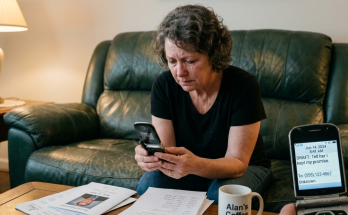
At 5:12, Shane texted me.
SUNDAY 2 PM. BRING YOUR BANK STATEMENTS. MOM WANTS PROOF OF EVERYTHING YOU’VE TAKEN FROM HER.
I read it twice.
Then I typed:
I’ll bring everything.
Three dots appeared.
Good.
I put my phone down.
At home that evening, Mom was sitting at the kitchen table when I walked in.
She had arranged three grocery receipts in front of her like evidence in a murder trial.
My daughter was upstairs.
“I bought groceries last week,” Mom said.
“Okay.”
“You ate some.”
“Probably.”
“That is the kind of thing we’re going to discuss Sunday.”
I set my purse on the chair.
“How much do I owe you for the yogurt?”
Her eyes narrowed.
“Don’t get smart.”
“I’m asking.”
“This attitude is exactly why Shane is worried about me.”
I stopped.
“Worried about you?”
“He thinks you’ve taken advantage.”
“For nine years?”
“Yes.”
I almost laughed.
Instead, I poured myself a glass of water.
Mom watched me.
“You should start packing.”
“I’m not packing.”
Her face changed.
Not dramatically.
Just enough.
“Excuse me?”
“I said I’m not packing.”
“This is my house.”
I looked straight at her.
It was the first time in nine years that the sentence didn’t make me shrink.
“Sunday,” I said.
“What about Sunday?”
“We’ll talk about the house Sunday.”
“I’m telling you now.”
“And I’m telling you Sunday.”
She stood.
“Michelle, if you make your brother involve a lawyer—”
“I think lawyers are a good idea.”
She stopped.
That one landed.
Her face lost color.
“What have you done?”
There it was.
Not What do you mean?
Not Why would we need lawyers?
What have you done?
I drank my water.
“Nothing.”
“Did you call somebody?”
“I got a phone call today.”
Mom’s fingers tightened around the back of the chair.
“From who?”
I smiled.
“I’ll tell you Sunday.”
She followed me halfway to the stairs.
“Michelle.”
I kept walking.
“Michelle!”
I went into my room and closed the door.
Then I locked it.
Ten minutes later, someone tried the handle.
Once.
Twice.
I didn’t say anything.
My phone buzzed.
Mom.
I ignored it.
Then Shane.
I ignored that too.
At 7:41, another number called.
Unknown.
Normally I wouldn’t answer.
That night, I did.
“Ms. Dunn?”
“Yes?”
“This is Aaron Bell with First County Bank’s fraud department. Your mother gave us permission to contact you because your name appears on several historical transfers connected to her account.”
I sat down.
“My name?”
“Yes. We’re reviewing activity after she reported her debit card compromised.”
“I didn’t use her card.”
“I’m not calling about the debit card.”
My stomach tightened.
“What are you calling about?”
“Recurring transfers.”
“How much?”
He hesitated.
“We’re still reviewing them.”
“Transfers to who?”
“I can’t disclose information from another customer’s account without authorization.”
“Then why are you calling me?”
“Because several transfers appear to have been labeled with your name.”
I stopped breathing for a second.
“My name how?”
He read one.
MICHELLE HOUSE PAYMENT.
Another.
MICHELLE EXPENSE.
Another.
MICHELLE LOAN.
I stood up.
“I never received money from my mother.”
“That is why I’m calling.”
“How much are we talking about?”
“I can’t give you a final number yet.”
“Give me an approximate number.”
Another pause.
“Over the period we can currently see, more than seventy thousand dollars.”
I gripped the edge of my dresser.
“Seventy thousand dollars went where?”
“That’s what we are determining.”
“But it didn’t go to me.”
“If what you’re telling me is correct, no.”
“Who received it?”
“I need additional authorization before discussing the destination account.”
I already knew.
Or at least I thought I did.
“Was it Shane?”
“I cannot confirm that.”
His careful tone confirmed more than the words did.
“What happens now?”
“We’ll continue reviewing.”
“Can you send me something showing my name was used?”
“With your mother’s authorization, yes.”
“Good luck getting that.”
He was quiet.
Then he said, “Ms. Dunn, there is one other reason I called.”
“What?”
“One of the transfers occurred this morning.”
My skin went cold.
“This morning?”
“Yes.”
“How much?”
“Twenty-two thousand dollars.”
I sat down again.
“From Mom’s account?”
“Yes.”
“Labeled as what?”
He inhaled.
“Michelle relocation expense.”
I laughed.
I couldn’t help it.
Someone had moved twenty-two thousand dollars out of my mother’s account that morning and put my name on it.
The same morning Mom told me I had to leave.
The same week Shane filed paperwork claiming Mom owned our house.
The same week they decided I owed them money.
They weren’t just trying to throw me out.
They were building a story.
A paper story.
One where I was the daughter who lived free for nine years.
The daughter who drained her elderly mother’s account.
The daughter who had to be removed before she took anything else.
And on Sunday, they planned to put that story in writing.
“Aaron,” I said.
“Yes?”
“Please document that I told you tonight I did not authorize or receive that money.”
“I already have.”
“Thank you.”
After we hung up, I sat in the dark for several minutes.
Then my daughter knocked softly.
“Mom?”
“Come in.”
She stepped inside carrying her laptop.
“Grandma’s downstairs talking to Uncle Shane.”
I looked at the time.
8:16.
“He’s here?”
“No. On video.”
She closed the door.
“I heard my name.”
“What did they say?”
She looked nervous.
“Grandma told him you know something.”
Of course she did.
“What else?”
My daughter swallowed.
“Uncle Shane said, ‘Then we need her signature before Sunday.’”
The room went very still.
“What signature?”
“She didn’t say.”
Then my daughter handed me her laptop.
“But I think I know.”
On the screen was a photograph.
A document.
My daughter had taken the picture that afternoon because she found the paper sitting on the printer downstairs.
At the top were the words:
FAMILY OCCUPANCY AND FINANCIAL SETTLEMENT AGREEMENT.
Halfway down the page was my name.
At the bottom was a signature line.
MICHELLE ANNE DUNN.
But that wasn’t what made my blood turn cold.
Beside the unsigned line was a yellow sticky note in my brother’s handwriting.
Mom had kept enough of his birthday cards over the years for me to recognize it immediately.
GET HER TO SIGN BEFORE SHE SEES DEED.
I stared at those seven words until they blurred.
My daughter whispered, “What deed?”
I closed the laptop.
“The reason we’re not going anywhere.”
Downstairs, Mom laughed at something Shane said.
The sound traveled through the vent like everything in our house was still normal.
It wasn’t.
I opened my closet and pulled down an old fireproof box where I kept my divorce papers, my daughter’s birth certificate, tax returns, and the documents I had been too tired to understand nine years earlier.
I spread everything across the bed.
At 9:03, I found something.
An envelope from the original closing.
Still sealed.
My name was written across the front.
Not in Mom’s handwriting.
Dad’s.
I stared at it.
That was impossible.
Dad had been dead for almost two years when we bought the house.
I turned the envelope over.
The seal had never been broken.
On the front, underneath my name, were six words:
FOR MICHELLE — WHEN CAROL TRIES IT.
Carol was my mother.
My daughter stared at me.
“Grandpa wrote that?”
I couldn’t answer.
Because inside the envelope was something hard.
Something shaped like a key.
And suddenly, the deed wasn’t the biggest secret in the house anymore…………..
TO BE CONTINUED IN PART 3…
PART 3 — THE KEY MY FATHER LEFT BEHIND
I held the envelope like it might explode in my hands.
My daughter sat beside me on the bed, staring at my father’s handwriting.
FOR MICHELLE — WHEN CAROL TRIES IT.
“Mom,” she whispered, “what does that mean?”
“I don’t know.”
But that wasn’t completely true.
I knew one thing.
My father had expected my mother to do something.
Something bad enough that he had prepared for it before he died.
I slid my finger beneath the flap.
The paper tore softly.
Inside was a small brass key taped to a folded letter.
And underneath the letter was a business card.
HOLLAND & REEVES
ESTATE AND PROPERTY LAW
On the back, Dad had written a name.
THOMAS REEVES.
Below it:
HE HAS EVERYTHING.
My heart started pounding.
I unfolded the letter.
Michelle,
If you are reading this, your mother has probably tried to convince you that something belonging to you belongs to somebody else.
I stopped.
My daughter leaned closer.
“Keep reading.”
I did.
You have always believed people longer than they deserved because you think love means giving people another chance.
Your mother knows that.
So does your brother.
I swallowed hard.
Dad had known me better than I wanted to admit.
There are things about our family finances I should have told you while I was alive.
I didn’t because I kept believing I could fix them quietly.
That was my mistake.
Do not repeat it.
If Carol ever tries to remove you from a home, property, account, or inheritance that you believe I intended for you, take the enclosed key to Thomas Reeves.
Do not give the key to Carol.
Do not give it to Shane.
And most importantly, do not sign anything they place in front of you.
My daughter and I looked at each other.
Downstairs, Mom’s voice floated through the floor.
She was still talking to Shane.
I continued reading.
There is a safe-deposit box.
Thomas will know where.
The key opens it.
Everything inside belongs to you.
If Carol tells you otherwise, ask her what happened on March 17.
I froze.
March 17.
No year.
No explanation.
Just a date.
The letter continued.
When you know what happened that day, you will understand why I arranged the property the way I did.
I am sorry I was not brave enough to tell you myself.
Dad.
I read the last sentence three times.
My eyes burned.
My father had been gone eleven years.
I had spent most of that time remembering him as the quiet one.
The parent who avoided arguments.
The parent who disappeared into the garage whenever Mom and Shane started fighting.
I had always thought he was weak.
Now I wondered whether he had been quietly preparing something none of us understood.
My daughter touched the key.
“Are you going to call that lawyer?”
I looked at the clock.
9:19 p.m.
“Tomorrow morning.”
Then I heard footsteps outside my room.
Mom.
I shoved the letter, card, and key into the fireproof box just as the doorknob turned.
Locked.
“Michelle?”
I said nothing.
She knocked.
“Michelle, open the door.”
“What?”
“We need to talk.”
“Tomorrow.”
“No. Now.”
I looked at my daughter.
She shook her head.
“Mom, I’m tired.”
“You weren’t too tired to make phone calls behind my back.”
My entire body went still.
“What phone calls?”
The hallway went silent.
Then Mom said, “Open the door.”
I walked over but didn’t unlock it.
“Who do you think I called?”
“I don’t know.”
“Then why are you upset?”
“Because you’re acting strange.”
I almost smiled.
Nine years of paying the mortgage hadn’t been strange.
Being told to leave the house I partially owned hadn’t been strange.
A fake financial settlement waiting for my signature hadn’t been strange.
But asking questions was.
“I’ll see you in the morning.”
“You are not going to work tomorrow.”
That caught me.
“Excuse me?”
“We need to settle this family issue.”
“I have a job.”
“Shane is coming over.”
“Then Shane can enjoy breakfast.”
“Michelle.”
Her voice dropped.
It was the voice she had used since I was a child whenever she wanted obedience instead of conversation.
“You need to understand something. If you turn this into a legal fight, you are going to hurt everyone.”
“Interesting.”
“What is that supposed to mean?”
“It means nobody mentioned lawyers until I started asking questions.”
She didn’t answer.
I stepped away from the door.
“Goodnight, Mom.”
“Your father would be ashamed of you.”
That used to work.
For years, that sentence could reduce me to a twelve-year-old girl.
This time, I looked at the sealed box containing his letter.
“No,” I said quietly.
“I’m starting to think he wouldn’t.”
Mom stopped breathing on the other side of the door.
I could hear it.
Then she said something I didn’t expect.
“You went through his things.”
Not a question.
An accusation.
My daughter’s eyes widened.
I walked back to the door.
“What things?”
Silence.
“Mom?”
She stepped away.
I heard her bedroom door close thirty seconds later.
That was when I knew.
She knew about the envelope.
Maybe not where it was.
Maybe not exactly what it contained.
But she knew Dad had left something.
At 6:34 the next morning, I woke to the sound of drawers opening downstairs.
I checked my phone.
Three missed calls from Shane.
Two texts.
CALL ME.
And:
DO NOT MAKE THIS UGLY.
I showered, dressed, and put Dad’s key in the small zipped pocket inside my purse.
The letter went into my work bag.
The original documents stayed locked in the fireproof box.
When I came downstairs, Mom was standing in the kitchen wearing the same robe she had worn when she told me to leave.
She looked exhausted.
“Coffee?”
“No.”
“You should eat.”
“I’m fine.”
She watched me put on my shoes.
“You’re going to work?”
“Yes.”
“I told you Shane is coming.”
“And I told you I have a job.”
“He rearranged his schedule.”
“That sounds like Shane’s problem.”
Mom folded her arms.
“You are becoming very disrespectful.”
I stood.
“No, Mom.”
I looked directly at her.
“I think I’m becoming inconvenient.”
Her face hardened.
I left before she could answer.
I didn’t go to work first.
At 8:02, I sat in my car outside Holland & Reeves.
The building was smaller than I expected.
Two stories.
Red brick.
Gold letters beside the door.
I almost drove away.
Then I thought about the sticky note.
GET HER TO SIGN BEFORE SHE SEES DEED.
I went inside.
The receptionist looked up.
“Can I help you?”
“I’m looking for Thomas Reeves.”
“Do you have an appointment?”
“No.”
“May I ask what this concerns?”
I placed Dad’s business card on the counter.
Her expression changed instantly.
Not dramatically.
Just enough.
“Your name?”
“Michelle Dunn.”
She stared at me.
Then she stood.
“One moment.”
She disappeared down the hall.
Less than a minute later, a man in his seventies came out.
Tall.
Thin.
Gray suit.
He looked at me like he had seen a ghost.
“Michelle?”
“Yes.”
He glanced at the card.
Then at my face.
“Good Lord.”
“You knew my father?”
“I did.”
I took the brass key from my purse.
His shoulders dropped.
“You found it.”
“I found an envelope.”
He looked toward the receptionist.
“Cancel my nine o’clock.”
Then he turned to me.
“Come with me.”
His office smelled like leather and old paper.
There was a photograph on the wall of Thomas standing beside my father near a lake.
Both of them looked about forty.
“Dad never mentioned you.”
“He wasn’t supposed to.”
That was not the answer I expected.
Thomas closed the door.
“Sit down.”
I didn’t.
“What is this key?”
He studied me.
“Has Carol done something?”
“Which thing would you like first?”
That almost made him smile.
Almost.
I told him everything.
Mom ordering me out.
Shane moving in.
The deed.
The attempted quitclaim.
The mortgage payments.
The strange banking transfers.
The document my daughter found.
By the time I finished, Thomas wasn’t smiling at all.
He leaned back in his chair.
“Did you sign anything?”
“No.”
“Good.”
“Why?”
“Because that agreement could have been used to argue that you voluntarily surrendered your interest in the property.”
My stomach tightened.
“So Shane knew.”
“Apparently.”
“Did Dad put Shane on the deed?”
Thomas looked toward the window.
“No.”
I stared at him.
“The deed says Shane and me.”
“Yes.”
“Then who did?”
“Your mother.”
That matched the handwritten closing instruction.
“But why?”
Thomas folded his hands.
“Because she was never supposed to have control of the property.”
I sat down.
“What does that mean?”
He sighed.
“Your father knew he was sick earlier than he told the family.”
I remembered.
Cancer.
Fast.
Cruel.
By the time Dad told us, he had less than six months.
“At first,” Thomas continued, “he believed your mother would manage things fairly after his death.”
“Obviously that changed.”
“Yes.”
“What happened?”
Thomas stared at the brass key.
“March 17 happened.”
My skin prickled.
“What happened on March 17?”
He didn’t answer immediately.
Instead, he stood and walked to a filing cabinet.
He unlocked the bottom drawer.
Inside was a thick red folder.
My name was written across the tab.
MICHELLE DUNN — PRIVATE.
He set it on the desk.
“This file was created eleven years ago.”
“What’s in it?”
“Your father’s instructions.”
I opened the folder.
The first page was a copy of Dad’s will.
I had seen a will after he died.
Or at least I thought I had.
This one was different.
The version Mom showed us had left everything to her.
This document didn’t.
It divided several assets between Mom, Shane, and me.
And one paragraph had been highlighted.
PROPERTY ACQUIRED FROM PROCEEDS OF THE SALE OF THE HENDERSON PARCEL SHALL PASS SOLELY FOR THE BENEFIT OF MICHELLE ANNE DUNN AND HER DESCENDANTS.
I looked up.
“What Henderson parcel?”
Thomas’s expression darkened.
“Land your father inherited from his mother.”
“I’ve never heard of it.”
“Your mother hoped you never would.”
“How much was it worth?”
“When it was sold?”
“Yes.”
“About three hundred and eighty thousand dollars.”
I nearly laughed from shock.
“Where did that money go?”
“Some of it disappeared.”
“What do you mean disappeared?”
“Your father discovered withdrawals.”
“By Mom?”
“Yes.”
“How much?”
“Almost one hundred and sixty thousand dollars.”
I thought of the bank investigator.
The transfers labeled with my name.
“This has happened before.”
Thomas nodded slowly.
“That’s what I was afraid of.”
I sat back.
“So March 17…”
“Your father confronted Carol.”
“What happened?”
“According to him, she admitted giving money to Shane.”
My chest tightened.
“Why?”
“Debts.”
“What kind?”
“He never told me all the details.”
Thomas pulled another document from the folder.
“But after that conversation, your father changed his estate plan.”
I read it.
A trust.
My name.
My daughter’s name.
Property.
Accounts.
Instructions.
Then I saw Shane’s name.
EXCLUDED FROM DISTRIBUTIONS FROM THE MICHELLE DUNN FAMILY TRUST.
“Dad cut Shane out?”
“From these assets, yes.”
“But Shane is on the deed.”
“Because what happened after your father’s death became complicated.”
“Complicated how?”
“Your mother sold the Henderson parcel after your father died.”
“Could she do that?”
“She controlled part of the estate.”
“Then she used my divorce money to buy the house.”
Thomas nodded.
“And she added Shane.”
“Yes.”
“Why didn’t anyone stop her?”
“Because I didn’t know about the house.”
That surprised me.
“What?”
“Your father instructed Carol to contact me before using any remaining Henderson proceeds.”
“She didn’t.”
“No.”
“Then how did Dad’s envelope end up in my fireproof box?”
Thomas stared at me.
“I was about to ask you that.”
I explained how Mom had kept many of Dad’s old papers after his death.
How she gave me a box during my divorce because she said I needed somewhere to store important documents.
Thomas slowly shook his head.
“She may have moved the envelope accidentally.”
“Or she knew it was there.”
“Possibly.”
“But last night, she acted like she knew I found something.”
Thomas’s eyes narrowed.
“What exactly did she say?”
“She said, ‘You went through his things.’”
Thomas became completely still.
“That concerns me.”
“Why?”
“Because there is something Carol has been looking for since shortly after your father died.”
“What?”
He pointed toward the brass key.
“That.”
My fingers closed around it.
“She knew about the safe-deposit box?”
“She knew there was one.”
“What’s inside?”
Thomas stood.
“We should go.”
“Now?”
“Now.”
He grabbed his jacket.
“The bank opens at nine.”
On the drive there, he told me very little.
The box had been established jointly between Dad and a trust controlled by Thomas’s firm.
After Dad died, access was restricted until specific conditions were met.
“What conditions?”
“One of them was that you appear with the key.”
“And the other?”
“That there be evidence Carol attempted to transfer property intended for you.”
I stared at him.
“So Dad expected this.”
“He considered it possible.”
We arrived at the bank at 9:18.
Thomas handled the paperwork.
A manager escorted us downstairs.
The safe-deposit room was cold and quiet.
The manager inserted one key.
I inserted Dad’s.
The lock turned.
She pulled out a long metal box and left us alone.
My hands shook when I lifted the lid.
Inside were three envelopes.
A flash drive.
A small black notebook.
And a photograph.
I picked up the photograph first.
It showed Dad standing beside a much younger Shane in a parking lot.
The date printed in the corner was March 17.
Behind them was a bank.
On the back, Dad had written:
THE DAY I LEARNED THE TRUTH.
Thomas opened the black notebook.
He read the first page.
His expression changed.
“What?”
He didn’t answer.
“Thomas.”
He turned the notebook toward me.
Dad had recorded dates.
Amounts.
Checks.
Transfers.
Dozens of them.
Some had Mom’s initials.
Some had Shane’s.
But a third set had initials I didn’t recognize.
M.D.
My initials.
I stared.
“No.”
Thomas continued reading.
“It doesn’t necessarily mean you.”
“It says M.D.”
“Yes.”
Then he found a note Dad had written beside one transfer.
MICHELLE DOES NOT KNOW HER NAME IS BEING USED.
My stomach dropped.
“They were using my name even then.”
Thomas nodded.
I opened the first envelope.
Inside were copies of checks.
The checks were payable to me.
MICHELLE DUNN.
Thousands of dollars each.
But the endorsements on the back weren’t mine.
Someone had signed my name.
Again.
And again.
And again.
I whispered, “Who cashed these?”
Thomas examined the stamps.
Then his face tightened.
“Shane’s bank.”
I felt dizzy.
“How much?”
We added them.
$84,500.
Money supposedly paid to me.
Money I had never seen.
I opened the second envelope.
Inside was a notarized statement from Dad.
Thomas read silently while I watched his expression.
“What does it say?”
He handed it to me.
I read the first paragraph.
If any document is produced after my death claiming Michelle Dunn received advances, loans, gifts, or distributions from me totaling $84,500, such claims are false.
My hands began shaking harder.
Dad knew.
He knew exactly what they had done.
The statement continued.
The signatures purporting to be Michelle’s were not made by Michelle.
I witnessed Carol Dunn instruct Shane Dunn to endorse three checks using Michelle’s name.
I looked at Thomas.
“He saw them forge my signature?”
“Yes.”
“Why didn’t he tell me?”
“I don’t know.”
I finished reading.
Then I reached the final paragraph.
My father had written:
On March 17, Shane admitted that Carol instructed him to take money in Michelle’s name because she believed Michelle would eventually receive “more than enough” from the family.
If this conduct continues after my death, Michelle should be told everything.
I put the paper down.
For several seconds, neither of us spoke.
Then Thomas reached for the third envelope.
Unlike the others, it had only one sentence written across the front.
OPEN ONLY IF CAROL TRIES TO GIVE SHANE THE HOUSE.
My heart slammed against my ribs.
“Well,” I whispered.
“She did.”
Thomas handed it to me.
I opened it.
Inside was a single document.
A deed.
Not the deed Ms. Farrow had shown me.
An earlier one.
Prepared before Dad died.
I read the property description.
Larkin Street.
The same house?
No.
That was impossible.
The house hadn’t been purchased until two years after Dad died.
I looked closer.
It wasn’t a deed to the house.
It was a deed restriction attached to the source funds used to purchase future property.
Thomas leaned over.
Then he whispered, “Oh, Richard.”
“What?”
“I didn’t know he completed this.”
“What does it do?”
Thomas read faster.
His face changed more with every line.
“Thomas.”
He looked at me.
“Your father protected the Henderson money.”
“What does that mean?”
“It means any real estate purchased substantially using those proceeds was supposed to be held for your benefit.”
“But the house was bought with my forty-eight thousand.”
“Partially.”
“What do you mean partially?”
He pointed to a settlement statement clipped behind the document.
Purchase price: $312,000.
My contribution: $48,000.
Another contribution: $121,000.
SOURCE: HENDERSON TRUST PROCEEDS.
I stopped breathing.
Mom had never told me.
She hadn’t just used my divorce settlement.
She had used $121,000 Dad had protected for me.
Then put Shane on the deed.
“So this house…”
Thomas nodded.
“Should never have been half Shane’s.”
My knees weakened.
“Can we fix it?”
“Possibly.”
“Possibly?”
“It depends on what Shane knew.”
I thought of his signed acknowledgment.
“He knew he was on the deed.”
“That’s not enough.”
Then I remembered something.
The sticky note.
GET HER TO SIGN BEFORE SHE SEES DEED.
I showed Thomas the photograph on my phone.
He zoomed in.
His expression hardened.
“This helps.”
“Enough?”
“Maybe.”
Before he could explain, my phone rang.
Mom.
I declined it.
She called again.
Declined.
Then Shane.
Declined.
Then my daughter.
I answered immediately.
“Hey.”
Her voice was shaking.
“Mom?”
I stood.
“What happened?”
“Uncle Shane is here.”
My blood went cold.
“Are you at school?”
“No.”
“What do you mean no?”
“Grandma called the school and said I had a dentist appointment.”
“What?”
“She picked me up.”
I grabbed my purse.
“Where are you?”
“At home.”
“Go to your room and lock the door.”
“I already did.”
“Do not open it for anyone.”
“Mom, Uncle Shane is yelling.”
“What is he saying?”
She went quiet.
Then whispered, “He keeps asking Grandma where you put the box.”
I looked at Thomas.
“What box?”
“She says she doesn’t know.”
A crash sounded through the phone.
My daughter gasped.
“Mom.”
“I’m coming.”
Then I heard Shane in the background.
Loud.
Furious.
“Where is Dad’s key, Mom?”
Thomas heard it too.
His eyes locked onto mine.
My daughter whispered, “He knows about the key.”
Then another voice came through the phone.
Mom.
Crying.
“Shane, I told you, Michelle found it.”
Silence.
Then Shane said something that changed everything.
“Well, then she knows Dad recorded us.”
I stopped moving.
Thomas went pale.
“Recorded what?” I whispered.
My daughter breathed into the phone.
Then Shane shouted downstairs.
“YOU TOLD ME YOU DESTROYED THE TAPE FROM MARCH SEVENTEENTH!”
Thomas grabbed the flash drive from the safe-deposit box.
We looked at each other.
Dad’s note.
March 17.
The photograph.
The forged checks.
And now a recording.
I stared at the flash drive in Thomas’s hand.
Whatever happened on March 17 had been recorded.
And my mother had spent eleven years believing she destroyed the only copy.
She was wrong………….
TO BE CONTINUED IN PART 4…
PART 4 — THE RECORDING FROM MARCH SEVENTEENTH
For three seconds, nobody moved.
Thomas was holding the flash drive.
I was holding my phone.
And through the speaker, my brother’s voice was still echoing from downstairs in my house.
“YOU TOLD ME YOU DESTROYED THE TAPE FROM MARCH SEVENTEENTH!”
My daughter whispered, “Mom?”
“I’m here.”
“What do I do?”
“Stay in your room. Lock the door. Don’t come out.”
“What if Uncle Shane comes upstairs?”
“Call 911.”
Thomas was already gathering the documents from the safe-deposit box.
I lowered my voice.
“Listen to me. If he touches your door, tries to open it, or threatens you, call 911 immediately. Do you understand?”
“Yes.”
“I’m coming home.”
“Okay.”
Then I heard Mom scream downstairs.
“Give me that!”
Something crashed.
My daughter gasped.
“Mom—”
Then the call disconnected.
I stared at the screen.
“Call her back,” Thomas said.
I did.
Straight to voicemail.
Again.
Voicemail.
Thomas was already moving toward the door.
“Leave the box contents with the bank except what we need.”
“What are we taking?”
“The flash drive, your father’s statement, copies of the forged checks, and the funding restriction.”
I grabbed everything.
As we rushed upstairs, I called 911.
I gave the address.
I told them my teenage daughter was inside a locked bedroom with two adults downstairs arguing violently.
The dispatcher told me officers were being sent.
I was already running toward the parking lot.
Thomas followed.
“I’ll drive.”
“I can drive.”
“You’re shaking.”
He was right.
I handed him the keys.
The entire ride home, I kept calling my daughter.
Nothing.
Then, halfway there, she texted.
I’M OK.
My chest loosened slightly.
I typed:
POLICE ARE COMING. STAY LOCKED IN.
Three dots appeared.
Then:
UNCLE SHANE IS LOOKING FOR SOMETHING IN GRANDMA’S ROOM.
I showed Thomas.
“What would he be looking for?”
“The original recording, maybe.”
“But he thinks it was destroyed.”
“People who lie for eleven years don’t suddenly become rational when they think the truth survived.”
Another message arrived.
GRANDMA KEEPS SAYING “YOU PROMISED ME.”
Then:
UNCLE SHANE SAID “IT WAS YOUR IDEA.”
I stared at the words.
Thomas glanced at me.
“Save everything.”
“I am.”
Five minutes later, we turned onto Larkin Street.
Two police cars were already outside.
My front door was open.
I jumped out before Thomas fully stopped.
An officer blocked me at the walkway.
“Ma’am, stay here.”
“My daughter is inside.”
“She’s safe.”
“Where?”
“Upstairs with an officer.”
I nearly collapsed with relief.
“What happened?”
“We’re sorting that out.”
Then Shane appeared in the doorway.
His face was red.
His shirt was half untucked.
An officer stood behind him.
When he saw me, the anger disappeared.
For one second, he looked scared.
Then he pointed.
“She started all of this.”
I laughed.
I actually laughed.
The officer looked between us.
“Sir, step back inside.”
Shane ignored him.
“She’s stealing from Mom.”
I stared at him.
“That story isn’t working anymore.”
His face changed.
Just slightly.
But I saw it.
“What did you find?”
There it was.
He didn’t ask what I meant.
He asked what I found.
I smiled.
“Enough.”
Mom appeared behind him.
She looked ten years older than she had that morning.
Her hair was messy.
Her eyes were swollen.
“Michelle.”
I didn’t answer.
She stepped toward me.
“You need to listen.”
“No.”
“Please.”
“No.”
Her mouth trembled.
“It’s not what you think.”
“What part?”
She stopped.
“The forged checks?”
Her face went white.
“The money transfers?”
Shane swore under his breath.
“The house?”
Mom grabbed the doorframe.
“The deed?”
Neither of them spoke.
Then I said the date.
“March seventeenth.”
Shane looked at Mom.
Mom looked at Shane.
And right there, before anyone said another word, I knew Dad’s recording was real.
One of the officers stepped forward.
“Ma’am, are you alleging financial fraud?”
Thomas came up beside me.
“Yes,” he said.
Both officers looked at him.
“And you are?”
“Thomas Reeves. Attorney.”
Shane laughed bitterly.
“Of course she brought a lawyer.”
Thomas looked at him calmly.
“I was your father’s attorney.”
Shane stopped laughing.
Mom whispered, “Thomas.”
He looked at her.
“Hello, Carol.”
The way he said her name made the entire doorway feel colder.
Mom gripped the front of her robe.
“You shouldn’t be here.”
“I could say the same about Shane.”
“This is my house.”
Thomas didn’t even blink.
“No, Carol.”
Mom’s jaw tightened.
“Don’t start.”
“I’m afraid Michelle has already discovered enough that there’s no point pretending anymore.”
The younger officer looked confused.
“Who owns the property?”
Thomas answered.
“Currently, recorded title shows Michelle Dunn and Shane Dunn.”
Shane immediately pointed at me.
“Exactly. Half mine.”
Thomas turned toward him.
“For now.”
Shane’s expression shifted.
“What’s that supposed to mean?”
“It means the source of the purchase funds appears to be subject to restrictions your father established before his death.”
“That’s ridiculous.”
“Is it?”
“Yes.”
Thomas pulled a certified copy from his folder.
Shane didn’t take it.
Mom did.
She read the first page.
Then the second.
Her knees seemed to weaken.
“Where did you get this?”
Thomas said nothing.
Mom looked at me.
Then at my purse.
“The box.”
I didn’t answer.
She whispered, “You opened the box.”
Shane turned on her.
“You said there was no box anymore.”
“I thought there wasn’t.”
“You told me the key was gone.”
“I thought it was.”
The officers looked at each other.
Thomas spoke quietly.
“I think this conversation should continue with counsel present.”
Shane snapped, “You’re not my lawyer.”
“No,” Thomas said.
“I most certainly am not.”
My daughter appeared at the top of the stairs.
An officer stood beside her.
“Mom.”
I walked past everyone and hugged her.
She buried her face in my shoulder.
“I’m okay.”
“I know.”
“I recorded some of it.”
I pulled back.
“What?”
She held up her phone.
“When Uncle Shane started yelling.”
Shane shouted from the doorway.
“Delete that.”
Every officer turned toward him.
My daughter flinched.
I stepped in front of her.
“Do not speak to my daughter.”
“She recorded me without permission.”
One officer raised a hand.
“Sir, stop.”
Shane pointed again.
“This is family business.”
“No,” I said.
“It stopped being family business when you used my name to move money.”
Mom’s head snapped toward me.
“What money?”
I looked at her.
“You really don’t know?”
She stared.
“The twenty-two thousand dollars yesterday.”
Her mouth opened.
“What twenty-two thousand?”
That surprised me.
Shane looked away.
Mom noticed.
“Shane?”
He didn’t answer.
She stepped toward him.
“Shane.”
“Not now.”
“What twenty-two thousand dollars?”
“Mom, shut up.”
The words hit the room like a slap.
Mom stared at him.
I had heard Shane speak to her disrespectfully before.
But never like that.
He realized it too.
“Look, I can explain.”
“Where is my money?”
“I said I can explain.”
“How much?”
He looked toward the officers.
“This is ridiculous.”
Mom grabbed his arm.
“How much money did you take?”
Shane pulled away.
“Don’t touch me.”
Her face crumpled.
“You told me Michelle froze my card.”
“She probably did.”
The bank investigator’s words came back to me.
Recurring transfers.
My name used as labels.
More than seventy thousand dollars.
I watched Mom carefully.
“Did you authorize those transfers?”
“What transfers?”
“The ones labeled Michelle House Payment. Michelle Expense. Michelle Loan.”
She shook her head.
“I don’t know what you’re talking about.”
Shane laughed nervously.
“She’s manipulating you.”
I looked at him.
“I haven’t even told her where the money went.”
He stopped laughing.
Mom looked from him to me.
Then back to him.
“Where did it go?”
“Mom.”
“Where did it go?”
He ran both hands through his hair.
“It wasn’t stealing.”
Nobody had accused him of stealing.
Not yet.
The officer beside the door noticed.
“So you moved money from her account?”
Shane’s eyes widened.
“I didn’t say that.”
“You said it wasn’t stealing.”
“I meant hypothetically.”
The officer wrote something down.
Shane looked like he wanted to disappear.
Mom sat slowly on the bottom stair.
“How much?”
I answered because Shane wouldn’t.
“At least seventy thousand dollars under my name. Plus twenty-two thousand yesterday.”
Mom covered her mouth.
“No.”
Shane started pacing.
“She was going to give it to me eventually.”
Mom looked up.
“What?”
“You said the kids needed stability.”
“That doesn’t mean take my money.”
“You’ve been promising me the house for years.”
“That’s different.”
“Is it?”
“Yes.”
Shane laughed without humor.
“You used Michelle’s money for years.”
Mom went still.
So did I.
“Shane,” she whispered.
He realized what he had said.
Too late.
I stepped forward.
“Say that again.”
He shook his head.
“What money did she use?”
“I don’t know what you’re talking about.”
“You just said she used my money for years.”
“I was angry.”
“What money?”
Mom stood.
“Michelle, please.”
I turned toward her.
“No.”
“Please let me explain privately.”
“There is no privately anymore.”
Her eyes filled with tears.
“I was trying to keep the family together.”
“By forging my name?”
“I never forged your name.”
I pulled Dad’s statement from the folder.
She recognized it.
Her expression collapsed.
“You have that.”
“Yes.”
“Richard was sick.”
“Did you forge my name?”
“No.”
“Did Shane?”
She didn’t answer.
“Mom.”
“I didn’t hold the pen.”
It was such a carefully chosen sentence that it made me sick.
“You told him to do it.”
She closed her eyes.
Shane exploded.
“Oh, come on. Don’t dump this on me.”
Mom looked at him.
“You signed them.”
“You told me to.”
“I told you to deposit them.”
“In Michelle’s name.”
“Because your father was being impossible.”
Thomas stepped in.
“Carol.”
She looked at him.
“You remember March seventeenth.”
Her face changed instantly.
She whispered, “Don’t.”
Thomas held up the flash drive.
Mom stared at it.
For the first time, she looked genuinely terrified.
Shane noticed.
“What is that?”
Mom didn’t answer.
He looked at Thomas.
“What is that?”
Thomas said, “Something Richard left.”
Shane stepped forward.
An officer blocked him.
“What did Dad leave?”
Thomas looked at me.
“It belongs to Michelle.”
Shane’s eyes locked on the drive.
Then he looked at Mom.
“You said you destroyed it.”
“I destroyed the cassette.”
My pulse jumped.
Cassette.
So there had been an original physical recording.
Thomas looked at her.
“You destroyed a copy.”
Mom shook her head slowly.
“No.”
“Yes.”
“No, Richard only had one recorder.”
Thomas didn’t answer.
She stared at him.
Then understanding reached her face.
“He duplicated it.”
Thomas said nothing.
Mom whispered, “That bastard.”
I felt something inside me harden.
“Don’t call him that.”
She looked at me.
“You don’t know what your father did.”
“Then tell me.”
She looked toward the officers.
“Not here.”
“You had eleven years.”
“Michelle.”
“Tell me what happened on March seventeenth.”
She covered her face.
Shane looked ready to run.
Thomas leaned toward me.
“We should listen to the recording somewhere secure.”
I nodded.
But my daughter spoke.
“I already heard part of it.”
Everyone turned toward her.
My heart stopped.
“What?”
She held up her phone.
“When Grandma and Uncle Shane were arguing, Grandma opened a drawer in her room.”
Mom’s face drained.
My daughter continued.
“She took out an old recorder.”
Shane stared at Mom.
“You still had it?”
Mom shook her head.
“It wasn’t the same one.”
My daughter said, “Grandma pressed play.”
Mom closed her eyes.
My daughter looked at me.
“I only heard maybe twenty seconds before Uncle Shane grabbed it.”
“What did you hear?”
She hesitated.
Then she repeated the words.
“Grandpa said, ‘Shane, tell me where Michelle’s checks went.’”
I felt my breath leave me.
“And?”
“Uncle Shane on the recording said, ‘Mom told me to cash them.’”
Shane shouted, “That’s enough!”
The officer stepped closer.
“Sir.”
My daughter kept going.
“Then Grandma’s voice said, ‘Richard, stop recording.’”
Mom’s shoulders dropped.
“And Grandpa said…”
My daughter looked at me.
“He said, ‘I’m recording because one day Michelle is going to need proof against both of you.’”
Silence.
Complete silence.
Even Shane had nothing to say.
Thomas tightened his grip on the flash drive.
My father had known.
Not suspected.
Known.
He knew I would need proof.
And he had made sure it survived him.
The officers separated Shane and Mom to take statements.
I took my daughter into the kitchen.
For the first time in nine years, I looked around that room differently.
The countertops I paid to replace.
The refrigerator I bought.
The floor I refinished.
The table where Mom had told me to leave.
This wasn’t where I had been living off my mother.
This was where my mother had been living off me.
Thomas sat beside us.
“We need to preserve everything immediately.”
“What happens now?”
“You hire independent counsel.”
“You’re not representing me?”
“I can advise temporarily, but because I represented your father and may become a witness, another attorney should lead.”
I nodded.
“And the house?”
“We challenge Shane’s ownership interest.”
“Can he stay here?”
“That’s a separate issue.”
I looked toward the living room where Shane was speaking to an officer.
“I don’t want him moving in.”
“He isn’t moving in today.”
“What about Mom?”
Thomas paused.
“That decision is partly yours.”
I looked at her through the doorway.
For nine years, I had paid the mortgage while she let everyone believe I was dependent on her.
For years, she had let Shane use my name.
She had lied about Dad.
Lied about money.
Lied about the house.
And still, looking at her sitting there crying, some old piece of me wanted to rescue her.
That was the dangerous part.
Thomas seemed to know exactly what I was thinking.
“Your father wrote something else in his notebook.”
“What?”
“He wrote, ‘Michelle will forgive Carol before Carol deserves it.’”
I looked at him.
“That sounds like Dad.”
“He followed it with another sentence.”
“What sentence?”
Thomas opened the notebook.
He found the page.
Then read:
“If Michelle ever finds this, tell her forgiveness does not require surrender.”
I looked away before they could see me cry.
At 1:17 that afternoon, the police left.
No one was arrested.
Not yet.
There were documents to review.
Bank records to obtain.
Statements to compare.
But the atmosphere in the house had changed completely.
Shane stood near the front door.
His confidence was gone.
Mom sat at the kitchen table.
The same table where this had started.
Shane looked at me.
“I’m coming back Sunday.”
“No.”
“It’s my house too.”
“For now.”
His jaw tightened.
“You think some dead man’s paperwork changes everything?”
I looked straight at him.
“Our dead father’s paperwork?”
He looked away.
“You don’t know what Dad was really like.”
“Apparently neither did you.”
He stepped closer.
“You want a war?”
I didn’t move.
“No, Shane.”
I pointed toward the door.
“You brought one.”
He left.
Mom remained at the table.
For almost five minutes, neither of us spoke.
Then she whispered, “I loved your father.”
I didn’t answer.
“I did.”
“Okay.”
“He didn’t understand Shane.”
“What does that mean?”
“Your brother always needed more help.”
There it was.
The sentence that had shaped my entire life.
Shane needs more.
Michelle will manage.
Shane needs help.
Michelle is strong.
Shane has children.
Michelle will land on her feet.
I sat across from her.
“What did I need?”
She looked confused.
“What?”
“All those years you were helping Shane.”
I leaned forward.
“What did I need?”
Her mouth opened.
Nothing came out.
I nodded.
“That’s what I thought.”
Tears rolled down her face.
“I knew you could handle things.”
“That wasn’t a compliment, Mom.”
“I was trying to protect him.”
“And who protected me?”
She cried harder.
I felt nothing.
That frightened me more than anger.
Then she said, “There is something you don’t know.”
I waited.
She looked toward the stairs to make sure my daughter wasn’t there.
“Shane wasn’t the reason your father changed the trust.”
I frowned.
“What?”
“He was part of it.”
“Then what was the real reason?”
Mom twisted her hands together.
“Your father found out something about the Henderson land.”
“What?”
She shook her head.
“I promised him I would never tell you.”
“Dad left me a safe-deposit box full of evidence against you. I think we’re past promises.”
Her face hardened briefly.
“You think your father was some saint because he left you papers?”
“No.”
“He lied too.”
“About what?”
She looked at me for a long time.
Then said:
“The Henderson land was never his.”
I stared.
“What?”
“It was legally in his name.”
“That sounds like it was his.”
“No.”
“Then whose was it?”
Mom looked down at the table.
“Your grandmother arranged it.”
“For Dad?”
“For you.”
My heart skipped.
“I was a child.”
“Yes.”
“Why would Grandma put land in Dad’s name for me?”
“Because she didn’t trust me.”
I almost laughed at the irony.
Mom continued.
“She wanted Richard to hold it until you were older.”
“So Dad inherited it.”
“No.”
Her voice cracked.
“He was trustee in everything but name.”
I sat back.
“The Henderson property was always meant for me.”
“Yes.”
“And you sold it.”
She nodded.
“After Dad died.”
“Yes.”
“How much did you get?”
She looked away.
“More than Thomas knows.”
My entire body went cold.
“How much?”
She whispered, “The sale wasn’t three hundred and eighty thousand.”
I didn’t move.
“How much was it?”
“Six hundred and forty thousand.”
I stared at her.
Thomas had told me approximately $380,000.
“Where did the rest go?”
Mom looked toward the hallway.
“To another account.”
“Whose?”
She didn’t answer.
“Mom.”
“It doesn’t exist anymore.”
“Whose account?”
“Mine.”
I stood.
“You hid more than two hundred thousand dollars?”
“I was scared.”
“Where is it?”
“Gone.”
“How?”
She started crying again.
“Shane.”
Of course.
“How much did he take?”
“Most of it.”
“Most?”
“He kept needing things.”
“What things require two hundred thousand dollars?”
Mom shook her head.
“He had problems.”
“What problems?”
“Business debts.”
“That doesn’t explain all of it.”
She looked terrified again.
“Mom.”
She whispered, “Gambling.”
I stared at her.
Shane.
The man who said I had lived free.
The man who wanted me out because he had three children.
The man who wanted the house.
Gambling.
“How long?”
“Years.”
“Does Misty know?”
“No.”
“Does he still gamble?”
Mom didn’t answer.
That was answer enough.
Then my phone rang.
Aaron Bell.
The bank fraud investigator.
I answered.
“Ms. Dunn?”
“Yes.”
“We’ve completed another portion of our review.”
I put him on speaker.
Mom looked confused.
Aaron continued.
“I can now confirm the destination of yesterday’s twenty-two-thousand-dollar transfer.”
I stared at Mom.
“Where did it go?”
“An account controlled by Shane Dunn.”
Mom covered her mouth.
Aaron continued.
“But there’s something more concerning.”
“What?”
“We found another account receiving transfers labeled under your name.”
“How much?”
“Over the period reviewed so far, approximately one hundred forty-eight thousand dollars.”
I nearly dropped the phone.
“And that went to Shane too?”
“No.”
Mom stopped breathing.
I looked at her.
“Who?”
Aaron said, “The account holder is Carol Dunn.”
My mother.
I stared across the kitchen table at her.
Her tears stopped.
Aaron continued.
“Ms. Dunn, several of those transfers appear to have originated from accounts associated with the Henderson property sale.”
I couldn’t speak.
Mom slowly stood.
“Michelle—”
I held up my hand.
Aaron wasn’t finished.
“There is one more thing.”
“What?”
“One transfer account is still active.”
Mom moved toward me.
“Hang up.”
I stepped away.
Aaron said, “There is currently a balance of approximately two hundred and six thousand dollars.”
My heart slammed against my ribs.
“You just said the money was gone,” I told Mom.
She shook her head.
“I can explain.”
“Whose account is it?”
Aaron answered before she could.
“It is held in a trust account.”
Thomas looked up sharply.
“What trust?”
Aaron read the name.
“Dunn Family Education Trust.”
I had never heard of it.
Mom sank back into her chair.
I stared at her.
“Who is the beneficiary?”
Aaron paused.
Then said:
“Not you.”
I felt cold all over.
“Who?”
There was a rustle of paper.
Then Aaron spoke.
“The trust lists three beneficiaries.”
Three.
I already knew before he said it.
“Shane Dunn’s children.”
My nieces and nephew.
The three children Mom said needed the house more than my daughter.
The three children she used as justification for throwing us out.
She hadn’t just tried to give Shane my home.
She had already hidden more than two hundred thousand dollars of money meant for me inside a trust for his children.
I looked at my mother.
She couldn’t meet my eyes.
And suddenly I understood.
This had never been about Shane needing more.
It had never been about family.
It had never even been about Mom believing I was strong enough to survive without help.
She had spent my entire adult life transferring my future to my brother piece by piece.
Money.
Property.
Inheritance.
Even my reputation.
And Sunday’s meeting wasn’t supposed to decide what I owed her.
It was supposed to finish the job.
I lowered the phone.
“Mom.”
She looked at me.
“Sunday is still happening.”
Her eyes widened.
“What?”
“Everybody wanted a family meeting.”
Thomas looked at me.
I could see the question on his face.
I answered it without being asked.
“I want Shane there.”
“Michelle—”
“I want Misty there too.”
Mom shook her head quickly.
“No.”
“Yes.”
“Please don’t involve her.”
“She lives in the house Shane wants to replace mine with.”
“That’s different.”
“No.”
I looked at the documents spread across the kitchen table.
“Sunday at two.”
Mom whispered, “What are you going to do?”
I looked at the chair where Shane had planned to sit and tell me what I owed.
Then I looked back at her.
“I’m going to let everyone tell their version first.”
Thomas understood immediately.
Then I said:
“And after they finish lying, we’re going to play Dad’s recording.”
Mom’s face went completely white………….
TO BE CONTINUED IN LAST PART…
PART 5 — THE SUNDAY THEY CAME TO TAKE MY HOUSE
Sunday arrived quietly.
That was the strange part.
For four days, my life had been collapsing in loud pieces.
Police.
Bank calls.
Forged checks.
Hidden trusts.
My father’s recording.
But Sunday morning was almost peaceful.
I woke at 6:12.
My daughter was still asleep.
Mom’s bedroom door was closed.
The kitchen was empty.
I made coffee and sat at the same table where, less than a week earlier, my mother had told me Shane was moving his family into the house and I needed to leave.
The same table where she had said:
“You’ll land on your feet. You always do.”
I finally understood what that sentence really meant.
It meant:
I can hurt you because you survive.
I can give your brother what belongs to you because you won’t collapse.
I can take from you because you are strong.
For most of my life, I had accepted that as love.
I didn’t anymore.
At 8:30, Thomas arrived with another attorney.
Her name was Laura Chen.
She specialized in property disputes, trusts, and financial fraud.
She shook my hand firmly.
“Thomas has briefed me.”
“That must have taken a while.”
She almost smiled.
“It did.”
We spread documents across the dining room table.
Bank records.
Copies of Dad’s notebook.
The deed.
Settlement records.
The handwritten closing instruction adding Shane.
Proof of my $48,000 contribution.
Proof of the $121,000 from Henderson proceeds.
Nine years of mortgage payments.
The forged checks.
The hidden trust.
And the photograph of Shane’s sticky note.
GET HER TO SIGN BEFORE SHE SEES DEED.
Laura looked at it twice.
“Your daughter took this?”
“Yes.”
“Keep the original photo on her phone. Don’t alter it.”
“I won’t.”
Then Thomas placed Dad’s flash drive on the table.
Laura looked at me.
“Have you listened to the full recording yet?”
“No.”
Thomas and I had agreed not to listen until Laura was present.
Part of me was afraid.
Eleven years was a long time to carry a version of your family inside your head.
I already knew that version was false.
I wasn’t sure how much more truth I could handle.
Laura inserted the drive into her laptop.
There were four audio files.
The first was dated March 17.
Duration: 38 minutes, 14 seconds.
Thomas closed the dining room door.
My daughter sat beside me.
“Are you sure you want her here?” Laura asked.
I looked at my daughter.
She was seventeen.
She had spent years hearing relatives imply her mother was irresponsible.
She had slept on a trundle bed while I paid for half a house I was told wasn’t mine.
She had been pulled out of school so my brother could search for evidence.
“Yes,” I said.
“She stays.”
Laura pressed play.
At first, there was only static.
Then Dad’s voice.
Weak.
Tired.
But unmistakable.
“Sit down, Shane.”
I closed my eyes.
For one second, he was alive again.
Shane’s younger voice answered.
“I don’t have time for this.”
“You made time to cash Michelle’s checks.”
Silence.
Then Mom.
“Richard, we’ve discussed this.”
“No, Carol. You talked. I listened. Now Shane is going to explain why eighty-four thousand five hundred dollars intended for his sister went into accounts she never controlled.”
My daughter reached for my hand.
Shane laughed nervously on the recording.
“Michelle doesn’t need it.”
Dad said, “That wasn’t the question.”
Mom interrupted.
“She had a husband then.”
“She had a marriage that was already falling apart.”
“You didn’t know that.”
“I knew my daughter.”
My eyes filled.
Dad continued.
“And I know my son.”
Shane said, “What’s that supposed to mean?”
“It means you have spent your adult life turning every emergency you create into somebody else’s responsibility.”
The room stayed silent around us.
On the recording, Shane swore.
Mom snapped at Dad.
“Stop attacking him.”
“I’m not attacking him. I’m asking where Michelle’s money went.”
“She’ll get plenty later.”
Dad’s voice sharpened.
“That money was hers now.”
Mom replied:
“She would have wasted it helping that husband.”
I felt something twist inside me.
Even then.
Even before my divorce.
Mom had already decided she understood my life better than I did.
Dad said:
“You forged her name.”
“I did not.”
“Shane did.”
Silence.
Then Shane:
“Mom told me to sign them.”
Mom immediately shouted:
“Don’t put this on me.”
“You literally told me what to write.”
“You knew what you were doing.”
“I was twenty-nine.”
“You were old enough.”
Dad interrupted them.
“Listen to yourselves.”
Then came the sound of something hitting a table.
Dad again:
“You stole from your sister and now you’re arguing over which thief had the idea.”
Nobody in my dining room moved.
On the recording, Mom began crying.
“Richard, please.”
“No.”
“We needed to help Shane.”
“No. You wanted to rescue Shane.”
“He had debts.”
“He always has debts.”
“He could have lost everything.”
“And what exactly do you think Michelle loses when you take from her?”
Mom’s answer came softly.
“Michelle always manages.”
I opened my eyes.
There it was.
Eleven years ago.
The sentence before the sentence.
The belief that explained everything.
Michelle always manages.
Dad’s answer was immediate.
“That is not permission to rob her.”
My daughter squeezed my hand harder.
The recording continued.
Dad told them the Henderson property was for me.
Mom argued that family assets should help family.
Dad said:
“Michelle is family.”
Shane said:
“She doesn’t have kids.”
At that point in my life, I already did.
My daughter was six.
Dad corrected him.
“She has a daughter.”
Shane answered:
“One kid. I’ll have more.”
My daughter whispered, “Wow.”
I looked at her.
“I know.”
Then came the moment that changed everything.
Dad’s voice grew quieter.
“I’m changing the arrangements.”
Mom said, “You can’t.”
“I can.”
“Richard.”
“The Henderson proceeds will be protected for Michelle and her descendants.”
Shane laughed.
“You’re cutting me out because of a few checks?”
Dad said:
“I’m protecting her because the two of you have demonstrated that if I die first, neither of you can be trusted with anything meant for her.”
Mom started crying harder.
“You’re destroying this family.”
“No, Carol.”
Dad sounded exhausted.
“I’m documenting who already did.”
Then there was movement.
Mom’s voice came closer.
“Turn that recorder off.”
“No.”
“Richard.”
“No.”
“If Michelle hears this, she’ll never forgive us.”
Dad paused.
Then said the sentence I will remember until I die.
“Maybe forgiveness should stop being the thing you count on before you hurt her.”
I covered my mouth.
My daughter leaned against me.
On the recording, Mom tried to grab the recorder.
Dad shouted.
There was a scuffle.
Then Shane’s voice.
“Just erase it.”
Dad laughed.
A dry, tired laugh.
“You think this is the only copy?”
Everything went quiet.
Shane said:
“What does that mean?”
“It means I finally learned how this family works.”
The recording ended seven minutes later.
The final words were Dad speaking alone.
He must have turned the recorder back on after they left.
His voice was softer.
“Michelle, if you ever hear this, I am sorry.”
I stopped breathing.
He continued.
“I should have told you sooner.”
A long pause.
“You are going to want to ask why I didn’t protect you better while I was alive.”
My eyes filled.
“I don’t have a good answer.”
Another pause.
“I confused avoiding conflict with keeping peace.”
Thomas looked down.
Dad continued.
“And every time I stayed quiet, Carol learned silence had no cost.”
I started crying.
Not loudly.
Just tears I couldn’t stop.
Then Dad said:
“Do not inherit my silence.”
The audio clicked off.
Nobody spoke.
Laura closed the laptop.
My daughter whispered, “Grandpa knew.”
“Yes.”
I wiped my face.
“He knew.”
At 1:52, Shane’s SUV pulled into the driveway.
Misty was beside him.
Their children were not.
At 1:56, another car arrived.
Mom had invited my aunt Linda.
Of course she had.
Linda had spent years defending Mom.
Family should stay together.
Shane has children.
Michelle is independent.
I almost laughed when I saw her.
Mom came downstairs at 1:58.
She was dressed carefully.
Hair done.
Makeup.
Pearl earrings.
She looked like she was going to church.
When she saw Laura sitting beside Thomas, she stopped.
“Who is that?”
“My attorney.”
Mom closed her eyes briefly.
“You promised this was a family meeting.”
“No.”
“I never promised that.”
At exactly two o’clock, Shane walked in without knocking.
Misty followed.
She looked angry before she even sat down.
“This better not take long.”
Shane looked at Laura.
“Who’s she?”
Laura introduced herself.
He rolled his eyes.
“Unbelievable.”
My aunt Linda entered behind them.
“Can we all please act like adults?”
I said nothing.
Everyone took a seat.
Mom sat at the head of the table.
Old habits.
Shane put a folder in front of him.
I recognized it immediately.
The financial settlement agreement.
He pushed it toward me.
“I brought a clean copy.”
Misty crossed her arms.
“Good.”
I looked at her.
“Do you know what that is?”
She frowned.
“Your agreement to move out.”
Shane turned toward her.
“Misty.”
“What?”
He shook his head.
Interesting.
I sat back.
“Before we start, I want everyone to say exactly what they believe.”
Shane laughed.
“This isn’t court.”
“No.”
I looked at him.
“But pretend there’s a record.”
Laura said nothing.
Thomas said nothing.
They both understood.
Shane leaned back.
“Fine.”
He pointed at me.
“You’ve lived here for nine years without paying Mom rent.”
Misty nodded.
“You’ve taken advantage of her.”
Mom stared at the table.
I looked at my aunt.
“Linda?”
She sighed.
“Honey, everybody knows Carol has supported you since your divorce.”
“Supported me how?”
“You live in her house.”
I nodded.
“Anything else?”
“She helps with your daughter.”
“Financially?”
Linda hesitated.
“I assume so.”
I looked at Misty.
“What have you been told?”
She seemed irritated.
“That you moved in temporarily and never left.”
“And?”
“That Carol has been paying most of the expenses.”
I looked at Shane.
He was suddenly very interested in his folder.
“How much of the mortgage do you think Mom pays?”
Misty frowned.
“All of it.”
I nodded.
“And you believe Shane is moving here because?”
“His business had a difficult year.”
Shane snapped, “Misty.”
“What?”
She looked at him.
“You told me everyone knew.”
Nobody moved.
I asked:
“Did Shane tell you he owns half the house?”
Her face changed.
“What?”
There it was.
I looked at Shane.
He said nothing.
Misty turned toward him.
“What does she mean?”
“Technically, my name is on the deed.”
“Since when?”
He hesitated.
“Since the purchase.”
“Nine years?”
“Yes.”
She stared at him.
“You told me your mother owned this house.”
“I didn’t think the paperwork mattered.”
I actually laughed.
“The paperwork is why we’re here.”
I pulled out the certified deed.
I slid it toward Misty.
She read the names.
MICHELLE ANNE DUNN.
SHANE MICHAEL DUNN.
Her expression changed slowly.
Then I slid over the settlement statement.
“My $48,000 down payment.”
Then another document.
“$121,000 from proceeds intended for me.”
Then my mortgage history.
“And nine years of mortgage payments.”
Misty’s eyes moved down the pages.
“You paid this?”
“Yes.”
“All of it?”
“Yes.”
She looked at Shane.
“You told me Michelle was living here free.”
He looked furious.
“She’s twisting things.”
I pushed forward the banking spreadsheet.
“Here are the payments.”
Misty looked at him again.
“She paid the mortgage?”
Shane slammed his hand on the table.
“This isn’t about that.”
“Yes,” I said.
“It is.”
Mom whispered, “Michelle.”
I looked at her.
“You’ll get your turn.”
Aunt Linda picked up the statements.
Her face changed.
“Carol, did you know?”
Mom didn’t answer.
Linda repeated:
“Did you know Michelle was paying the mortgage?”
“Yes.”
The room went silent.
Linda slowly lowered the papers.
“For nine years?”
“Yes.”
“Then why have you been telling everybody Shane helps with the house?”
Mom looked at Shane.
“I was trying to protect him.”
Linda stared.
“From what?”
Nobody answered.
I did.
“From consequences.”
Shane stood.
“I’m done.”
Laura spoke for the first time.
“I recommend you remain.”
He looked at her.
“That a threat?”
“No.”
She folded her hands.
“But there is information you may want to hear before deciding what you say next.”
That stopped him.
He sat.
I pulled out copies of the forged checks.
I placed them in front of Misty.
“Do you recognize Shane’s handwriting?”
She looked at the backs.
Then at him.
“What is this?”
“Checks payable to me that I never received.”
Misty flipped through them.
“How much?”
“Eighty-four thousand five hundred dollars.”
She stopped.
“Shane?”
He shook his head.
“That was years ago.”
That answer destroyed him more effectively than a denial.
Misty stared.
“You did it?”
“Dad was going to give her everything.”
“That’s not what I asked.”
“It was family money.”
“You signed her name?”
Shane looked at Mom.
Mom immediately said:
“Don’t look at me.”
He laughed.
“You’re unbelievable.”
“Shane—”
“You told me to do it.”
Misty pushed her chair back.
“What?”
Mom’s face collapsed.
“Things were different then.”
My aunt Linda whispered:
“Oh my God.”
I looked around the table.
“Would anyone like to change their version?”
Nobody spoke.
I brought out the records Aaron had helped identify.
“The bank found transfers under my name.”
Mom shut her eyes.
“More than seventy thousand dollars routed to Shane.”
Misty’s face went blank.
“What?”
“And twenty-two thousand transferred last Thursday.”
She turned toward her husband.
“What twenty-two thousand?”
Shane stood again.
“Misty, we’ll talk at home.”
“No.”
She stood too.
“What twenty-two thousand?”
He lowered his voice.
“I needed liquidity.”
“For what?”
“My business.”
“What business bill?”
He didn’t answer.
Misty’s eyes narrowed.
Then she said:
“Was it gambling?”
The entire room froze.
Shane looked at Mom.
That was enough.
Misty stepped backward.
“You told me you stopped.”
“I did.”
“You told me two years ago.”
“I mostly did.”
“Mostly?”
“Misty—”
She slapped both hands onto the table.
“Did you take money from your mother to gamble?”
Shane shouted:
“It wasn’t just gambling!”
Nobody spoke.
He realized too late.
Misty sat down.
Her face had gone cold.
“What else?”
“Business.”
“How much?”
“I don’t know.”
“How much, Shane?”
He rubbed his face.
“I said I don’t know.”
I slid another page toward her.
“Then you might want to start with this.”
The Dunn Family Education Trust.
Misty read the beneficiary names.
Her three children.
Then the balance.
$206,000.
Her hands started shaking.
“What is this?”
Mom whispered:
“It was for the children.”
Misty looked at her.
“Where did this money come from?”
Mom said nothing.
I answered.
“Money from property that was supposed to benefit me and my daughter.”
Misty’s mouth opened.
She looked at her children’s names again.
Then at Mom.
“You put stolen money in a trust for my kids?”
“Don’t call it stolen.”
“What should I call it?”
“Family money.”
Misty pushed the document away as though it were dirty.
“You made my children part of this?”
“I was securing their future.”
“You were using them as cover.”
I had never liked Misty much.
At that moment, I almost respected her.
She turned toward Shane.
“Did you know?”
He hesitated.
The silence answered.
She stood.
“Give me your keys.”
“What?”
“Car keys.”
“Misty.”
“Now.”
“You’re being dramatic.”
She pulled out her phone.
“I’ll call my sister.”
He tossed the keys onto the table.
She picked them up.
Then looked at me.
“I didn’t know.”
I believed her.
Not because I wanted to.
Because her face looked exactly the way mine had felt all week.
The expression of somebody realizing the story they had been living inside was built by someone else.
“I know,” I said.
She nodded once.
Then I turned toward Mom.
“Your turn.”
She looked exhausted.
“What do you want me to say?”
“The truth.”
“I made mistakes.”
“No.”
I shook my head.
“Not that sentence.”
“What do you want?”
“I want you to say what you did without hiding behind words like mistake, help, family, or protection.”
She stared at me.
For the first time in my life, I didn’t rescue her from silence.
A full minute passed.
Then she whispered:
“I took money intended for you.”
I waited.
“I gave some of it to Shane.”
I waited.
“I let him sign your name.”
My aunt covered her mouth.
Mom continued.
“I added him to the deed.”
“Why?”
“Because I thought he needed security.”
“And me?”
“You were already secure.”
I shook my head.
“Try again.”
Her face crumpled.
“Because I believed you would survive it.”
There it was.
I nodded.
“What else?”
She began crying.
“I let people believe you lived here for free.”
“What else?”
“I told people Shane helped.”
“What else?”
“I was going to let him move in.”
“What else?”
She looked at the settlement agreement.
“I wanted you to sign away any claim.”
Shane muttered:
“Mom.”
She looked at him.
“No.”
Something had finally broken between them.
Maybe the right thing.
She turned back to me.
“I knew if you saw the deed first, you wouldn’t sign.”
I swallowed.
“What else?”
She covered her face.
“I used your name on transfers.”
My daughter sat very still beside me.
I asked:
“Why?”
“To make it look like money had gone to you.”
The truth landed harder than I expected.
Even after everything I knew.
“You were creating records.”
“Yes.”
“So if I questioned where my inheritance went—”
“It would look like you had already received it.”
My aunt whispered:
“Carol.”
Mom cried harder.
“I was afraid.”
I asked:
“Of me?”
“No.”
“Of what?”
“Of losing Shane.”
I almost laughed.
Instead I said:
“So you chose to lose me.”
She looked up.
“No.”
“Yes.”
“Michelle—”
“You just assumed I wouldn’t leave.”
She couldn’t answer.
That was the difference.
She had never believed I had a limit.
Because I never showed her one.
Until now.
I looked at Thomas.
He opened the laptop.
Shane stood instantly.
“No.”
Misty looked at him.
“What?”
“Nothing.”
I said:
“Sit down.”
“You don’t order me around.”
“No.”
I looked at Laura.
“But she’ll probably advise you that destroying or interfering with evidence would be a very bad idea.”
Laura said calmly:
“That would indeed be my advice.”
Shane sat.
Thomas pressed play.
Dad’s voice filled the dining room.
“Sit down, Shane.”
My brother turned white.
Mom started sobbing before the first minute finished.
Misty stared at Shane during the forged-check confession.
Aunt Linda stared at Mom.
My daughter stared at the table.
I stared at nothing.
I had already heard it once.
This time I listened to everyone else hear the truth.
When Dad said:
“Michelle always manages is not permission to rob her,”
my aunt started crying.
When Shane admitted Mom told him to sign the checks, Misty stood and walked to the window.
When Dad said:
“Maybe forgiveness should stop being the thing you count on before you hurt her,”
Mom whispered:
“Turn it off.”
I didn’t.
When Dad’s final message began, nobody moved.
Then came his last instruction.
“Do not inherit my silence.”
The recording ended.
No one spoke.
The house had never been that quiet.
Finally, Shane laughed.
One short, desperate laugh.
“So what?”
Everyone looked at him.
He spread his hands.
“Dad’s dead.”
Misty closed her eyes.
Shane continued.
“That recording doesn’t change the deed.”
Laura opened her folder.
“No.”
She looked directly at him.
“But your signed acknowledgment, the funding restrictions, the source-of-funds records, the attempted quitclaim filing, the proposed settlement agreement, the bank transfers, the forged checks, and this recording together may change quite a lot.”
His face tightened.
“What are you saying?”
“I’m saying Michelle has authorized us to file.”
“For what?”
Laura answered calmly.
“To challenge your interest in the property, seek an accounting, preserve disputed assets, and pursue recovery of funds traceable to her father’s estate and the Henderson proceeds.”
Mom whispered:
“Michelle.”
I kept looking at Shane.
Laura continued.
“The bank’s fraud review is separate. Any criminal consequences are not for Michelle to decide.”
Shane turned toward me.
“You’d do that to your own brother?”
There it was.
Family.
Always family when consequences arrived.
I asked:
“Did you ask yourself that before you forged my name?”
He shook his head.
“You have no idea what I was dealing with.”
“Neither did you.”
“What?”
“You had no idea what I was dealing with because you never cared.”
He looked away.
“You were always fine.”
I smiled sadly.
“That’s the family lie, Shane.”
He stared at me.
“I wasn’t always fine.”
I pointed at my daughter.
“She wasn’t always fine.”
My voice shook for the first time.
“We were just quiet.”
Shane grabbed his folder.
“This is over.”
Laura said:
“No.”
He stopped.
“This is actually where your version ends.”
He left.
Misty did not follow him.
She waited ten minutes.
Then called her sister.
Before she left, she stopped beside me.
“I’m sorry.”
I nodded.
She looked at my daughter.
“I’m sorry to you too.”
My daughter said nothing.
She didn’t owe anyone comfort.
Misty walked out.
Aunt Linda remained seated.
She looked at Mom.
Then at me.
“I owe you an apology.”
“Yes.”
She looked surprised by my answer.
For years, I would have said:
No, you didn’t know.
No, it’s okay.
No, don’t worry.
But she did owe me one.
Linda nodded.
“I believed what Carol told me without asking you.”
“Yes.”
“I repeated it.”
“Yes.”
“I’m sorry.”
“Thank you.”
That was enough.
She hugged my daughter.
Then left.
Only Mom remained.
She sat at the kitchen table.
The same chair.
The same room.
Different truth.
Laura and Thomas packed the documents.
Before leaving, Laura asked me:
“Are you safe staying here tonight?”
I looked at Mom.
“Yes.”
“Call if that changes.”
“I will.”
When the front door closed, Mom and I were alone except for my daughter upstairs.
Mom stared at her hands.
“What happens to me?”
I sat across from her.
“For once, I don’t know.”
“Are you throwing me out?”
I almost smiled at the irony.
“I haven’t decided.”
“This is my home.”
I looked at her.
“No.”
Her eyes filled.
“You’re going to take everything.”
“No.”
I shook my head.
“That’s what you would do.”
She flinched.
“I’m going to let the lawyers determine what belongs to whom.”
“Michelle.”
“And whatever legally belongs to me, I’m keeping.”
She cried quietly.
“What about the trust for the children?”
“If the money was mine, it will be addressed.”
“They’re innocent.”
“Yes.”
“So you’ll take it from them?”
I leaned forward.
“Listen carefully.”
She looked at me.
“I am not taking anything from them.”
I spoke slowly.
“You took something from me and put their names on it.”
She looked down.
“That difference matters.”
For the first time, she had no argument.
The months that followed were ugly.
Real life did not wrap itself up in one dramatic courtroom scene.
There were depositions.
Financial tracing.
Bank subpoenas.
Arguments between lawyers.
Appraisals.
Forensic accountants.
Shane denied things he had admitted on recordings.
Mom remembered things when remembering helped her and forgot them when it didn’t.
But documents are stubborn.
Numbers are stubborn.
Recorded voices are stubborn.
The bank traced years of transfers.
The Henderson sale records were reconstructed.
Dad’s trust instructions were authenticated.
The settlement documents showed exactly where the purchase funds came from.
And the sticky note my daughter photographed became very difficult for Shane to explain.
Six months later, we reached a court-approved settlement before trial.
Shane relinquished his interest in the house.
Not because he suddenly grew a conscience.
Because the financial claims against him were larger than the equity he was fighting to keep.
His share became part of the settlement.
The deed was corrected.
For the first time, the house was mine.
Not Mom’s.
Not Shane’s.
Mine.
The education trust was frozen during the case.
After the tracing was completed, the portion connected to misdirected Henderson proceeds was returned to a protected trust for me and my daughter.
I asked that Shane’s children keep anything that could be shown to have come legitimately from their parents.
They had done nothing wrong.
I meant what I told Mom.
I wasn’t interested in taking from children.
The bank fraud investigation continued separately.
Shane eventually admitted to unauthorized transfers and falsified transaction descriptions as part of an agreement resolving several financial charges.
He had to repay money.
He lost his business.
Misty filed for divorce.
I heard he entered treatment for gambling addiction.
I hope it helped him.
I mean that.
But hoping somebody gets better does not require giving them access to you while they destroy you.
Mom was harder.
She was never charged over every old act.
Some were too old.
Some were difficult to prove independently.
But the civil case made enough clear.
The lies became public within the family.
The story she had told for years collapsed.
And without that story, she didn’t know who to be.
I gave her sixty days to move.
She cried when I told her.
“You’re doing exactly what I did to you.”
“No.”
I handed her the written notice.
“You gave me less than thirty days from a house I paid for.”
She looked down.
“I’m giving you sixty days from a house you told everyone was yours.”
“Where am I supposed to go?”
I remembered standing at this same table asking her that exact question.
Where would you like me to go?
And I remembered her answer.
You’ll land on your feet.
You always do.
For one second, I considered saying it back.
I didn’t.
Cruelty doesn’t become justice just because the direction changes.
“I’ll help you find an apartment,” I said.
She looked at me hopefully.
“I’ll pay the deposit.”
More hope.
“One time.”
Her face fell.
“And after that?”
“You’ll manage your own life.”
“But I’m your mother.”
“Yes.”
“That means something.”
“It does.”
I took a breath.
“It just doesn’t mean what you taught me it meant.”
She moved out seven weeks later.
My daughter took Mom’s old room.
For the first time in nine years, she had a bedroom that didn’t require pulling a mattress out from underneath mine.
The first night she slept there, she stood in the doorway and said:
“This feels weird.”
“Good weird?”
She smiled.
“Yeah.”
Then she looked around.
“Can I paint it?”
I laughed.
“Whatever color you want.”
She chose a terrible green.
I let her.
A month later, I renovated the kitchen.
Not because it needed it.
Because I needed that room to look different.
The old table went first.
I almost donated it.
Then I changed my mind.
I kept it in the garage.
Not because I wanted the memory.
Because sometimes evidence isn’t paper.
Sometimes it’s a place.
A chair.
A sentence.
A table where someone tells you your life is less important than somebody else’s.
One Saturday, Thomas stopped by.
He brought a box.
“Found this in archived storage.”
Inside were more of Dad’s papers.
Nothing legally important.
Photographs.
Fishing licenses.
Birthday cards.
A few letters.
At the bottom was one envelope addressed to me.
This one was not sealed.
Thomas smiled.
“Your father asked me to give that to you if things ever got resolved.”
I opened it.
There was one page.
Michelle,
If Thomas gives you this, then I assume the truth finally came out.
I wish I could tell you I knew exactly how everything would happen.
I didn’t.
I only knew you.
You will probably spend too much time wondering whether standing up for yourself made you selfish.
So let me save you some time.
It didn’t.
I stopped reading.
Thomas looked away to give me privacy.
I continued.
There is a difference between being kind and volunteering to be harmed.
There is a difference between forgiving someone and returning the weapon.
And there is a difference between keeping a family together and keeping yourself trapped inside a family’s worst habits.
My vision blurred.
The last paragraph was short.
Build a home where your daughter never has to earn the right to belong.
Love,
Dad.
I cried harder reading those words than I had during the entire case.
Not because I was sad.
Because I finally understood what winning meant.
It wasn’t the deed.
It wasn’t the money.
It wasn’t Shane losing his claim.
It wasn’t Mom being forced to face what she had done.
Winning was my daughter walking through our house without asking permission.
Winning was opening the refrigerator without hearing who paid for the groceries.
Winning was receiving a mortgage statement and seeing my own name.
Winning was never again confusing endurance with duty.
A year after the Sunday meeting, my daughter graduated high school.
We held the party in the backyard.
There were string lights.
Cheap folding chairs.
Too much food.
Her friends were everywhere.
At one point, she found me alone in the kitchen.
“You okay?”
I smiled.
“Yeah.”
She looked around.
“Thinking about Grandma?”
“A little.”
Mom and I spoke occasionally by then.
Short phone calls.
Public lunches.
No money.
No shared accounts.
No keys to my house.
No pretending the past had disappeared.
Boundaries made our relationship smaller.
They also made it real.
My daughter leaned against the counter.
“You know what’s funny?”
“What?”
“Uncle Shane said this was his house.”
I smiled.
“He said a lot of things.”
“And Grandma said it was hers.”
“Yep.”
She looked around.
“So whose is it?”
I thought about the obvious answer.
Mine.
Legally, it was.
Financially, it was.
But Dad’s final letter had changed the way I thought about ownership.
I looked through the open back door at my daughter’s friends laughing beneath the lights.
Then I looked at her.
“Ours.”
She smiled.
That night, after everyone left, I found an envelope on the kitchen counter.
My daughter had written my name on it.
Inside was a graduation card.
At the bottom, beneath everything else, she had written:
Mom,
Thank you for teaching me that being strong doesn’t mean letting people hurt you.
I sat down.
For a long time, I just stared at that sentence.
Nine years earlier, I had walked into this house believing survival was enough.
I thought being the dependable daughter meant paying.
Forgiving.
Adjusting.
Sleeping in the smaller room.
Keeping quiet.
Making things easier for everyone else.
I thought strength meant absorbing the damage without making anyone uncomfortable.
I was wrong.
Strength was asking for the deed.
Strength was reading the numbers.
Strength was letting people be angry when I stopped sacrificing myself for them.
Strength was hearing the word selfish and not running back to prove I wasn’t.
And sometimes strength was simply saying:
No.
You do not get to take this too.
I walked into the garage and looked at the old kitchen table.
The table where Mom had told me Shane needed the house more.
The table where I had asked where I should go.
I ran my hand across the wood once.
Then I carried it to the curb.
The next morning, it was gone.
I didn’t ask who took it.
Some things don’t need to follow you into the next chapter.
I went back inside.
My daughter was making pancakes.
Music was playing.
Sunlight came through the kitchen windows.
A mortgage statement sat unopened on the counter.
My name was printed clearly across the front.
MICHELLE ANNE DUNN.
I smiled.
For nine years, everyone had told me I was lucky my mother let me live in her house.
Turns out, the truth was exactly the opposite.
I had spent nine years keeping a roof over everyone else while they convinced me I had no claim to stand beneath it.
But the biggest thing my father left me wasn’t money.
It wasn’t land.
It wasn’t even the house.
It was proof that I had been allowed to trust myself all along.
And once I finally learned that, nobody in my family could ever evict me from my own life again.
THE END!!!