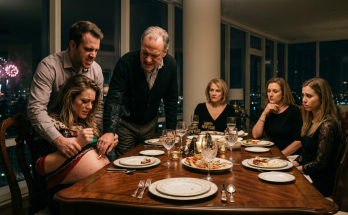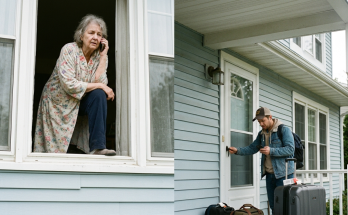

PART 2 — THE DAY “STAY AWAY” BECAME EXPENSIVE
The first call came at 9:17 that morning.
I didn’t answer it.
I was standing at my kitchen sink with my injured wrist resting against my chest when Liam’s name appeared on the screen.
It rang until voicemail picked up.
Thirty seconds later, he called again.
Then again.
By the fourth call, I almost laughed—not because anything was funny, but because less than twenty-four hours earlier, my son had made his wishes perfectly clear.
Stay away from us.
So I was staying away.
At 9:26, the first text arrived.
“Mom, did you do something with the mortgage?”
I read it once and placed the phone back on the counter.
Another message followed almost immediately.
“The lender says there’s a problem with your documents.”
Then:
“Call me.”
Then:
“Mom. This is serious.”
I stared at those four words for a long moment.
Apparently my bruised wrist hadn’t been serious.
Apparently watching his wife knock his sixty-two-year-old mother onto a hardwood floor hadn’t been serious.
Apparently telling me to disappear from his life hadn’t been serious.
But the mortgage?
That was serious.
At 9:41, Chloe called.
I declined it.
She called again.
Declined.
Then Liam.
Then Chloe.
Then Liam again.
By ten o’clock, I had eleven missed calls.
I made another cup of coffee.
There is something strangely peaceful about finally obeying people exactly as they asked.
At 10:08, an unfamiliar Denver number appeared.
This time, I answered.
“Mrs. Bennett?”
“Yes.”
“This is Aaron Walsh from Mountain Crest Lending. I’m calling regarding the Patterson mortgage application.”
I had expected the call, but hearing it made everything feel suddenly official.
“Yes, Mr. Walsh.”
“I received your request to withdraw as co-signer and remove your financial documentation from the application.”
“That’s correct.”
There was a pause.
“I just want to confirm that you understand this may significantly affect their approval.”
“I understand.”
“In fact, without your income and assets attached to the application, their debt-to-income ratio exceeds our current underwriting threshold.”
“I understand.”
Another pause.
He sounded uncomfortable.
“Mrs. Bennett, your son indicated there may have been some misunderstanding.”
“There wasn’t.”
“I see.”
“I am voluntarily withdrawing from the application. Please consider that decision final.”
He went quiet for half a second.
“Understood. We’ll process it immediately.”
“Thank you.”
I ended the call.
Seven minutes later, Liam left a voicemail.
I didn’t listen to it until after lunch.
His voice was different.
Not angry.
Not yet.
Panicked.
“Mom, please call me. The lender says they can’t approve us without you. We already gave notice on the apartment. Chloe’s parents are coming next month. We have furniture being delivered. We need to figure this out.”
We.
Need.
That word again.
Except somehow I was only included in “we” when a financial problem appeared.
I deleted the voicemail.
At 12:36, Chloe sent me a message.
“I think emotions got out of control yesterday. We should all sit down like adults.”
I actually stared at the screen in disbelief.
Emotions got out of control.
What an elegant little sentence.
No mention of her hand.
No mention of my fall.
No mention of my wrist.
No apology.
Just “emotions.”
As though violence were weather.
As though it had simply rolled through the kitchen unexpectedly.
I didn’t respond.
At 1:15, my doorbell rang.
Through the front window, I saw Liam standing on my porch.
For one stupid, hopeful second, the mother in me reacted before the woman in me could stop her.
My heart jumped.
Maybe he had come to apologize.
Maybe he had come alone because he was ashamed.
Maybe he was finally going to say, “Mom, I should have come downstairs.”
I opened the door but kept the storm door locked between us.
His eyes immediately dropped to the brace on my wrist.
Something passed across his face.
Guilt, maybe.
But it disappeared quickly.
“Mom.”
“Liam.”
“Can I come in?”
“No.”
He blinked.
That answer surprised him.
For thirty-three years, my son had rarely heard me say that word.
No.
No, I won’t lend you the money.
No, I won’t fix this.
No, I won’t make your discomfort disappear.
No.
It is amazing how offensive that tiny word can sound to someone who has built his life around your yes.
“Seriously?” he asked.
“You told me to stay away from you.”
“I was upset.”
“You seemed very clear.”
He rubbed a hand across his forehead.
“Can we not do this right now?”
I almost smiled.
“Do what?”
“This whole dramatic thing.”
I looked at him through the glass.
“My wrist is sprained.”
“I know.”
“How?”
“Chloe told me.”
“So you knew she hurt me.”
He looked away.
That answer told me everything.
“Mom, she didn’t mean for you to fall.”
“She swung at me.”
“You were both arguing.”
“No, Liam. She was arguing. I was trying to leave.”
He exhaled sharply.
“This is exactly what I mean. You always have to make everything black and white.”
“My wrist is black and blue.”
His jaw tightened.
For the first time, anger entered his voice.
“We’re going to lose the house.”
And there it was.
Not “Are you okay?”
Not “I’m sorry.”
Not “I failed you.”
The house.
Always the house.
I unlocked the storm door but didn’t open it.
I wanted him to hear me clearly.
“You are not losing your house, Liam.”
His shoulders relaxed slightly.
Then I finished.
“You never had it.”
His face changed.
“What?”
“You applied for a mortgage you couldn’t qualify for without my income, my assets, and my signature. That means the house was never financially yours to begin with.”
“That’s not fair.”
“What isn’t fair?”
“You promised to help us.”
“And you told me to stay away.”
“That was personal.”
I stared at him.
He actually said it.
As though my money somehow existed separately from me.
As though the bank account belonged to a silent machine while the mother attached to it could be discarded.
“So your position,” I said carefully, “is that you can remove me from your family but keep me on your mortgage?”
His cheeks flushed.
“That’s not what I’m saying.”
“It sounds exactly like what you’re saying.”
“Mom, please.”
He stepped closer.
“We already put down earnest money.”
“How much?”
“Eight thousand.”
I nodded.
I knew.
I had transferred six thousand of it.
“We could lose it.”
“That sounds like something you need to discuss with your realtor.”
His eyes widened.
“You’re really going to do this?”
“I already did.”
He slapped his palm against the railing.
“You know Chloe starts her hospital rotation next month! You know my car payment is killing me! You know rent everywhere is ridiculous!”
“Yes.”
“And you still pulled out?”
“Yes.”
He stared at me as though I had become a stranger.
Maybe I had.
Or maybe I was simply becoming someone he had never been forced to meet before.
A mother with boundaries.
“You’re punishing us.”
“No.”
“What would you call it?”
“I’m no longer financing people who don’t want me in their lives.”
He laughed once, bitterly.
“You always do this.”
I frowned.
“Do what?”
“Hold money over people.”
That accusation hit differently.
Because I had spent years doing exactly the opposite.
When Liam’s college scholarship fell short, I covered the difference.
When his first car died, I bought him another.
When Chloe entered nursing school and reduced her working hours, I paid their electric bill for six months without telling anyone.
When they wanted the wedding venue that was “just slightly over budget,” I wrote the deposit check.
When Liam lost his job during a company restructuring, I paid their rent for four months.
And not once had I asked for repayment.
Not once had I brought those favors up during an argument.
But suddenly, refusing the next favor meant I had been controlling all along.
“Liam,” I said quietly, “if you believe my money has been used to control you, then removing it should feel like freedom.”
He had no response to that.
For several seconds, we simply looked at one another.
Then he said something I will never forget.
“You’re really choosing money over your son.”
I felt something inside me settle.
“No,” I said. “You chose your wife’s behavior over your mother. I’m simply choosing not to pay for the privilege.”
He turned and walked down the porch steps.
At the bottom, he stopped.
Without looking back, he said, “If we lose this place, that’s on you.”
“No, Liam.”
He finally turned.
“It’s on the two people whose names are going on the deed.”
He left.
That evening, my sister Caroline called.
Caroline lives in Colorado Springs and has always possessed the supernatural ability to learn family drama before anyone formally tells her.
“Liam called me,” she said.
“Of course he did.”
“He says you withdrew from the mortgage.”
“I did.”
“He says Chloe pushed you.”
“She hit me first.”
Silence.
Then her voice changed.
“What?”
I told her everything.
The argument.
Chloe’s arm.
The table.
The urgent care visit.
Liam staying upstairs.
The text.
When I finished, Caroline was quiet for nearly ten seconds.
Then she asked, “Have you taken pictures?”
“Yes.”
“Good.”
That single word surprised me.
“You think I should?”
“I think you should document everything.”
“I’m not trying to ruin their lives.”
“Documenting what happened isn’t ruining anyone’s life.”
She paused.
“Did you file a police report?”
“No.”
“Why?”
“Because he’s my son.”
“And what does that have to do with what she did?”
Everything, I thought.
And nothing.
That was the problem.
“I need time.”
“Take time. But don’t erase what happened just because Liam wants you to.”
After we hung up, I opened my phone and photographed the swelling again.
The bruising had spread around my wrist.
Deep purple near the base of my thumb.
Yellowing along the side.
I hated looking at it.
Not because of the pain.
Because it was evidence.
And evidence has a cruel way of stripping excuses down to the bone.
The next morning, Chloe’s mother called.
I almost ignored her.
But curiosity won.
“Hello, Diane.”
“Margaret, I’m hoping we can talk calmly.”
I closed my eyes.
Whenever someone begins a conversation by asking you to remain calm, they are usually preparing to say something infuriating.
“I’m calm.”
“Good. Chloe told me there was an incident.”
“An incident.”
“She feels terrible about how everything unfolded.”
“Has she told you she struck me?”
Pause.
“She said there was pushing.”
“No. She struck me, and I fell.”
“Well, I wasn’t there.”
“I was.”
Diane sighed.
“I’m not calling to argue.”
“Then why are you calling?”
“Because the house situation is becoming catastrophic.”
There it was again.
The house.
Not my wrist.
Not what happened.
The house.
“The lender called them this morning,” Diane continued. “They’re going to need either another co-signer or a much larger down payment.”
“I’m aware.”
“They don’t have that kind of money.”
“I’m aware of that too.”
She hesitated.
“Would you reconsider?”
“No.”
“Margaret, they could lose thousands.”
“They already lost my financial support.”
“You’re making a permanent decision because of one emotional moment.”
“No. Chloe made an emotional decision. Liam made another decision afterward. I’m responding to both.”
“Chloe is under enormous pressure with nursing school.”
I looked down at my wrist.
“Then I hope the hospital teaches stress management.”
“Margaret.”
“You called me.”
Her voice hardened.
“Do you really want to destroy your relationship with your son over this?”
I had heard enough.
“My son sent me a message telling me to stay away from him.”
“He was protecting his wife.”
“And who was protecting me?”
Silence.
Not one person in that family seemed prepared for that question.
I continued.
“You know what the strangest part is, Diane?”
“What?”
“Not one of you has asked how badly I was hurt.”
She started to speak.
I hung up.
By Friday, the calls stopped.
For almost twenty-four hours.
I should have known that silence wasn’t surrender.
It was planning.
Saturday morning, I went grocery shopping.
When I returned, a black SUV was parked near my driveway.
Chloe was sitting inside.
She stepped out as I carried two grocery bags toward the house.
For the first time since the kitchen incident, I saw uncertainty on her face.
“Margaret.”
I kept walking.
“Margaret, please.”
I stopped.
She glanced at my wrist brace.
Her mouth tightened.
“I came to apologize.”
I said nothing.
“I shouldn’t have touched you.”
Touched.
Another carefully selected word.
“You hit me.”
Her eyes flashed.
“Okay. I hit you.”
There.
Finally.
A complete sentence.
“I was angry,” she continued. “You were saying things about how Liam and I manage money, and I felt judged.”
“You asked me for another fifteen thousand dollars.”
“It wasn’t like that.”
“You asked whether I could increase the down payment because the appraisal came in differently than expected.”
“We were desperate.”
“And I said I needed to think about it.”
“You made me feel like we were irresponsible children.”
“I didn’t make you do anything.”
Her lips pressed together.
“I said I’m sorry.”
“No. You explained why you think you did it.”
“That’s an apology.”
“No, Chloe. An apology does not come with an invoice.”
She stared at me.
“What does that mean?”
“It means you’re only standing in my driveway because the mortgage failed.”
“That’s not true.”
“Would you be here if the loan had been approved?”
She opened her mouth.
Nothing came out.
I nodded.
“That’s what I thought.”
Tears suddenly appeared in her eyes.
Whether they were real or strategic, I couldn’t tell anymore.
“We’re going to lose everything.”
“No. You’re going to lose a house you haven’t bought.”
“We already picked out the nursery.”
That caught me.
“Nursery?”
Her face changed.
Too late.
The word had escaped.
I stared at her.
“Are you pregnant?”
She looked away.
My heart began pounding.
“How far along?”
“Eleven weeks.”
For one horrifying second, every boundary I had spent days building threatened to collapse.
A grandchild.
My grandchild.
She knew exactly what that word would do to me.
I could already picture tiny socks.
A crib.
Christmas mornings.
Little arms around my neck.
And Chloe watched my face closely enough to see the effect.
“We were going to tell you after closing,” she said softly.
After closing.
Of course.
Something about those two words pulled me back to reality.
“Does Liam know?”
“Yes.”
“And neither of you thought I should know before asking me to guarantee a thirty-year mortgage?”
“We wanted it to be a surprise.”
I almost laughed.
Instead, I adjusted the grocery bag in my good hand.
“Congratulations.”
Her eyes widened.
“That’s it?”
“What else would you like me to say?”
“You’re going to be a grandmother.”
“I understand.”
“This house was supposed to be where your grandchild grows up.”
I stared at her.
There it was.
The new lever.
When guilt failed, use the baby.
“I hope my grandchild grows up somewhere safe and loving.”
“It could be this house.”
“If you can afford it.”
Her tears vanished.
“Wow.”
“Chloe—”
“No. Wow.”
She shook her head.
“You really are cold.”
I felt an unexpected calm.
“You hit me four days ago.”
“And I apologized!”
“You came here because the bank said no.”
“That’s not fair.”
“Neither was the kitchen floor.”
She stepped closer.
For the briefest moment, my body stiffened automatically.
She saw it.
Her face changed.
Maybe for the first time, she understood what she had done.
I took one step backward.
“Do not come closer.”
“I wasn’t going to—”
“Do not.”
She froze.
I walked inside and locked the door.
Ten minutes later, I looked through the blinds.
She was gone.
But something had been left beneath my windshield wiper.
A white envelope.
Inside was an ultrasound photograph.
On the back, Chloe had written:
“Your first grandchild. Due February 18.”
I sat in my car for nearly twenty minutes holding that photograph.
I cried.
I won’t pretend I didn’t.
I cried for the baby.
For Liam.
For the relationship I thought we had.
For the grandmother I had imagined becoming.
And maybe most of all, I cried because some part of me still wanted to solve everything with a check.
That had always been my weakness.
Money was easier than conflict.
When Liam struggled, I paid.
When he worried, I paid.
When he made mistakes, I softened the landing.
I had confused rescuing him with loving him.
And perhaps, without meaning to, I had taught my son that consequences were things his mother handled.
That ended in my driveway.
Monday morning, my attorney returned my call.
Her name was Renee Carson, and she had handled my estate documents after my husband died twelve years earlier.
After hearing the story, she asked one question.
“Margaret, how much financial support are you currently providing them besides the mortgage?”
I opened a spreadsheet.
I had never added it all together.
Their phone plan: $186 a month.
Car insurance contribution: $240.
Student loan assistance for Chloe: $500.
A recurring transfer I had started when Liam lost his job and never stopped: $750.
Health insurance reimbursement: another $310.
And several smaller subscriptions and family-plan accounts.
Renee did the math.
“You’re giving them close to two thousand dollars every month.”
I stared at the number.
“And that doesn’t include the mortgage support,” she added.
“No.”
“Do you intend to continue?”
I thought about the kitchen.
I thought about Liam upstairs.
I thought about his message.
Stay away from us.
“No.”
“Then stop.”
My stomach tightened.
“All of it?”
“Margaret, I’m your attorney, not your therapist. I can tell you what you’re legally obligated to pay.”
“And?”
“None of those expenses.”
That afternoon, I began canceling them.
Not vindictively.
Not secretly.
Not as revenge.
I simply separated my finances from two adults who had demanded separation everywhere else.
Phone plan.
Gone.
Car contribution.
Gone.
Monthly transfer.
Canceled.
Student loan assistance.
Stopped.
Streaming accounts.
Removed.
Family warehouse membership.
Canceled.
Emergency credit card.
Frozen.
Each click felt strangely painful.
Not because of the money.
Because each one represented a small thread connecting me to my son’s life.
By evening, almost every thread was gone.
At 7:03, Liam called.
At 7:04, again.
At 7:06, again.
Then the messages started.
“What are you doing?”
“Why is my phone saying the account changes next month?”
“Did you cancel the car payment transfer?”
“Mom, answer me.”
Then the final message:
“You’re taking this too far.”
I stared at it for nearly a minute.
Then I typed:
“You asked me to stay away. I am respecting your boundary completely.”
Three dots appeared.
Disappeared.
Appeared again.
Finally:
“You know that’s not what I meant.”
I typed:
“Then perhaps you should have been more careful with words you expected me to obey.”
He called instantly.
This time, I answered.
“What?” he snapped.
Not hello.
Not Mom.
What.
“I received your messages.”
“Why are you doing this?”
“I already explained.”
“Chloe’s pregnant!”
“I know.”
Silence.
“She told you?”
“Yes.”
“And you’re still doing this?”
I felt my grip tighten around the phone.
“Liam, becoming parents does not make you entitled to my bank account.”
“You’re her grandmother.”
“I will be her grandmother whether I pay your bills or not.”
“You’re unbelievable.”
“No. I’ve been extremely predictable. That’s the problem.”
“What is that supposed to mean?”
“It means you’ve spent your adult life assuming I will fix whatever you cannot afford.”
“I never asked you to—”
“Yes, you did.”
Silence.
I opened the spreadsheet.
“College tuition gap. Twelve thousand. First replacement car. Seventeen thousand. Wedding. Twenty-three thousand. Four months of rent. Eight thousand. Chloe’s nursing school support. Nearly eleven thousand so far. Your current monthly expenses—”
“Stop keeping score!”
“I wasn’t. That’s why I didn’t know the total until today.”
He went quiet.
Then he said, “You’re my mother.”
“Yes.”
“You’re supposed to help me.”
“No, Liam. I was supposed to raise you.”
That sentence came from somewhere deeper than anger.
“I did that. You’re thirty-three years old now.”
His breathing changed.
“What do you want? An apology?”
I closed my eyes.
“No.”
“Then what?”
“I wanted my son to come downstairs when I was hurt.”
Silence.
That was the first time I heard him truly lose his footing.
“Mom—”
“I wanted you to ask if I was okay.”
“I didn’t know how bad—”
“You knew enough to tell me to stay away.”
“Chloe was crying.”
“So was I.”
Another silence.
Longer this time.
Then he whispered, “I didn’t know.”
“You didn’t check.”
That ended the conversation.
Two days later, I received an email from Mountain Crest Lending.
My withdrawal had been processed.
The mortgage application, as originally structured, could no longer proceed.
I closed the email and thought that would be the end of it.
I was wrong.
Because Thursday afternoon, Renee called me.
“Margaret, did you sign any document recently giving Liam power of attorney?”
“No.”
“Any authorization allowing him to access your investment account?”
My stomach dropped.
“No.”
“Are you absolutely sure?”
“Yes. Why?”
She hesitated.
“Because someone attempted to submit financial verification from your brokerage account yesterday.”
I stood so quickly my chair scraped across the floor.
“What?”
“It appears they were trying to demonstrate access to additional family assets for the mortgage lender.”
“I never authorized that.”
“I assumed not.”
“Who submitted it?”
“I’m working on that.”
My injured wrist began throbbing again.
“Renee.”
“Yes?”
“Tell me.”
There was a pause.
“The document includes an electronic signature using your name.”
The room went completely still.
“I didn’t sign anything.”
“I know.”
My voice dropped.
“Was it Liam?”
“I can’t confirm that yet.”
I stared at the family photograph sitting on the bookshelf across from me.
Liam at twelve.
Missing front tooth.
His arm around my shoulders.
Both of us laughing.
For the first time since this nightmare began, fear replaced heartbreak.
Because a denied mortgage was one thing.
A forged signature was something else entirely.
“When can we know?”
“Soon. The lender has access logs.”
As if summoned by the words, my phone buzzed.
A message from Liam.
“Mom, please don’t freak out. I can explain the paperwork.”
I read it twice.
Then a third time.
Renee heard my silence.
“What happened?”
“He just texted me.”
“What did he say?”
I read the message aloud.
Renee’s tone changed immediately.
“Do not respond.”
Another message appeared.
“I only did it because we’re running out of time.”
Then another.
“You were going to help us anyway.”
My chest felt hollow.
One final message arrived.
“Please don’t call the lender until I explain.”
I looked at the splint around my wrist.
Then at Chloe’s ultrasound photograph on the kitchen table.
Then at my son’s messages glowing on the screen.
Four days earlier, I had thought the worst thing Liam could do was remain upstairs while his wife hurt me.
I had been wrong.
Because now I was staring at evidence that my own son might have decided that if I would no longer give him my money willingly…
He would simply find another way to use my name.
And before I could decide what to do, Renee spoke quietly through the phone.
“Margaret, there’s something else you need to know.”
I swallowed.
“What?”
“The lender sent me the document.”
My heart began pounding.
“And?”
“The signature may not be the biggest problem.”
I gripped the edge of the counter.
“Then what is?”
Renee took a slow breath.
“According to this paperwork, you supposedly agreed to transfer $185,000 into Liam and Chloe’s account before closing.”
I stopped breathing.
One hundred eighty-five thousand dollars.
And beneath Renee’s voice, my phone began ringing again.
Liam.
But this time, I didn’t see my son’s name when I looked at the screen.
I saw a man who had just crossed a line I wasn’t sure either of us could ever uncross……………..
TO BE CONTINUED IN PART 3…
PART 3 — THE SIGNATURE THAT WAS NEVER MINE
I let Liam’s call ring until it stopped.
Then it started again.
Renee was still on the phone.
“Don’t answer,” she said.
“I wasn’t planning to.”
“Save every text. Screenshot everything. Do not delete a single message.”
My eyes remained fixed on the number she had just given me.
$185,000.
I had read stories about families fighting over inheritances.
I had watched television dramas where children forged signatures and drained accounts.
But those things happened to other people.
They did not happen in a quiet kitchen outside Denver while a woman stood barefoot beside a cooling cup of coffee, staring at her son’s name flashing on an iPhone.
At least, that was what I had believed.
“Renee,” I whispered, “where would they even get the idea that I had that much available?”
She hesitated.
“That’s something else we need to discuss.”
My stomach tightened.
“What?”
“The document doesn’t just list the transfer.”
She paused.
“It includes the last four digits of your brokerage account.”
I sat down.
Slowly.
“They know my account number?”
“At least part of it.”
“How?”
“I don’t know yet.”
But I did.
Or at least, I knew one possibility.
Three months earlier, Liam had helped me replace my home printer.
Mine had died in the middle of tax season, and he had insisted on setting up the new one because, according to him, I was “dangerous around technology.”
He had spent almost two hours in my home office.
Installing drivers.
Connecting Wi-Fi.
Testing scans.
Moving paperwork off the desk.
And sitting directly beside the file drawer where I kept printed investment statements.
At the time, I had thought nothing of it.
Now every harmless memory suddenly felt contaminated.
“I think he saw my statements,” I said.
Renee was quiet.
“Do you keep them somewhere accessible?”
“In a locked file cabinet.”
“Who has a key?”
I swallowed.
“I do.”
“Anyone else?”
I looked toward the hallway.
There had once been two keys.
One in my desk.
One hidden inside a ceramic bowl in the pantry.
Liam knew about the pantry key.
I knew he knew because when my husband died, Liam had helped me organize all the documents.
That had been twelve years ago.
I had completely forgotten.
Until now.
“My son.”
Renee exhaled.
“Change the lock.”
“I will.”
“And call your brokerage firm today.”
“I will.”
“Tell them you suspect attempted financial fraud. Ask them to add enhanced verbal authentication and block outgoing transfers until you personally verify them.”
My hands started trembling.
“What if they already tried?”
“I’m checking.”
That sentence terrified me more than anything else she had said.
I opened my laptop while Renee remained on the line.
My brokerage account loaded.
Balance.
Investments.
Activity.
Nothing obvious.
Then I saw it.
A pending request.
Not completed.
Not approved.
Pending.
“Renee.”
“What?”
“There’s something here.”
I leaned closer to the screen.
“An outgoing transfer request.”
“How much?”
My throat went dry.
“One hundred eighty-five thousand dollars.”
Neither of us spoke.
For several seconds, all I could hear was the faint hum of my refrigerator.
Then Renee’s voice sharpened.
“Call them now.”
I disconnected from her and immediately dialed the brokerage security number.
The representative introduced herself as Maya.
I barely let her finish.
“My account may be compromised.”
Her tone changed instantly.
“Can you verify your full name and security phrase?”
I did.
Then she placed a temporary restriction on the account while transferring me to the fraud department.
The next representative asked question after question.
Did I authorize a $185,000 transfer?
No.
Did I recently change banking instructions?
No.
Did I submit a request through electronic documentation?
No.
Did I authorize anyone to act on my behalf?
No.
Then he asked:
“Do you recognize the receiving account?”
He read the bank name.
I did.
It was Liam’s bank.
I had transferred money there dozens of times.
Small amounts.
Rent assistance.
Emergency expenses.
Birthday gifts.
Never $185,000.
“That account belongs to my son.”
There was a pause.
“I see.”
My chest tightened.
“Has the money moved?”
“No, ma’am. The transfer was flagged because it exceeded your established transaction pattern and required manual verification.”
I covered my mouth.
For the first time that morning, I felt air enter my lungs.
“Can you cancel it?”
“Yes.”
“Cancel it.”
“Immediately.”
He did.
Then he asked if I wanted to place a fraud alert on the entire account.
“Yes.”
New passwords.
New security questions.
Verbal passcode.
Transfer lock.
Account review.
By the time the call ended, forty-six minutes had passed.
I sat in silence.
My phone had seventeen missed calls.
Nine from Liam.
Six from Chloe.
Two from Diane.
I also had a new voicemail.
I pressed play.
Liam’s voice filled the kitchen.
“Mom, you need to stop panicking. Nobody stole anything. We were trying to restructure the loan. The lender needed proof the funds would be available, and I knew you had already agreed to help us before everything got messed up. Please call me before you make this worse.”
Before I make this worse.
I replayed that part.
Then again.
By the third time, something inside me stopped hurting.
That frightened me.
Because anger still means you are emotionally engaged.
Pain means you still care how someone sees you.
But this was different.
This was clarity.
My son did not believe he had stolen from me.
He believed he had merely accelerated a decision I should have made for him.
He believed my money had already become his because he needed it.
And perhaps the ugliest truth of all was that I had helped teach him that.
Not intentionally.
Never intentionally.
But every rescue had carried the same message:
Mom will fix it.
Mom will pay.
Mom will absorb the consequences.
Mom will say yes eventually.
I picked up my phone and called Renee back.
“The transfer has been canceled.”
“Good.”
“They confirmed the receiving account belongs to Liam.”
Silence.
Then:
“Margaret, I need to ask you something difficult.”
“Go ahead.”
“Do you want to report this?”
My heart sank.
There it was.
The question I had been avoiding since Chloe struck me.
Only now it wasn’t about an injured wrist.
This was financial fraud.
Possibly forgery.
Possibly attempted theft.
Possibly crimes committed by my son.
“I don’t know.”
“I understand.”
“No, you don’t.”
My voice cracked.
“He’s my child.”
“I know.”
“I raised him.”
“I know.”
“I taught him to ride a bicycle.”
My eyes burned.
“I sat beside his hospital bed when he had pneumonia at eight. I drove six hours through a snowstorm because he called me from college saying he thought he’d failed everything. I paid for tutoring. I stood in the front row when he got married.”
“I know.”
“And now I’m supposed to walk into a police station and tell someone my son tried to steal $185,000 from me?”
Renee’s voice softened.
“I’m not telling you what you’re supposed to do.”
“Then what are you telling me?”
“I’m telling you that protecting Liam from consequences will not undo what he did.”
That sentence stayed with me.
For the next hour.
Then the next.
At 2:14 in the afternoon, someone knocked on my door.
Not the bell.
Three sharp knocks.
I checked the camera.
Liam.
And Chloe.
Together.
I almost ignored them.
Then Chloe held something toward the camera.
An envelope.
Liam looked directly into the lens.
“Mom, please. We need to talk.”
Need.
That word again.
I opened the door but kept the chain latched.
“What do you want?”
Liam looked terrible.
His hair was uncombed.
Dark circles sat beneath his eyes.
Chloe stood beside him, arms folded around herself.
“We need five minutes,” he said.
“You have two.”
His face tightened.
“Can we come inside?”
“No.”
“Mom.”
“No.”
Chloe stepped forward.
“I’m not going to touch you.”
The fact that she even needed to say it made something cold move through me.
“Good.”
Liam looked at my wrist brace.
For once, he didn’t look away.
“We screwed up.”
I waited.
He rubbed both hands over his face.
“I screwed up.”
That was new.
Not we.
I.
“What did you do?”
His eyes met mine.
“I submitted paperwork.”
“Using my signature.”
He swallowed.
“Yes.”
Chloe turned toward him.
“You said she had already signed those forms.”
Liam’s head snapped toward her.
“Not now.”
Her face changed.
“What do you mean, not now?”
“Chloe.”
“You told me your mother signed them before the argument.”
I looked between them.
Interesting.
Very interesting.
“Did you know my signature was forged?” I asked Chloe.
“No.”
Liam immediately said, “She didn’t.”
Chloe’s mouth fell open.
“You told me the transfer was already arranged.”
“Chloe, stop.”
“No.”
She stepped away from him.
“You said your mom had promised $185,000 from her investments and we were just documenting it differently because she pulled out of the mortgage.”
My stomach turned.
I stared at Liam.
“Did I ever promise you $185,000?”
He looked at the porch floor.
“No.”
“Did I ever promise you anything close to that?”
“No.”
Chloe stared at him.
“Liam.”
“Please.”
“You lied to me?”
“I was trying to save the closing.”
“You told me she was doing this to punish us.”
“I thought she’d calm down.”
“You forged your mother’s signature.”
“I didn’t think of it like that.”
I almost laughed.
“How exactly did you think of it?”
He looked at me desperately.
“As temporary.”
“Temporary forgery?”
“No! Temporary paperwork. I thought once you understood Chloe was pregnant, you’d help us again.”
“And if I didn’t?”
“You would.”
The confidence in those two words stunned me.
Not hoped.
Not might.
Would.
“You were that certain?”
He looked genuinely confused by the question.
“You always help me.”
There it was.
The entire relationship condensed into four words.
You always help me.
And suddenly I understood something.
Liam had not forged my signature because he hated me.
He had forged it because my refusal did not feel real to him.
My boundaries had never lasted long enough for him to believe them.
Every “no” eventually became “fine.”
Every consequence eventually became a rescue.
Every emergency eventually became my expense.
He had simply assumed this would be the same.
I looked at him.
“Not anymore.”
His face changed.
“Mom—”
“I canceled the transfer.”
“I know.”
“How do you know?”
His silence answered.
“You checked.”
“I got an alert.”
“Of course you did.”
Chloe looked between us.
“What happens now?”
“Nothing happens with my money.”
“No,” she said. “I mean legally.”
Liam shot her a warning look.
She ignored him.
“Margaret, are you reporting this?”
Her voice trembled.
There it was.
Not because she suddenly cared about me.
Because she finally understood the stakes.
“I haven’t decided.”
Liam stepped closer to the door.
“Mom, please don’t.”
“Why?”
“You know why.”
“No. Tell me.”
His jaw worked.
“I could lose my job.”
Liam worked as an operations manager for a medical supply company.
A fraud allegation would not disappear quietly.
“I could be charged.”
“Yes.”
“Chloe’s pregnant.”
“Yes.”
“We’ll lose everything.”
I stared at him.
“You keep saying that.”
“Because it’s true.”
“No, Liam. You keep confusing consequences with theft. Losing something because of what you did does not mean someone took it from you.”
He stared at me.
Then his voice dropped.
“I’m your son.”
“Yes.”
“Does that mean anything?”
The question hurt.
But not in the way he intended.
“It means more than you understand.”
“Then don’t destroy my life.”
I looked at him for a long moment.
“When Chloe hit me, you stayed upstairs.”
His shoulders slumped.
“I know.”
“When you finally contacted me, it wasn’t to ask whether I needed a doctor. It was to tell me to stay away.”
“I know.”
“When I obeyed you and removed myself financially, you tried to use my identity without permission.”
He closed his eyes.
“I know.”
“And every time you talk about what happened, you describe what might happen to you.”
His eyes opened.
“Because I’m scared.”
“So was I.”
That silenced him.
Chloe looked away.
For the first time since they arrived, neither of them had anything to say.
I reached for the door.
“Go home.”
“Mom.”
“Go home.”
“Can I just—”
“No.”
He looked at me with the expression he used to wear as a boy when he knew he had disappointed me.
Once, that expression could make me forgive almost anything.
Now I saw something else beneath it.
Fear.
Not of losing me.
Of losing the safety net attached to me.
I closed the door.
That night, I couldn’t sleep.
At 1:07 a.m., I walked into my home office.
Opened the locked drawer.
Removed every financial document.
Brokerage statements.
Bank statements.
Insurance files.
Property records.
Then I found something I had not thought about in years.
My estate plan.
The binder Renee prepared after my husband died.
At the top of the beneficiary page was one name.
LIAM BENNETT — 100%.
Everything.
My house.
My retirement accounts.
My investments.
My life insurance.
Everything I had spent forty years building would go to him.
I stared at the page.
Then I thought about the ultrasound photograph.
My grandchild.
An innocent child had nothing to do with any of this.
I called Renee at eight the next morning.
“I want to change my estate plan.”
She didn’t sound surprised.
“What are you thinking?”
“I don’t know yet.”
“We can discuss options.”
“I don’t want Liam controlling everything.”
“Understood.”
“But I don’t want to punish my grandchild.”
“Those are two separate decisions.”
That sentence helped.
We scheduled an appointment for Thursday.
Before hanging up, Renee said:
“One more thing.”
“What?”
“The lender responded to my request for access records.”
I sat straighter.
“And?”
“The forged document was uploaded from an IP address associated with Liam’s home.”
My eyes closed.
There it was.
Confirmed.
“But that’s not all,” she continued.
My stomach tightened.
“There were two uploads.”
“Two?”
“Yes.”
“One was the transfer authorization.”
“And the other?”
“A letter.”
“What letter?”
“Supposedly from you.”
My hand tightened around the phone.
“What did it say?”
Renee hesitated.
“It stated that you intended to make Liam and Chloe an advance on his inheritance.”
I felt sick.
“His inheritance?”
“Yes.”
“How much?”
“Two hundred fifty thousand dollars.”
I stood.
“Two hundred fifty?”
“The letter claimed the $185,000 transfer was the first portion.”
My mouth went dry.
“There’s no such agreement.”
“I know.”
“Did Liam write that too?”
“We need more information.”
I looked toward the estate binder still sitting on my desk.
“What exactly did the letter say?”
“I’ll send you a copy.”
A minute later, it arrived.
I opened the attachment.
My name appeared at the bottom.
Margaret Bennett.
The signature was good.
Very good.
Good enough that I understood why the lender had initially accepted it.
But the language above it made my skin crawl.
“I have chosen to advance a portion of my son’s anticipated inheritance to assist Liam Bennett and Chloe Bennett in establishing permanent housing for their growing family.”
Growing family.
They had used the pregnancy.
The letter continued:
“This gift reflects my long-standing intention that Liam eventually receive the majority of my estate.”
My breathing became shallow.
Because that sentence was true.
Or had been.
That was what made the forgery so clever.
It mixed lies with facts.
I scrolled further.
Then I saw a sentence that made me stop.
“I have no other children or beneficiaries whose financial interests would be affected by this gift.”
I read it again.
No other beneficiaries.
Technically true.
But why include that?
Unless someone had been thinking far beyond the mortgage.
“Renee.”
“Yes?”
“Why would the letter mention other beneficiaries?”
“I wondered the same thing.”
“Could this document be used for anything besides the loan?”
“Potentially.”
My stomach dropped.
“What do you mean?”
“If someone were later trying to establish that you intended Liam to receive your estate early—or that large transfers were consistent with your wishes—this document could be cited as evidence.”
I sat very still.
“So this wasn’t just about buying a house.”
“I can’t say that yet.”
But the possibility had already entered my mind.
And once it did, I couldn’t remove it.
I thought about Chloe’s words in the kitchen.
You’re not welcome here anymore.
I thought about Liam’s message.
Stay away from us.
I thought about how quickly they expected my money to remain while I disappeared.
Then another memory surfaced.
Six months earlier, Chloe had asked me an odd question during dinner.
“What happens to your house if something happens to you?”
At the time, I laughed.
“I suppose Liam gets tired of mowing the lawn.”
She laughed too.
Then asked:
“Is everything already in a trust?”
I had answered without thinking.
“Most of it.”
Liam had changed the subject.
Now that conversation felt different.
I pulled out the estate binder.
There was my trust.
There were my accounts.
There was Liam.
Everywhere.
I called Renee again.
“Thursday isn’t soon enough.”
“What do you want to do?”
“Today.”
There was silence.
Then:
“Come at three.”
At 2:30, I drove downtown.
My wrist still hurt when I turned the steering wheel.
Denver traffic moved slowly, giving me too much time to think.
By three, I was sitting across from Renee in a glass-walled conference room.
She placed a yellow legal pad between us.
“Tell me what outcome you want.”
“I want control of my own life.”
“That’s a good start.”
“I want Liam removed as successor trustee.”
“Easy.”
“I want him removed from my financial power of attorney.”
“Also easy.”
“I want medical authority changed.”
She nodded.
“To whom?”
“My sister Caroline.”
“Good.”
I swallowed.
“And the inheritance?”
Renee waited.
“I want something protected for the baby.”
“A trust for your grandchild?”
“Yes.”
“Do you want Liam to have access?”
“No.”
“Chloe?”
“No.”
Renee nodded.
“We can create an independent trust with a separate trustee.”
“What about the rest?”
“That’s your decision.”
I looked out the window at the city.
For years, I had assumed Liam would receive everything because he was my only child.
I never even questioned it.
Inheritance had felt automatic.
But suddenly I realized inheritance was not a birthright.
It was a final act of trust.
And trust was exactly what my son had destroyed.
“I don’t know yet.”
“That’s fine.”
We changed the power of attorney immediately.
Changed healthcare authority.
Changed successor trustee.
Added safeguards requiring direct confirmation for major financial decisions.
Then Renee drafted temporary estate amendments while we considered the larger plan.
When I left her office two hours later, I felt exhausted.
But safer.
For the first time in years, nobody besides me had authority over my financial life.
I thought that would bring relief.
Instead, what happened next brought something much worse.
At 6:22 p.m., Caroline called.
“Margaret, where are you?”
“In my car. Why?”
Her voice sounded strange.
“Are you alone?”
“Yes.”
“I need you to pull over.”
My stomach tightened.
“Caroline.”
“Pull over.”
I turned into a pharmacy parking lot.
“What happened?”
She took a breath.
“Liam called me.”
“Of course.”
“No. This was different.”
“How?”
“He asked questions about your health.”
My fingers tightened around the phone.
“What questions?”
“Whether you’ve been forgetting things.”
My entire body went cold.
“What?”
“He asked whether I noticed memory problems.”
I said nothing.
“He wanted to know if you’d ever seemed confused about money.”
The parking lot blurred in front of me.
“Why?”
“I asked him the same thing.”
“And?”
“He said he’s worried.”
I almost laughed.
After forging my signature, my son was suddenly worried about my cognitive health.
“What else?”
Caroline hesitated.
“He asked if dementia runs in the family.”
I stopped breathing.
Every strange piece suddenly moved into place.
The inheritance letter.
The forged signature.
The reference to my estate.
The questions about memory.
“What did you tell him?”
“That you’re sharper than both of us.”
Despite everything, I smiled briefly.
“Thank you.”
“But Margaret, there’s more.”
I closed my eyes.
“Tell me.”
“He asked whether I would sign something.”
My eyes opened.
“What?”
“A statement.”
“What statement?”
“He said the lender might need proof that your decision to pull out of the mortgage was sudden and out of character.”
My heart began pounding.
“What exactly did he want you to say?”
“That you’d been acting irrationally.”
I felt physically sick.
“He wants to claim I’m incompetent.”
“I don’t know.”
“Yes, you do.”
Caroline went quiet.
“So do I.”
My hands began shaking again.
Not from fear this time.
From rage.
Liam had tried guilt.
Then manipulation.
Then forgery.
And now, apparently, he was building a story in which his sixty-two-year-old mother could no longer make rational financial decisions.
“Did you agree?”
“Margaret.”
“I know. I’m sorry.”
“I told him never to ask me something like that again.”
I exhaled.
Then Caroline said something that made everything worse.
“He wasn’t alone.”
“What?”
“I could hear someone talking in the background.”
“Chloe?”
“No.”
“Diane?”
“No.”
“Who?”
“A man.”
I sat perfectly still.
“What man?”
“I don’t know.”
“What did he say?”
“I only heard one sentence clearly.”
My skin prickled.
“What sentence?”
Caroline lowered her voice.
“He said, ‘If she’s declared unable to manage the trust, your position becomes much stronger.’”
My blood went cold.
The trust.
They weren’t talking about a mortgage anymore.
They were talking about my estate.
“Caroline, are you sure?”
“Yes.”
“Exact words?”
“As close as I can remember.”
I immediately called Renee.
She answered on the second ring.
I told her everything.
This time, she did not sound merely concerned.
“Margaret, go home.”
“Why?”
“Go home and do not let Liam or Chloe inside.”
“What are you thinking?”
“I’m thinking we need to find out who that man was.”
“You think he’s an attorney?”
“Possibly.”
“Can Liam have me declared incompetent?”
“Not because he says so.”
“But he can try?”
“Anyone can make allegations. Establishing incapacity is another matter.”
I swallowed.
“What would he gain?”
“If your previous documents remained unchanged and he could position himself as the person managing your affairs, potentially a great deal.”
“But we changed them today.”
“Yes.”
“Does he know?”
“No.”
“Good.”
Renee paused.
“Margaret, don’t tell him.”
That evening, I parked inside my garage and locked every door.
At 9:41, my security camera sent a motion alert.
Someone was standing on my front porch.
Not Liam.
Not Chloe.
A man in a gray suit.
He carried a leather folder.
I watched through the camera.
He rang the bell.
Once.
Twice.
Then looked directly toward the camera.
“Mrs. Bennett?”
I didn’t answer.
“My name is Daniel Mercer.”
The name meant nothing to me.
“I represent your son.”
My stomach tightened.
He continued.
“We’d like to resolve this privately.”
Privately.
I remained silent.
He removed an envelope from the folder and slid it beneath my door.
Then he walked back to a black sedan.
I waited until he drove away.
Only then did I retrieve the envelope.
Inside was a four-page letter.
The first paragraph accused me of withdrawing promised financial support “without reasonable notice.”
The second referred to “concerning recent behavioral changes.”
The third suggested Liam had reason to question whether I was making “fully informed financial decisions.”
And the fourth contained a proposal.
If I reinstated the $185,000 transfer and signed a notarized statement confirming it as an advance inheritance, Liam would agree not to pursue “further protective legal remedies.”
I read that phrase three times.
Protective legal remedies.
My own son was threatening me.
Not with shouting.
Not with insults.
With paperwork.
At the bottom was Daniel Mercer’s contact information.
I photographed every page and sent them to Renee.
She called almost immediately.
“Do not respond.”
“I wasn’t planning to.”
“I know this firm.”
That caught my attention.
“What do you mean?”
“Mercer handles guardianship disputes.”
My mouth went dry.
“Guardianship?”
“Yes.”
“You mean declaring people incompetent.”
“In some cases.”
I looked down at the letter again.
My son was not simply desperate.
He had consulted someone who knew exactly how to challenge an older person’s control over money.
“I’m sixty-two.”
“I know.”
“I run my own finances.”
“I know.”
“I still work three days a week.”
“I know.”
“This is insane.”
“It may be.”
“But?”
“But if someone is preparing a claim, we take it seriously.”
The next morning, Renee arranged for me to meet with a physician.
Not because I believed Liam.
Because I wanted a documented baseline.
Memory tests.
Cognitive screening.
Medical evaluation.
Every result normal.
The doctor looked almost amused.
“You’re doing better than half my fifty-year-olds.”
I laughed for the first time in days.
Then I asked him to document everything.
He did.
By afternoon, Renee had copies.
Medical capacity.
Financial capacity.
Updated estate documents.
Fraud records.
The urgent care report.
Photographs of my wrist.
Liam’s text messages.
Chloe’s admission that she struck me.
We had built a file.
I hated that I needed one against my own child.
But I had one.
Then, Friday morning, Liam made his biggest mistake.
At 10:11, he emailed me.
Not a text.
An email.
Subject: FINAL CHANCE TO FIX THIS.
I opened it.
“Mom,
I don’t want lawyers involved.
Neither does Chloe.
But your behavior has become unpredictable, and people are noticing.
You agreed to help us with the house, then suddenly pulled everything after one argument.
You canceled financial support we relied on.
You froze accounts.
You are changing plans impulsively.
I am worried about you.
If you send the $185,000 as originally planned, we can put all of this behind us.
If not, I will have to do what I believe is necessary to protect you and the family.
Please don’t force this.
Liam.”
I read it.
Then I forwarded it to Renee.
Her response arrived one minute later.
“Thank you.”
Nothing more.
I knew enough to understand that was lawyer language for:
He just handed us evidence.
At noon, I received another call.
Unknown number.
“Mrs. Bennett?”
“Yes.”
“This is Detective Marcus Hale with the Denver Police Department.”
Every muscle in my body froze.
My first thought was the brokerage fraud.
Maybe they had reported it automatically.
“Detective?”
“Yes. I’m contacting you regarding a complaint involving your son and daughter-in-law.”
My pulse quickened.
“What complaint?”
He hesitated.
“Ma’am, are you somewhere private?”
“Yes.”
“There has been an allegation that you threatened your daughter-in-law.”
For several seconds, I thought I had misheard him.
“I did what?”
“Mrs. Chloe Bennett filed a report this morning.”
I gripped the counter.
“What did she say?”
“She stated that you threatened her after learning she was pregnant.”
My mouth fell open.
“That never happened.”
“I’m not making any conclusions. I’d like to ask you some questions.”
Of course.
Of course this was where they went next.
If they could not make me incompetent, perhaps they could make me dangerous.
“What exactly did she claim?”
“She says you told her she would regret keeping you away from the baby.”
“I never said that.”
“She also reported that you became physically aggressive during an argument at their home last week.”
The room tilted.
“Physically aggressive?”
“She says you grabbed her first.”
I looked down at my wrist brace.
For a moment, I could not speak.
Then something very strange happened.
I smiled.
Not because it was funny.
Because Chloe had forgotten one thing.
The urgent care nurse.
The photographs.
The timestamped messages.
And perhaps most importantly…
Their kitchen camera.
I had noticed it that day.
A small indoor security camera mounted near the refrigerator.
Liam installed it months earlier because they occasionally left their dog home alone.
I remembered teasing him.
“Do you really need surveillance to see whether Baxter steals your socks?”
He had laughed.
Now that camera might contain the only unbiased witness to what happened.
“Detective Hale?”
“Yes?”
“They have a camera in the kitchen.”
Silence.
“Are you certain?”
“Yes.”
“Do you know whether it records continuously?”
“I don’t.”
“But it existed at the time?”
“Yes.”
“Thank you.”
His tone changed.
“We’ll follow up.”
After the call, I immediately contacted Renee.
When I told her about Chloe’s report, she said only:
“This has escalated.”
“Yes.”
“We need that footage.”
“What if they deleted it?”
“We’ll find out.”
By evening, legal preservation notices had been sent.
Do not delete.
Do not alter.
Do not destroy electronic evidence.
At 8:03, Liam called.
I ignored him.
At 8:09, he texted.
“Why are lawyers demanding our camera footage?”
I didn’t respond.
At 8:11:
“Mom, seriously.”
At 8:14:
“You’re making this much bigger than it needs to be.”
At 8:17:
“Chloe is pregnant and stressed.”
Then nothing.
For almost an hour.
At 9:06, another message arrived.
“We don’t have the footage.”
I stared at it.
At 9:08:
“The camera wasn’t recording.”
At 9:11:
“It hasn’t worked in months.”
Too many explanations.
Too quickly.
I forwarded the messages to Renee.
Her reply:
“Do nothing.”
Saturday morning, someone knocked again.
This time it was Detective Hale.
And he wasn’t alone.
A younger officer stood beside him.
My heart pounded as I opened the door.
“Mrs. Bennett?”
“Yes.”
“We need to speak with you.”
I invited them inside.
Detective Hale sat at my dining table.
The same table where I had spent hours staring at my bruised wrist.
He opened a folder.
“We spoke with your daughter-in-law.”
I nodded.
“And?”
“We also spoke with your son.”
I waited.
“They both stated the kitchen camera was not functioning.”
“That’s what Liam told me.”
Hale looked at me carefully.
“Do you believe that?”
“No.”
“Why?”
“Because three weeks ago Liam sent me a video from it.”
The detective’s eyebrows lifted.
“What video?”
I opened my phone.
There it was.
A short clip Liam had sent because their dog Baxter had climbed onto the kitchen counter and stolen half a rotisserie chicken.
Timestamped.
Twenty-two days before the incident.
Recorded by the kitchen camera.
Detective Hale watched it twice.
Then emailed it to himself.
“That’s useful.”
My pulse quickened.
“Does that mean you can get the footage?”
“We obtained a warrant for the associated cloud account.”
I stared at him.
“And?”
He looked toward the younger officer.
Then back at me.
“We recovered deleted video.”
My heart stopped.
“From that day?”
“Yes.”
Every sound in the room disappeared.
“Did you watch it?”
“Yes.”
I could barely breathe.
“What does it show?”
Detective Hale closed the folder.
“It shows your daughter-in-law striking you.”
I closed my eyes.
For days, I had known what happened.
But hearing someone else say it made my entire body sag.
“And?”
“It also shows your son.”
My eyes opened.
“What?”
“He was not upstairs.”
I froze.
The detective continued.
“He was standing just outside the kitchen.”
For a second, my brain rejected the words.
“No.”
“I’m sorry.”
“No, he was upstairs.”
“That’s what you believed.”
“I would have seen him.”
“The camera angle shows part of the hallway. Your son appears there before the physical contact.”
My hands began trembling.
“Are you saying he saw it?”
Detective Hale’s expression told me before his words did.
“Yes.”
My throat closed.
“He saw Chloe hit me?”
“Yes.”
“And he did nothing?”
Detective Hale paused.
“Mrs. Bennett, there’s more.”
Of course there was.
There was always more.
“What?”
“The audio captured a conversation after you left.”
I stopped moving.
Between Liam and Chloe.
The detective opened the folder again.
“I’m not going to play it without preparing you.”
My heart hammered.
“Play it.”
“Mrs. Bennett—”
“Please.”
He studied me for a moment.
Then placed his phone on the table.
The recording began.
I heard the kitchen.
A cabinet closing.
Chloe breathing heavily.
Then Liam’s voice.
“She actually left?”
Chloe replied:
“Obviously.”
A few seconds of silence.
Then Liam said:
“Good.”
My fingers curled against the table.
Chloe asked:
“What if she backs out of the house now?”
And my son answered:
“She won’t.”
The room blurred.
Then Chloe said:
“You don’t know that.”
Liam laughed.
Not loudly.
Not cruelly.
Almost casually.
“She always comes back.”
My eyes filled.
But the recording continued.
Chloe:
“And if she doesn’t?”
Liam:
“Then we use the baby.”
My breath stopped.
The ultrasound.
The driveway.
The tears.
All of it.
Planned.
Chloe’s voice came next.
“She’s going to be furious.”
And Liam said:
“For a while.”
Then another voice appeared.
Not in the room.
On speakerphone.
Male.
Unfamiliar.
I looked at Detective Hale.
His expression hardened.
The man said:
“If she withdraws financial support, we need to document instability immediately.”
Every hair on my arms rose.
Daniel Mercer.
The guardianship attorney.
The recording continued.
Liam:
“How?”
Mercer:
“Sudden reversals. Emotional decisions. Irrational spending changes. Anything that could support diminished capacity.”
I stopped breathing.
Chloe:
“She’s not senile.”
Then Liam said something I will hear for the rest of my life.
“She doesn’t have to be.”
My vision went white.
Detective Hale reached forward and stopped the audio.
Silence filled my kitchen.
I could hear my own heartbeat.
For days, I had believed greed had slowly pushed my son across one terrible line after another.
But this was different.
This meant some of those lines had been visible before Chloe ever hit me.
This meant my injury had not created the plan.
It had simply accelerated one.
I looked at Detective Hale.
“How much more is on that recording?”
He hesitated.
“About fourteen minutes.”
“What else do they say?”
His expression changed.
“Mrs. Bennett, I think your attorney should be present before you hear the rest.”
Fear crawled slowly up my spine.
“Why?”
He closed the folder.
“Because the conversation stops being about your money.”
My mouth went dry.
“What does it become about?”
He looked directly at me.
“Your house.”
I swallowed.
“My house?”
“Yes.”
“What about it?”
The detective glanced toward the younger officer.
Then back at me.
“They discuss what happens if you refuse to cooperate.”
My fingers tightened around the edge of the table.
“And what did my son say?”
Detective Hale was quiet for two unbearable seconds.
Then he said:
“He told Chloe there was another way to get you out of the property.”
I stared at him.
Outside, a lawn mower started somewhere down the street.
A dog barked.
A car door slammed.
Normal Saturday sounds.
But inside my kitchen, my entire life had just changed again.
“What way?”
Detective Hale slowly reopened the folder.
And when he showed me the next page of the transcript, the first sentence spoken by my son made every dollar, every forged signature, and even my injured wrist suddenly feel like the least frightening part of this story.
Because Liam had said:
“If Mom won’t leave willingly, we’ll make sure she has no choice.”……………
TO BE CONTINUED IN PART 4…
PART 4 — THE HOUSE THEY THOUGHT WAS ALREADY THEIRS
I stared at the transcript until the words blurred.
“If Mom won’t leave willingly, we’ll make sure she has no choice.”
My son’s words.
Not Chloe’s.
Not some stranger’s.
My son’s.
Detective Hale watched me carefully from across the table.
“What did he mean?”
My voice sounded far away.
“That’s what we’re still determining.”
“You heard the entire recording.”
“Yes.”
“So tell me.”
He hesitated.
Then he slid the transcript toward me.
“Read the next section.”
I didn’t want to.
But I did.
Chloe’s voice came first.
“What are you talking about?”
Then Liam:
“The house is worth almost nine hundred thousand now.”
My stomach tightened.
Chloe:
“So?”
Liam:
“If she’s declared incompetent, somebody has to manage it.”
Chloe:
“You?”
Liam:
“Who else?”
The room around me seemed to shrink.
Then Daniel Mercer’s voice appeared.
“You’re getting ahead of yourself. Guardianship does not automatically mean you receive ownership.”
Liam:
“I know.”
Mercer:
“You would have fiduciary obligations.”
Liam:
“I know.”
Mercer:
“You couldn’t simply sell property because you wanted the money.”
A pause.
Then Liam said:
“But if maintaining the house wasn’t financially reasonable for her anymore?”
My fingers went cold.
Mercer:
“Then a sale could potentially be justified, depending on circumstances.”
Chloe:
“And where would she go?”
There was silence on the recording.
Then Liam answered:
“Assisted living.”
I stopped reading.
I physically could not continue.
Detective Hale remained silent.
I looked around my kitchen.
The cabinets I had painted with my husband.
The old scratch near the pantry door from when Liam crashed his bicycle indoors at nine.
The window above the sink where I had watched snowfall for twenty-two winters.
My home.
And my son had sat in his own kitchen calmly discussing putting me into assisted living.
At sixty-two.
Healthy.
Independent.
Simply because my house had value.
I swallowed hard.
“He wanted to put me in a facility?”
“He discussed it.”
“I’m not sick.”
“I know.”
“I drive.”
“I know.”
“I work.”
“I know.”
“I climbed a ladder two months ago to clean my gutters.”
A strange almost-smile crossed the detective’s face.
“I wouldn’t recommend telling your doctor that part.”
I laughed.
One short, broken laugh.
Then I started crying.
I hated that.
I had cried enough.
But some betrayals are too large for dignity.
Detective Hale waited.
When I finally regained control, I asked:
“Did Mercer agree to this?”
“No.”
That mattered.
“He actually cautioned your son several times.”
“Then why was he involved?”
“We’re looking into exactly what Mercer understood at each stage.”
I looked back at the transcript.
There were still several pages.
“What happens next?”
Hale didn’t answer immediately.
“What?”
I asked again.
He tapped the page.
“Your son begins discussing your mortgage.”
“My mortgage?”
“Yes.”
“My house is paid off.”
“That’s why this became interesting.”
My skin prickled.
He turned to another section.
I read.
Liam:
“If the house is free and clear, there’s equity just sitting there.”
Chloe:
“You said your mom would never borrow against it.”
Liam:
“She wouldn’t.”
Chloe:
“Then what?”
Liam:
“If I’m managing her finances, maybe I could.”
Mercer:
“No.”
The word was immediate.
Strong.
Mercer continued:
“You need to stop thinking like the assets become yours. They do not.”
Liam:
“I’m talking about helping her.”
Mercer:
“No, you’re talking about accessing equity to solve your own financial problem.”
Silence.
Then Chloe:
“So there’s no way?”
Mercer:
“I didn’t say that.”
I stopped.
Detective Hale pointed to the next paragraph.
Mercer:
“If Margaret voluntarily created a family loan secured by the property, that would be different.”
Liam:
“She won’t.”
Mercer:
“Then the answer is no.”
Liam:
“What if she already agreed?”
Mercer:
“Did she?”
Long silence.
Then Liam:
“She will.”
My stomach turned.
Again.
That belief.
She will.
I suddenly understood why the forged paperwork had seemed so easy for him.
My consent had become irrelevant.
He had decided that future consent counted as present permission.
“He was planning another forgery.”
“We don’t know that.”
Detective Hale paused.
“But we found something that concerns us.”
“What?”
He opened a second folder.
Inside was a copy of a document.
HOME EQUITY LINE OF CREDIT — PRELIMINARY APPLICATION.
My name was at the top.
Margaret Bennett.
My address.
Estimated property value: $895,000.
Requested credit line:
$300,000.
My stomach dropped.
“No.”
Hale watched me.
“I never applied for this.”
“We know.”
“How?”
“The institution contacted you for identity verification yesterday.”
I remembered.
An unknown number had called twice while I was at Renee’s office.
I had ignored it.
“Who submitted it?”
“We’re tracing the application.”
“Was there a signature?”
“Electronic acknowledgment.”
“Mine?”
“Your name.”
I stared at him.
“Three hundred thousand dollars.”
“Yes.”
“That’s almost twice the transfer.”
“Yes.”
I felt suddenly furious.
Not sad.
Not confused.
Furious.
“What did they need three hundred thousand dollars for?”
“We don’t know.”
I laughed bitterly.
“They needed the house.”
“Possibly.”
“No.”
I looked straight at him.
“They needed my house.”
That afternoon, Renee came over.
I showed her everything.
The transcript.
The HELOC application.
The recording.
She read silently for almost twenty minutes.
Then she removed her glasses.
“This is significantly worse.”
“I know.”
“No, Margaret. I need you to understand what I mean.”
She pointed at the application.
“If Liam or anyone working with him tried to access equity in your home using falsified authorization, this is no longer a family dispute.”
“It stopped being that a while ago.”
“Yes.”
Her expression remained serious.
“But now we’re dealing with a pattern.”
Forgery.
Attempted unauthorized transfer.
Possible attempted credit fraud.
False claims about capacity.
And now a financial application attached to my property.
Renee looked around my kitchen.
“You should consider staying somewhere else temporarily.”
My head snapped up.
“No.”
“Margaret—”
“No.”
“This isn’t about fear.”
“I am not leaving my house because my son wants it.”
“I understand.”
“No, I mean it.”
My voice shook.
“If I leave now, even for one night, I’ll feel like he already succeeded.”
Renee studied me.
“Then we increase security.”
That I agreed to.
New exterior locks.
Garage code changed.
Alarm system upgraded.
Cameras installed at every entrance.
Window sensors.
A locksmith arrived before dinner.
Watching him replace the front lock felt symbolic.
Liam had carried a key to my house since he was sixteen.
I never asked for it back.
Now that key opened nothing.
At 7:45 that evening, the old code stopped working.
At 7:51, my phone buzzed.
Liam.
“Did you change the garage code?”
I stared at the message.
He had tried it.
Seven minutes after the installer left.
My heart began pounding.
I immediately called Detective Hale.
“Liam just tried my garage code.”
“You saw him?”
“No. My security app logged a failed entry.”
“Is he there now?”
I checked the exterior cameras.
Empty driveway.
Empty porch.
“No.”
“Send me the log.”
I did.
Then another text from Liam appeared.
“Why are you locking me out?”
The entitlement in that question stunned me.
I finally replied.
“You do not live here.”
He responded instantly.
“I’m your son.”
I typed:
“That does not make my house yours.”
Three dots appeared.
Then:
“We need to talk without Renee controlling you.”
I almost laughed.
There it was.
My attorney protecting me was now evidence that someone else controlled me.
I wrote:
“My attorney does not control me. She represents me.”
His response:
“You never needed lawyers before.”
I stared at those words.
He was right.
I had never needed lawyers before.
Because I had never needed protection from him before.
I stopped responding.
The following morning, my phone rang at 6:38.
Caroline.
“Turn on your security camera.”
I sat up in bed.
“What?”
“Front camera.”
I opened the app.
A silver sedan was parked across the street.
Inside sat Diane.
Chloe’s mother.
“What is she doing?”
“I don’t know,” Caroline said. “But she called me twenty minutes ago.”
My stomach tightened.
“What did she want?”
“She asked whether you were home.”
I got out of bed.
“Why?”
“She said she wanted to apologize.”
“Then why is she sitting across the street?”
“I asked the same thing.”
“And?”
“She hung up.”
I called Detective Hale again.
By the time an officer arrived, Diane had driven away.
But the camera captured everything.
Later that morning, Diane texted:
“Margaret, we need to stop involving police in family matters.”
I did not reply.
Then:
“This is hurting Chloe’s pregnancy.”
Still nothing.
Then:
“Whatever Liam did, the baby should not suffer.”
That sentence almost worked.
Almost.
Because she was right about one thing.
The baby was innocent.
But innocence did not mean I needed to finance the people surrounding her.
At noon, I met Caroline for lunch.
She hugged me longer than usual.
“You look tired.”
“I am.”
“You sleeping?”
“Barely.”
She glanced at my wrist.
“How is it?”
“Better.”
“How are you?”
“Worse.”
Caroline reached across the table.
“I’ve been thinking about something.”
“What?”
“Christmas two years ago.”
My stomach tightened.
“What about it?”
“Remember when Liam asked whether your house was in a revocable trust?”
I stared at her.
“No.”
“I do.”
“Why?”
“Because I thought it was weird.”
She leaned closer.
“You were talking about property taxes. Liam suddenly asked whether the house would pass directly to him or through probate.”
Memory flickered.
I vaguely remembered.
“He said he was helping a coworker with estate paperwork.”
“Maybe.”
Caroline’s expression remained uneasy.
“But then Chloe asked what the house was worth.”
That I remembered.
I had joked:
“Enough to keep the county tax assessor happy.”
At the time, everyone laughed.
Now nothing about it felt funny.
“They’ve been thinking about my house for years.”
“I don’t know.”
“Yes.”
I stared down at my untouched salad.
“At least Liam has.”
Caroline squeezed my hand.
“Don’t assume every old conversation was sinister.”
“I’m trying not to.”
But once trust breaks, memory becomes a crime scene.
Every comment gets reexamined.
Every question looks different.
Every favor becomes suspicious.
That afternoon, Renee called.
“We found something.”
My stomach sank.
“What now?”
“The HELOC application used an email address created three days ago.”
“Whose?”
“The account name resembles yours.”
“What do you mean?”
She spelled it.
Margaret.Bennett62.
My name.
My age.
A fake version of me.
“It was used to communicate with the lender.”
“Can they trace who created it?”
“They’re trying.”
I closed my eyes.
“Anything else?”
“Yes.”
“There’s always something else.”
“The application listed a phone number.”
“Mine?”
“No.”
“Liam’s?”
“No.”
“Whose?”
“We don’t know.”
Then she read the number.
Something about it felt familiar.
I searched my contacts.
Nothing.
Then my call history.
There it was.
Daniel Mercer’s office.
Not his main line.
A direct extension.
My heart stopped.
“Renee.”
“What?”
“That number belongs to Mercer’s office.”
Silence.
“Are you sure?”
“Yes.”
Another pause.
“That changes things.”
“Was he helping Liam?”
“I don’t know yet.”
“But his number is on the application.”
“Yes.”
“Why?”
“We need to ask him.”
Within two hours, Mercer’s firm had received a formal inquiry.
His response came quickly.
Very quickly.
He denied authorizing any mortgage or equity application.
He claimed Liam had used his office number without permission.
Then he did something no one expected.
He asked to speak with Renee privately.
The call lasted thirty-seven minutes.
When Renee called me afterward, she sounded stunned.
“What happened?”
“Mercer is withdrawing from representing Liam.”
“Why?”
“He says he was misled.”
“About what?”
“Almost everything.”
I sat straighter.
“What did Liam tell him?”
“That you had recently become confused.”
Of course.
“That you had verbally promised substantial financial assistance.”
Of course.
“That Chloe’s confrontation with you was minor and that you became physically aggressive first.”
Of course.
“And that Liam was concerned you were being manipulated by your sister.”
I actually laughed.
“Caroline?”
“Yes.”
“Why?”
“Because Caroline would become involved if you changed your estate documents.”
Smart.
Discredit anyone who might protect me.
“What else?”
“Mercer says Liam repeatedly presented the situation as an adult son trying to protect an aging mother.”
“I’m sixty-two.”
“I know.”
“What changed Mercer’s mind?”
“The recording.”
My breath caught.
“He heard it?”
“Detective Hale contacted him.”
“And?”
“He realized Liam had been recording their speakerphone consultation without telling him.”
I blinked.
“That’s why his voice is on the kitchen camera.”
“Yes.”
“And now?”
“Mercer is cooperating.”
That word mattered.
Cooperating.
Not defending.
Not explaining.
Cooperating.
“With police?”
“Yes.”
I sat silently.
Then Renee continued.
“He also turned over emails.”
My stomach tightened.
“What emails?”
“Between himself and Liam.”
“And?”
“Most support Mercer’s version. He repeatedly told Liam that your assets remained yours and that no transfer could occur without your valid consent.”
I exhaled.
“So Mercer wasn’t part of the fraud.”
“It appears not.”
“But?”
“There is one email Liam sent him that I think you need to see.”
She forwarded it.
The message was dated three weeks before Chloe hit me.
Three weeks.
Subject:
OPTIONS IF MOM CHANGES HER MIND.
I opened it.
Daniel,
Hypothetically, if my mother promised financial support for a home purchase and then suddenly backed out, what options would I have?
She is my only surviving parent, I am her only child, and I will eventually inherit most of her assets anyway.
If she began making irrational financial decisions, could I petition to manage things for her?
Also, if she refused to remain in her current home, could the property be sold for her benefit?
Liam
My hands went numb.
Three weeks before the kitchen.
Before the mortgage denial.
Before my withdrawal.
Before “stay away.”
He had already been asking.
Already planning.
Already wondering what happened if I changed my mind.
But the most disturbing sentence was:
“If she refused to remain in her current home…”
Refused to remain?
Who had said I wanted to leave?
No one.
I loved my home.
I had never discussed moving.
Never mentioned assisted living.
Never suggested downsizing.
Why would Liam phrase it that way?
I called Renee.
“That email is wrong.”
“What do you mean?”
“I never said I wanted to leave my house.”
“I assumed that.”
“No. Listen to the wording.”
I read it aloud.
“If she refused to remain in her current home.”
Renee went quiet.
Then:
“That is unusual.”
“Unless he already had a reason to think I might be forced out.”
“Margaret.”
“What?”
“Don’t jump ahead.”
“I’m not.”
But I was.
Because another memory had surfaced.
Two months earlier, Liam had shown up unexpectedly with a contractor.
I had been watering flowers.
He said the man was “a friend looking for renovation work.”
They walked around my house for nearly forty minutes.
Basement.
Garage.
Backyard.
I thought Liam wanted to help me estimate future repairs.
The contractor had asked strange questions.
How old was the roof?
When had the furnace been replaced?
Any foundation problems?
Did I have original blueprints?
At the time, I was impressed that Liam cared.
Now I felt sick.
He hadn’t been inspecting my house for me.
He had been evaluating it.
I called Caroline.
“Do you remember that contractor Liam brought over?”
“Yes.”
“Do you know his name?”
“No.”
“I need to find him.”
I searched old messages.
Nothing.
Then my doorbell camera history.
I still had footage from that month.
There.
Liam arriving with a tall man in a gray work shirt.
Logo over the pocket.
HENDERSON PROPERTY SOLUTIONS.
I searched the company online.
Owner:
Brad Henderson.
I sent the information to Detective Hale.
Within hours, he located him.
The next morning, Brad called me himself.
“Mrs. Bennett?”
“Yes.”
“This is Brad Henderson.”
My pulse quickened.
“I remember you.”
There was an awkward pause.
“I spoke with a detective today.”
“I know.”
“I think I owe you an apology.”
“For what?”
“I didn’t know you weren’t planning to sell.”
The words struck like a slap.
“What?”
“Your son told me you were considering moving.”
I sat down.
“Moving where?”
“He said possibly into a senior community.”
My throat tightened.
“What did he ask you to do?”
“A preliminary walk-through.”
“For what?”
“To estimate renovation costs before resale.”
Resale.
My house.
Resale.
“How much did you estimate?”
“About forty thousand for improvements.”
“And what did Liam say?”
“He asked how much the property might sell for after renovations.”
My hand tightened around the phone.
“What did you tell him?”
“Maybe nine-fifty. Possibly more depending on the market.”
Nearly a million dollars.
“And did you give him that in writing?”
Silence.
“Yes.”
“Do you still have it?”
“Yes.”
“Send it to Detective Hale.”
“I already did.”
I thanked him and hung up.
Then I sat alone in my living room.
For years, I had believed my greatest accomplishment was providing Liam with stability.
I had wanted him never to feel the insecurity I experienced after his father left when he was little.
So I built.
Saved.
Invested.
Worked.
Helped.
Protected.
And somehow, somewhere along the way, my son stopped seeing what I had built as my life.
He began seeing it as inventory.
That realization hurt more than the money ever could.
By Monday, the case had changed dramatically.
Detective Hale called me downtown.
Renee came with me.
Inside the interview room, Hale placed three folders on the table.
“Mrs. Bennett, we now believe there may have been a coordinated attempt to obtain access to your financial assets.”
“By Liam?”
“Primarily.”
“Chloe?”
“We’re still determining her level of involvement.”
“Diane?”
“We’re looking at her too.”
I swallowed.
“What did you find?”
He opened the first folder.
Emails.
Liam researching guardianship.
Assisted living costs.
Home equity lending.
Trust management.
Estate challenges.
Nothing illegal by itself.
But together?
Terrifying.
The second folder contained financial documents.
The forged transfer authorization.
The inheritance letter.
The HELOC application.
And something new.
A draft real estate listing.
My house.
My actual house.
Photographs pulled from an old online listing.
Description:
“Beautiful updated Denver-area residence with strong resale potential.”
Tentative listing price:
$949,000.
My hands shook.
“He listed my house?”
“No.”
Hale shook his head.
“This appears to be a draft prepared by an agent.”
“Which agent?”
“A woman named Stephanie Cross.”
“Do I know her?”
“No.”
“Who contacted her?”
“Liam.”
I closed my eyes.
“What did he tell her?”
“That you were transitioning into assisted living and expected him to manage the sale.”
I felt nauseated.
“Did she believe him?”
“She asked for legal authority before proceeding.”
“Good.”
“She never listed the house.”
Relief.
Tiny relief.
Then I looked at the third folder.
“What’s that?”
Hale’s expression changed.
“That is why we asked you here.”
Renee leaned forward.
“What is it?”
He opened it.
Inside was a medical form.
PATIENT INTAKE — COGNITIVE EVALUATION.
My name.
Margaret Bennett.
My date of birth.
An appointment date from two weeks earlier.
I stared.
“I never made this appointment.”
“We know.”
“Who did?”
“The clinic received an online request from someone identifying himself as your son.”
My stomach twisted.
“What did the request say?”
Hale read:
“Patient has increasing memory lapses, poor financial judgment, emotional instability, paranoia regarding family, and resistance to care.”
My mouth went dry.
Every boundary I set had been rewritten as a symptom.
Poor financial judgment.
Because I stopped paying.
Paranoia regarding family.
Because they forged documents.
Resistance to care.
Because I refused to be controlled.
“What happened to the appointment?”
“You didn’t attend.”
“Because I never knew about it.”
“Yes.”
“But there’s more.”
I laughed bitterly.
“Of course.”
Detective Hale turned the page.
“A second request was submitted.”
“For what?”
“A home evaluation.”
My heart stopped.
“You mean someone coming to my house?”
“Yes.”
“Who?”
“A private geriatric care manager.”
“Did they come?”
“No. They attempted to contact you first.”
I remembered a voicemail.
A woman saying she was calling regarding “support services.”
I had assumed it was spam.
“Liam was trying to build medical records.”
“That appears possible.”
Renee’s jaw tightened.
“Without her participation, those would have limited value.”
“Correct.”
Hale looked at me.
“But Mrs. Bennett, we found something else in the application.”
“What?”
“An emergency contact.”
I almost smiled.
“Let me guess. Liam.”
“No.”
That surprised me.
“Chloe?”
“No.”
“Diane?”
Detective Hale nodded.
My stomach turned.
Chloe’s mother.
The woman parked outside my house.
The woman calling Caroline.
The woman demanding police stay out.
“She was involved.”
“We interviewed her this morning.”
“And?”
“She initially denied knowing about the evaluation.”
“Initially?”
Hale slid another page across the table.
A text conversation.
Between Liam and Diane.
Liam:
I need you listed as backup contact in case Mom refuses the appointment.
Diane:
Why me?
Liam:
Because she’ll suspect me.
Diane:
What am I supposed to say?
Liam:
That you’ve noticed confusion too.
Diane:
I haven’t.
Liam:
You don’t have to lie. Just say she’s been emotional and making extreme decisions.
Diane:
She is angry because Chloe hit her.
Liam:
Please don’t write that.
I stopped.
I looked at Detective Hale.
“She knew.”
“Yes.”
“Diane knew Chloe hit me.”
“Yes.”
“And she still called asking me to restore the mortgage.”
“Yes.”
I leaned back.
Something inside me hardened completely.
Diane had known.
Not suspected.
Known.
And still she had tried to convince me that “one emotional moment” should not cost her daughter a house.
Hale continued.
“Eventually Diane wrote:
I will help if this keeps the baby secure.
Liam replied:
It will.”
The baby.
Again.
Every ugly decision wrapped in the unborn child like gift paper.
Renee closed the folder.
“What happens now?”
Hale looked at me.
“We anticipate charges.”
My heart jumped.
“Against whom?”
“I can’t discuss every charging decision yet.”
“Liam?”
“Yes.”
My chest hurt.
Even after everything, hearing it was devastating.
“Chloe?”
“Possibly.”
“Diane?”
“Potentially, depending on evidence.”
I looked down at my hands.
“What charges?”
“Forgery-related offenses. Attempted theft or fraud. Identity-related offenses. Possibly others.”
The room became silent.
My only child.
Criminal charges.
For trying to steal from me.
There are no parenting books for that moment.
No chapter titled:
What to do when the little boy whose shoes you once tied becomes the adult whose forged signature may send him to court.
I wanted to vomit.
I wanted to scream.
I wanted my son at six years old again.
Instead, I had Detective Hale asking whether I felt safe returning home.
“Yes.”
“Are you sure?”
“Yes.”
Then he said:
“We may be taking action soon. Do not warn Liam.”
I nodded.
That afternoon, I drove home.
For the first time since the nightmare began, I did not cry.
I cleaned.
Laundry.
Kitchen.
Vacuuming.
Normal things.
Perhaps because normal things reminded me I still had a life that existed outside Liam’s choices.
At 5:12, the doorbell rang.
Chloe.
Alone.
I watched her through the camera.
She looked exhausted.
Pregnancy had softened her face.
She wore no makeup.
Her eyes were red.
“Margaret?”
I said nothing.
“I know you’re home.”
Still nothing.
“I need to talk to you.”
I activated the speaker.
“You can talk from there.”
She looked at the camera.
“Please let me inside.”
“No.”
She flinched.
“I deserve that.”
“Yes.”
Silence.
Then:
“I left Liam.”
I froze.
“What?”
“I’m staying with my mother.”
I almost laughed.
“Diane?”
“She told me what Liam asked her to do.”
Interesting.
“What changed?”
Chloe wrapped her arms around herself.
“Police showed me some messages.”
“Which messages?”
“Liam’s.”
Her voice cracked.
“Things I didn’t know about.”
I remained silent.
“I knew about the mortgage.”
My stomach tightened.
“How much?”
“I knew he was trying to find another way to qualify.”
“The forged signature?”
“No.”
“The $185,000?”
“I thought you had promised it.”
“The guardianship?”
She looked down.
“I knew he was worried about your decisions.”
“Stop.”
She looked up.
“Do not repeat his language to me.”
“I’m sorry.”
“Were you planning to have me declared incompetent?”
“No.”
“Were you planning to put me in assisted living?”
Her face crumpled.
“No.”
“The recording says otherwise.”
“I know.”
“You discussed it.”
“He brought it up.”
“And you stayed in the conversation.”
“Yes.”
At least she admitted that.
“Why are you here?”
She looked behind her toward the street.
Then back at the camera.
“Because there’s something police don’t know.”
My pulse changed.
“What?”
She shook her head.
“Not through the camera.”
“Then tell Detective Hale.”
“I can’t.”
“Why?”
“Because Liam will know it came from me.”
“That is not my problem.”
“Margaret, please.”
Her voice dropped.
“He has something in the house.”
“What?”
She hesitated.
I could see fear on her face now.
Real fear.
“What does Liam have?”
“A box.”
“What kind of box?”
“Documents.”
“What documents?”
“I don’t know all of them.”
“Then why does it matter?”
“Because I saw your name.”
My skin prickled.
“On what?”
“Bank statements.”
“We already know he accessed those.”
“No.”
She shook her head quickly.
“These weren’t just yours.”
I froze.
“Whose?”
“Your husband’s.”
Everything inside me stopped.
“My husband has been dead for twelve years.”
“I know.”
“What statements?”
“I don’t know.”
“Chloe.”
“I only saw them once.”
She started crying.
“They were old documents. Insurance papers. Property papers. And something about a company.”
My husband.
Robert.
Robert had worked in commercial construction management most of his life.
He died after a sudden heart attack at fifty-eight.
We had settled his estate.
Or I thought we had.
“What company?”
“I don’t remember.”
“Try.”
She closed her eyes.
“Bennett Ridge.”
My hand tightened around the speaker.
I knew that name.
Bennett Ridge Holdings.
A small company Robert had created years earlier for a piece of commercial land he purchased with two partners.
After his death, I believed the partnership had been dissolved.
I had received a payout.
Case closed.
Or so I thought.
“Where is the box?”
“In our basement.”
“Why does Liam have my husband’s documents?”
“I don’t know.”
“How long?”
“I found it almost a year ago.”
A year.
“Why didn’t you tell me?”
“I thought they belonged to Liam.”
“They don’t.”
“He said his father left them to him.”
“Robert was not Liam’s biological father.”
Her eyes widened.
She knew that.
Everyone knew that.
Robert entered our lives when Liam was eleven.
He loved Liam like a son.
But legally, Robert’s estate had passed according to his will.
To me.
“What else was in the box?”
“There was a key.”
“What kind?”
“A bank key.”
My heart began pounding.
“Safe deposit?”
“I think so.”
“Anything written on it?”
“A number.”
“What number?”
“I don’t remember.”
I almost screamed.
Then Chloe said:
“I took a picture.”
Silence.
“What?”
“I took pictures of everything because Liam was acting strange.”
“Why?”
“He started locking the basement office.”
My mind raced.
“Do you have the pictures?”
“Yes.”
“Send them to me.”
She looked down at her phone.
Seconds later, images began arriving.
One.
Two.
Five.
Nine.
Fourteen.
I opened the first.
Old life insurance documents.
Second.
A property deed.
Third.
Bennett Ridge Holdings.
Fourth.
A handwritten note in Robert’s unmistakable handwriting.
My breath caught.
It read:
Maggie —
If anything happens to me before the partnership closes, everything related to Bennett Ridge is in Box 417. Do not let anyone sign the transfer agreement until Walter confirms the valuation.
Love,
R.
I nearly dropped the phone.
Box 417.
The next photograph showed a brass safe-deposit key.
Stamped:
417.
My legs weakened.
Robert had left instructions.
Instructions I had never seen.
“What is this?”
I whispered.
Chloe heard through the speaker.
“I don’t know.”
“Where did Liam get it?”
“I don’t know.”
Then another photo loaded.
A letter.
Dated eleven years ago.
One year after Robert died.
Addressed to:
Margaret Bennett.
It had never been opened.
Across the top:
FINAL NOTICE REGARDING PARTNERSHIP DISTRIBUTION.
My pulse thundered.
I opened the next image.
A spreadsheet.
Names.
Percentages.
Property values.
Then a number beside Robert’s ownership interest.
$2,840,000.
I stared.
That could not be right.
The payout I received after Robert’s death had been less than $300,000.
“What is this?”
Chloe whispered:
“I think that’s why Liam wanted your house.”
My head snapped toward the camera.
“What does my house have to do with Robert’s company?”
“I heard Liam on the phone last month.”
“With whom?”
“I don’t know.”
“What did he say?”
She swallowed.
“He said once the house was sold, he would have enough money to ‘unlock the rest.’”
Cold moved through me.
“Unlock what?”
“I don’t know.”
Then headlights appeared behind Chloe.
She looked over her shoulder.
Her face drained of color.
A dark SUV turned onto my street.
Liam’s SUV.
“Margaret.”
Chloe’s voice changed.
“Open the door.”
“No.”
“Please.”
Liam’s vehicle stopped behind hers.
He got out.
Fast.
Chloe backed toward my porch.
“Open the door!”
I called 911.
Then I unlocked only the deadbolt but left the security chain attached.
Liam marched up the driveway.
“What are you doing here?”
He shouted at Chloe.
She turned.
“I told her.”
His entire face changed.
“Told her what?”
“The box.”
Liam stopped.
For the first time since this began, I saw something on my son’s face stronger than anger.
Fear.
Real fear.
“You did what?”
Chloe stepped backward.
“She deserves to know.”
“You have no idea what you’ve done.”
I opened the door behind the chain.
“Then explain it to me.”
Liam looked at me.
His eyes dropped to my phone.
He knew.
“You sent her the pictures?”
Chloe said nothing.
That was enough.
He lunged toward her phone.
Chloe screamed.
I slammed my door shut and locked it.
Outside, they struggled.
I could hear Liam shouting:
“Give me the phone!”
Then:
“You stupid—”
Police sirens grew louder.
Liam heard them.
He froze.
Chloe ran toward the street.
Two patrol cars turned onto the block.
Liam looked at my house.
At the cameras.
At Chloe.
Then he did something I never expected.
He ran.
Not to his SUV.
Across my side yard.
Toward the back fence.
Officers followed.
I stood behind my locked door shaking.
Five minutes later, Detective Hale called.
“Margaret, stay inside.”
“What is happening?”
“We’re handling it.”
“Chloe?”
“She’s safe.”
“Liam?”
Pause.
“We have him.”
My eyes closed.
Then:
“Detective.”
“Yes?”
“There’s a box in Liam’s basement.”
“What box?”
I told him.
Documents.
Robert.
Bennett Ridge Holdings.
Safe deposit key 417.
The nearly three-million-dollar valuation.
Hale went silent.
“Send me everything Chloe sent you.”
“I will.”
“Now.”
I forwarded the images.
Ten minutes passed.
Then twenty.
At 8:42, Renee called.
“I’m coming over.”
“What happened?”
“Detective Hale contacted me.”
“About the box?”
“Yes.”
“Do you know what it means?”
“No.”
“But?”
She paused.
“Bennett Ridge Holdings still exists.”
My heart stopped.
“What?”
“I checked.”
“But Robert’s partnership ended.”
“Apparently not.”
“I received a distribution after he died.”
“That may have been one asset sale.”
“Renee.”
“I’m still checking.”
“How much is the company worth?”
“I don’t know.”
Then I remembered the spreadsheet.
$2,840,000.
Eleven years ago.
“What if Robert still owned part of it?”
“Then we need to determine who inherited that interest.”
“He left everything to me.”
“I know.”
“So why did Liam have the documents?”
“That is now a very important question.”
At 9:15, Detective Hale called again.
His voice sounded different.
“We executed a search of Liam’s residence with Chloe’s consent and obtained the basement box.”
My knees weakened.
“Was the key there?”
“Yes.”
“What else?”
“Documents.”
“Which documents?”
“Some appear to relate to your late husband.”
“And?”
“There is also correspondence addressed to you.”
“How much?”
“A lot.”
“Why would Liam have my mail?”
“We’re investigating.”
Then he said:
“Mrs. Bennett, we found another item.”
“What?”
“A handwritten journal.”
My breath caught.
“Whose?”
“Your son’s.”
I sat down.
“What does it say?”
“We’ve only reviewed a few pages.”
He paused.
“One entry references Box 417.”
My skin prickled.
“What does it say?”
Hale took a breath.
“It says:
‘If Mom ever opens 417, everything changes.’”
I stopped breathing.
The detective continued:
“There’s another line underneath.”
“What?”
“‘Dad wasn’t supposed to leave that to her.’”
Dad.
Robert.
The man who raised Liam.
The man whose funeral Liam sobbed through.
The man whose ashes Liam helped me scatter.
“What else?”
“Margaret, I think we should discuss the journal tomorrow with your attorney present.”
“No.”
“Mrs. Bennett—”
“Read me the next line.”
Silence.
Then Detective Hale spoke.
“‘If she finds out what I did after Robert died, I lose everything.’”
My vision blurred.
What I did after Robert died.
Not recently.
Not the mortgage.
Not Chloe.
Eleven years ago.
Something had started long before any of this.
“What did he do?”
“We don’t know yet.”
Then my phone buzzed.
An incoming email.
From Renee.
Subject:
URGENT — BENNETT RIDGE.
I opened it while Detective Hale was still speaking.
There were only three sentences.
Margaret,
I located the original partnership records.
Robert Bennett’s ownership interest was never legally transferred out of his estate.
Based on the current company valuation, your inherited share may now be worth approximately $11.7 million.
I stared at the number.
Eleven.
Point.
Seven.
Million.
My hands went numb.
Then Detective Hale said something through the phone that barely registered.
“We also found a copy of Robert’s death certificate in Liam’s box.”
I swallowed.
“So?”
“It has handwritten notes on it.”
“What notes?”
A long pause.
Then:
“One says, ‘Original will intercepted before probate.’”
My blood turned cold.
“Intercepted?”
“Yes.”
“And another says:
‘Mom never saw second version.’”
I could no longer feel my legs.
“Second version of what?”
Detective Hale already knew the answer.
So did I.
Robert’s will.
Eleven years ago, I had buried my husband believing I knew what he had left behind.
Believing the estate had been settled.
Believing my son had stood beside me as we grieved.
But somewhere inside Liam’s locked basement was evidence that he had been keeping a secret from me since I became a widow.
A secret potentially worth millions.
And suddenly I understood why he had been so desperate to control my finances.
Why he wanted me declared incompetent.
Why he wanted my house sold.
Why he believed everything would eventually belong to him anyway.
This had never started with a mortgage.
The mortgage was only the moment I finally stopped cooperating.
And whatever Liam had done eleven years earlier was the reason he could never afford for me to start asking questions.
I looked again at Robert’s handwritten note.
Box 417.
Do not let anyone sign the transfer agreement.
Then I heard Detective Hale say:
“We’re going to the bank tomorrow morning.”
My heart pounded.
“To open Box 417?”
“Yes.”
“What do you think is inside?”
“I don’t know.”
I stared at the faded handwriting of the man I had loved.
Then I whispered:
“Neither do I.”
But one thing was suddenly clear.
Whatever Robert had placed inside that box had frightened my son for eleven years.
And tomorrow, for the first time, I was going to find out why……………
PART 5 — THE BOX THAT CHANGED EVERYTHING
The bank opened at nine.
I arrived at 8:37.
Renee sat beside me in the passenger seat, holding a leather folder against her knees.
Detective Hale parked two spaces away.
None of us spoke while we waited.
I kept staring at the bank’s glass doors.
Box 417.
For eleven years, a tiny brass key had existed somewhere inside my son’s possession.
For eleven years, Robert’s handwritten note had been hidden from me.
For eleven years, Liam had apparently known something about my husband’s estate that I did not.
And now, seventeen minutes stood between me and the truth.
“You can still decide not to do this today,” Renee said quietly.
I turned toward her.
“No.”
“You’ve had almost no sleep.”
“I’ve had eleven years of not knowing.”
That was the end of the discussion.
At exactly nine, the doors unlocked.
Inside, a branch manager named Mr. Alvarez met us in a private office.
He had already spoken with the bank’s legal department.
The safe-deposit box had originally been registered jointly to Robert Bennett and Bennett Ridge Holdings.
After Robert’s death, nobody had completed the process required to remove his estate’s interest.
That technical oversight was the reason Box 417 still existed.
Untouched.
Waiting.
Mr. Alvarez compared Robert’s estate documents with my identification.
Then he looked at Detective Hale.
Then Renee.
Finally, he stood.
“Mrs. Bennett, we’re ready.”
The vault was colder than I expected.
Bright fluorescent lights.
Rows of identical metal doors.
Hundreds of little numbered rectangles.
All those secrets locked behind steel.
Mr. Alvarez stopped halfway down the second aisle.
417.
My knees weakened.
He inserted the bank’s key.
I inserted the brass key Chloe had photographed and police had recovered from Liam’s basement.
Both locks turned.
The metal box slid forward.
It was longer than I expected.
Mr. Alvarez carried it into a private viewing room.
Then he left.
For several seconds, none of us moved.
Renee finally said:
“Margaret?”
I put both hands on the lid.
My injured wrist protested.
I didn’t care.
I lifted it.
Inside were five things.
A sealed envelope with my name.
A thick legal folder.
A small black notebook.
A flash drive.
And Robert’s wedding ring.
I stopped breathing.
His ring.
The ring I thought had been buried with him.
I reached for it.
My fingers shook so violently I almost dropped it.
“Why is this here?”
Nobody answered.
Inside the band were the words I had engraved for our tenth anniversary.
Still choosing you.
I pressed the ring against my lips.
For one moment, the bank disappeared.
The police disappeared.
The betrayal disappeared.
I saw Robert standing beside our old barbecue grill wearing that ridiculous apron Liam gave him for Father’s Day.
I saw him sleeping on the couch with the newspaper on his chest.
I heard his laugh.
I remembered the way he used to tap my shoulder twice before leaving for work.
Two taps.
Always.
His silent way of saying:
I love you.
I’m coming home.
Except one afternoon, he didn’t.
“Take your time,” Renee whispered.
I wiped my face.
Then I picked up the envelope.
MARGARET — PERSONAL.
Robert’s handwriting.
I opened it carefully.
Maggie,
If you are reading this, then something happened before I had the chance to explain everything properly.
First, I am sorry.
I should have told you sooner.
Bennett Ridge became far more valuable than I ever expected. Walter believes our land position may eventually be worth several million dollars if the industrial development proceeds.
I have updated my estate plan.
You receive my entire partnership interest.
Not Liam.
You.
I love that boy as if I had made him myself, but he is young, impulsive, and too easily impressed by money. I have watched him become fascinated with what people own rather than what they build.
Maybe he grows out of it.
I hope he does.
But I will not gamble your security on hope.
The partnership belongs to you because you were there before any of it had value.
You paid our mortgage when my first business failed.
You worked weekends when I invested every spare dollar.
You believed in me when Bennett Ridge was three men, one muddy parcel of land, and a folding table.
Whatever it becomes, it is yours.
I have also prepared a separate trust for Liam.
Enough to give him opportunities.
Not enough to remove the need for character.
Please do not rescue him from every consequence.
I know you.
You will want to.
You love by protecting.
But sometimes protection becomes permission.
Make him stand on his own feet.
He may hate you for it temporarily.
Let him.
Better an angry son who learns responsibility than a grateful son who never learns it.
I had to stop reading.
My hands covered my face.
Eleven years.
Robert had known.
Not exactly what Liam would become.
But enough.
Enough to warn me about the very thing I had spent eleven years doing.
Rescuing.
Protecting.
Paying.
Softening.
I looked at the letter again.
There was one final paragraph.
And Maggie,
If Liam ever tells you that I wanted him to control your money, he is lying.
If anyone pressures you using my name, show them this letter.
My last wish is simple:
Live.
Not for me.
Not for Liam.
For yourself.
You spent too many years taking care of everyone else.
Please spend some taking care of Margaret.
I love you.
Still choosing you.
Robert
I folded forward over the table and sobbed.
Not quietly.
Not gracefully.
I cried like a woman discovering that her dead husband had reached through eleven years of silence and placed his hand on her shoulder.
Two taps.
I love you.
I’m coming home.
Except this time, what came home was the truth.
Renee wiped her eyes.
Even Detective Hale looked away.
Eventually, I opened the legal folder.
Inside was Robert’s updated will.
Not a draft.
Signed.
Witnessed.
Notarized.
There was also a partnership agreement.
A beneficiary designation.
And correspondence from the law firm Robert had used shortly before his death.
Renee read slowly.
Then again.
“This is real.”
“What does it mean?”
“It means Robert’s Bennett Ridge interest passed to you.”
“Then why didn’t I receive it?”
“That,” Detective Hale said, “is what we need to establish.”
We opened the black notebook.
Robert had written dates.
Meetings.
Valuations.
Names.
Near the back was a section labeled:
LIAM.
My heart tightened.
April 4.
Liam asked again how much Bennett Ridge might become worth. Told him value on paper is not money in hand. He laughed and asked if he would inherit my share someday.
April 17.
Spoke with Maggie about helping Liam become more independent. She thinks I am too hard on him. Maybe I am.
May 2.
Liam accessed office computer without permission. Says he needed printer. Changed password.
May 11.
Walter concerned someone requested partnership valuation using my name. Need to investigate.
The final entry was written eight days before Robert died.
Found copies missing from estate folder.
Asked Liam. He denied touching them.
Moving originals to Box 417 tomorrow.
Need to tell Maggie everything this weekend.
He never got the weekend.
Robert died on Friday.
I closed the notebook.
The room felt unbearably cold.
Detective Hale pointed toward the flash drive.
“We should preserve that before opening it.”
The bank arranged a secure copy.
Later that afternoon, police forensic staff reviewed the files.
At 4:28, Detective Hale called.
“Mrs. Bennett, you should come in.”
Renee and I drove downtown.
This time, he had no folders.
Only a laptop.
“We found scanned documents on Robert’s flash drive.”
“What documents?”
“Emails.”
“Between whom?”
“Robert and his attorney.”
He turned the screen toward us.
One message had been sent six days before Robert’s death.
Robert wrote:
I am concerned Liam has become fixated on the partnership value. I discovered he accessed documents in my office. I am moving originals to the bank and want the revised will delivered directly to Margaret if anything happens to me.
The attorney replied:
Understood. We will courier the estate packet Monday unless you confirm personal pickup.
Robert died Friday.
Monday came without him.
The packet was apparently sent to my house.
I never saw it.
But Liam did.
“How do you know?”
Detective Hale clicked another file.
A scan of a courier receipt.
DELIVERED.
Signed:
L. Bennett.
My son.
Twenty-two years old.
Three days after Robert’s funeral.
I stared at his signature.
“He took it.”
“It appears he received it.”
“What happened after that?”
Hale opened another document.
Six weeks later, Bennett Ridge received paperwork supposedly signed by me.
A disclaimer.
It stated that I had acknowledged Robert’s interest but elected to allow the partnership to “retain and restructure” the units temporarily.
My signature appeared at the bottom.
It was not mine.
“How did nobody call me?”
Renee examined the document.
“Because this isn’t transferring the interest to Liam.”
“What does it do?”
“It delayed distribution.”
“For eleven years?”
“No. Something else must have happened later.”
There was.
Three years after Robert died, another document appeared.
A contact-information amendment.
My correspondence address had been changed.
Not to Liam’s home.
To a private mailbox.
Detective Hale had already traced it.
Liam had rented the mailbox.
I felt physically ill.
For years, partnership notices intended for me had gone to my son.
Annual statements.
Voting materials.
Tax information.
Offers.
Valuations.
Everything.
“Why didn’t the IRS catch it?”
Renee shook her head.
“We’ll have accountants review everything. Do not assume we understand the full structure yet.”
Then Hale opened one final file.
Seven years ago, Liam had emailed Bennett Ridge’s administrator from an account using my name.
He wrote:
I prefer my son Liam to assist me with all partnership communications going forward due to my limited familiarity with financial matters.
My limited familiarity with financial matters.
Seven years ago.
Long before he recently tried calling me confused.
Long before guardianship.
He had been building that story for years.
“I was fifty-five.”
My voice cracked.
“I was running payroll for eighteen employees at fifty-five.”
Renee put her hand over mine.
“I know.”
Detective Hale continued.
“Liam appears to have communicated with Bennett Ridge several times while representing himself as assisting you.”
“Did he take money?”
“We’re still tracing distributions.”
My heart stopped.
“What distributions?”
The detective looked at Renee first.
That was never good.
“Bennett Ridge paid several shareholder distributions over the years.”
“How much?”
“We don’t have a final number.”
“How much?”
He took a breath.
“Potentially more than eight hundred thousand dollars attributable to Robert’s interest.”
My chair felt like it vanished beneath me.
Eight hundred thousand.
“Where did it go?”
“Some payments were retained in partnership accounts. Some appear to have been redirected.”
“To Liam?”
“We are tracing them.”
I thought about his wedding.
The car.
His vacations.
The apartment he somehow afforded after college.
All the times I assumed he was doing better financially than I realized.
Then I remembered something.
Eight years earlier, Liam had given me twenty thousand dollars.
He called it repayment.
“For everything you’ve done,” he said.
I had cried.
I had hugged him.
I told everyone how proud I was.
Had my own money paid me back?
I asked Hale.
His expression told me he had wondered the same thing.
That evening, I went home alone.
I placed Robert’s wedding ring beside mine.
Then I sat at my kitchen table until midnight.
I did not turn on the television.
I did not call Caroline.
I did not cry.
I simply thought.
About Robert.
About Liam.
About twenty-two-year-old Liam signing for that courier package three days after the funeral.
That detail hurt differently.
Because I remembered those days.
I barely ate.
I slept in Robert’s shirt.
I would wake at three in the morning and forget for half a second that he was dead.
Liam stayed with me.
He made coffee.
He answered the door.
He collected mail.
He hugged me while I cried.
And somewhere inside those same days, he opened an envelope meant for me.
How do you reconcile those two versions of a person?
The son who held his grieving mother.
The son who stole her dead husband’s final instructions.
Maybe you don’t.
Maybe adulthood is learning that people can love you and still choose themselves over you in terrible ways.
Tuesday morning, Detective Hale called.
“We arrested Liam.”
I sat perfectly still.
I thought I would feel satisfaction.
I didn’t.
I felt grief.
“What happened?”
“He surrendered through counsel.”
“Chloe?”
“She is cooperating.”
“Diane?”
“No arrest at this time.”
I nodded even though he couldn’t see me.
“What did Liam say?”
“He invoked his right to counsel.”
That sounded wise.
For once.
News traveled through the family quickly.
My cousins called.
Old friends texted.
People who had ignored me for years suddenly wanted details.
I gave none.
This was not entertainment to me.
It was the collapse of my family.
Chloe called Thursday.
I almost ignored her.
Then I remembered the ultrasound photograph still sitting in my drawer.
I answered.
“Margaret?”
“Yes.”
“I wanted to tell you something before you hear it from someone else.”
“What?”
“I’m filing for divorce.”
I closed my eyes.
“I’m sorry.”
“I’m not asking you to be.”
Silence.
Then:
“I knew Liam could be selfish.”
Her voice broke.
“I didn’t know about Robert.”
“I believe you.”
“I didn’t know about the old money.”
“I believe you.”
“I did know more about the guardianship idea than I first admitted.”
There it was.
I waited.
“I knew Liam wanted to have you evaluated.”
“How much did you know?”
“He told me you were becoming financially irrational.”
“And you believed him?”
“At first.”
“After you hit me?”
She started crying.
“That night I knew none of it made sense.”
“But you helped.”
“Yes.”
The word came quietly.
No excuses.
No pregnancy.
No stress.
Just yes.
“I’m cooperating with police.”
“I know.”
“I don’t expect you to forgive me.”
“Good.”
She inhaled sharply.
That probably hurt.
But forgiveness demanded honesty.
And I had spent too much of my life making dishonesty comfortable.
Then she said:
“I want you to know I’ll never keep the baby from you because of what happened between us.”
My heart tightened.
“Chloe.”
“I mean it.”
“I appreciate that.”
“But I understand if you don’t want—”
“Do not make my grandchild responsible for adult behavior.”
Silence.
“I don’t.”
“Neither will I.”
She cried harder.
For the first time, I believed her tears.
Not because I had become naïve again.
Because she was finally asking for nothing.
No mortgage.
No transfer.
No forgiveness.
No rescue.
Just speaking.
“I’m due February eighteenth,” she whispered.
“I remember.”
“You kept the picture?”
“Yes.”
That was all we said about the baby.
For now, it was enough.
The financial investigation took months.
Forensic accountants reconstructed eleven years of records.
The final picture was worse than I imagined but simpler than I feared.
Liam had intercepted Robert’s estate packet.
He had concealed the revised will.
He had redirected partnership correspondence.
Over the years, he forged or falsified several documents representing himself as acting with my permission.
He redirected part of the distributions connected to Robert’s ownership interest.
Not eleven million dollars.
He never had direct access to the underlying ownership.
But he took enough.
Hundreds of thousands.
Some paid debts.
Some funded his lifestyle.
Some disappeared through accounts investigators had to trace.
The recent mortgage crisis exposed everything because when I withdrew my support, Liam suddenly needed large amounts of legitimate money quickly.
The house was supposed to solve that.
A large credit line against my home could replace what he could no longer access elsewhere.
The competency story would give him leverage.
The forged inheritance letter would make the transfer look consistent with my long-term intentions.
And if I cooperated eventually?
Even better.
No one would look backward.
That was his mistake.
He had counted on me behaving exactly as I always had.
Protect Liam.
Forgive Liam.
Save Liam.
Robert had predicted it eleven years earlier.
Please do not rescue him from every consequence.
This time, I listened.
I did not ask prosecutors to drop anything.
I did not pay Liam’s attorney.
I did not cover his bills.
I did not call his employer.
I did not lie for him.
When relatives said:
“But he’s your son.”
I answered:
“Yes.”
Then nothing else.
Being my son explained my grief.
It did not erase his choices.
Bennett Ridge’s attorneys eventually recognized Robert’s estate documents after extensive legal review.
My inherited interest had grown enormously.
After taxes, fees, disputed distributions, and settlements were untangled, Renee sat across from me one afternoon and placed a final valuation report on her desk.
My interest was worth a little over eleven million dollars.
I looked at the number.
Then closed the folder.
Renee blinked.
“That’s it?”
“What?”
“You’re surprisingly calm.”
I smiled.
“After everything it cost to discover, it looks different.”
Money used to represent safety.
Then Liam taught me how easily people confuse money with entitlement.
Robert taught me something better.
Money was a tool.
Nothing more.
So I decided what mine would do.
First, I paid every legal and professional bill.
Then I created the Robert Bennett Scholarship for students entering skilled trades and construction management.
Robert had never gone to college.
He built his career with night classes, apprenticeships, bruised knuckles, and stubbornness.
The scholarship paid tuition for people like him.
Working people.
Late starters.
Parents.
Anyone trying to build a second chance.
Then I created a trust for my grandchild.
Not Liam.
Not Chloe.
The child.
A professional trustee would manage it.
Education.
Healthcare.
Reasonable support.
No parent could borrow against it.
No one could use it as collateral.
No one could demand early access.
Renee smiled when I approved the final language.
“Robert would like this.”
“I think so.”
“What about Liam?”
I looked at her.
“What about him?”
“Your estate.”
Months earlier, that question would have destroyed me.
Now it didn’t.
“I want him removed.”
“Completely?”
“Yes.”
She waited.
I added:
“If someday he rebuilds his life, genuinely changes, and we rebuild a relationship, I can change my will.”
“Fair.”
“But I am not writing a future reward for a man who has not done future work.”
Renee nodded.
“That makes sense.”
The house remained mine.
I did not sell it.
I did not borrow against it.
I did not move into assisted living.
I repainted the guest bedroom instead.
Yellow.
Soft yellow.
The room Robert once used as an office became a nursery for visits.
Caroline helped assemble the crib.
Halfway through, she held up three leftover screws.
“That’s concerning.”
“They always include extras.”
“No furniture company includes three emotional-support screws.”
I laughed so hard I cried.
It felt wonderful.
In February, Chloe called me from the hospital.
The baby had arrived early that morning.
A girl.
Seven pounds, four ounces.
Healthy.
Her name was Amelia Rose Bennett.
Rose had been Robert’s mother’s name.
I did not ask whose idea it was.
I drove to the hospital.
For ten minutes, I sat in the parking garage unable to move.
Then I looked at my wrist.
The bruises had disappeared months ago.
But memory is its own scar.
I went upstairs.
Chloe was pale and exhausted.
Her mother, Diane, stood near the window.
Our eyes met.
She looked away.
We had not repaired our relationship.
Perhaps we never would.
That was okay.
Not every broken thing needs to become what it was before.
Sometimes healing means learning how to exist differently.
Then Chloe placed Amelia in my arms.
Everything became quiet.
Tiny nose.
Dark hair.
One fist pressed against her cheek.
I stared at her.
“You have absolutely no idea what kind of family you arrived into, do you?”
Chloe laughed through tears.
Amelia yawned.
I kissed her forehead.
And for the first time since this began, I understood something clearly.
Ending generational damage does not require pretending damage never happened.
It requires refusing to hand it to the next person.
Amelia would not inherit our war.
She would never hear me call her father a monster.
She would never be used as leverage.
She would never be told she owed me love because I created a trust.
She would receive whatever relationship we could build naturally.
Nothing purchased.
Nothing demanded.
Nothing owed.
Six weeks later, a letter arrived from Liam.
County detention center.
I left it unopened for two days.
On the third evening, I sat at my kitchen table and opened it.
Mom,
I have written this about twenty times.
Every version started with an explanation.
Robert’s money.
Debt.
Fear.
The house.
Chloe.
Pressure.
Then I realized explanations are just another way I have spent my life trying to move consequences somewhere else.
So I will say this without explaining.
I stole from you.
I lied to you.
I used Robert’s death against you.
I let you believe documents did not exist because it benefited me.
I forged your name.
I tried to convince other people that you could not make decisions because you made a decision I didn’t like.
And when Chloe hurt you, I stood there.
That part wakes me up at night.
You were on the floor.
I saw you.
I wanted to go to you.
But I was angry.
And I remember thinking that if I went to you, Chloe would leave me.
So I chose the person I was afraid to lose over the person I thought I could never lose.
I thought you would always forgive me.
That might be the worst thing I believed.
I do not know whether you will ever speak to me again.
You do not owe me that.
I met Amelia once.
Chloe brought her.
She looks like you around the eyes.
I hope she never learns what I did from someone trying to hurt her.
If she learns someday, tell her the truth.
Do not protect me.
You protected me enough.
I am sorry.
Liam
I finished reading.
Then I cried.
Because the letter did not fix anything.
That is important.
Apologies do not travel backward in time.
They do not erase forged signatures.
They do not return stolen years.
They do not lift a mother off a kitchen floor.
But a real apology can do one thing.
It can stop demanding that the injured person carry the liar’s version of events.
For the first time, Liam had named what he did without blaming me.
I folded the letter and placed it in a drawer.
I did not answer immediately.
Three weeks later, I wrote six words on a plain card.
I received your letter.
Keep doing the work.
I signed:
Mom.
That was all.
Not forgiveness.
Not rejection.
A door.
Not open.
Not locked.
His work would determine what happened next.
Mine was finally to live.
A year later, I stood outside the first building funded by the Robert Bennett Scholarship program.
A training center had named one classroom after him.
Caroline stood beside me.
Chloe came with Amelia.
Even Diane attended quietly at the back.
A young man receiving one of the scholarships approached me after the ceremony.
He was twenty-eight.
Two children.
Worked nights at a warehouse.
Wanted to become a project manager.
“Mrs. Bennett,” he said, “I don’t know how to thank you.”
I looked at his wife holding their little boy.
Then at Amelia wobbling across the grass toward me.
“You don’t.”
He looked confused.
“Build something good with it.”
He smiled.
“I will.”
Amelia reached me and grabbed both my hands.
“Gamma!”
I lifted her.
She pointed toward Robert’s photograph on the building banner.
“Who?”
I looked at his face.
That familiar crooked smile.
The man who had tried to protect me from beyond the grave.
“That was your Grandpa Robert.”
“Bawbert.”
I laughed.
“Close enough.”
She touched the photograph.
“Nice?”
My throat tightened.
“Yes, sweetheart.”
“He was very nice.”
That evening, after everyone left, I drove home.
My home.
Still mine.
I made tea.
Opened the back door.
Watched the Colorado sunset turn the clouds orange.
Robert’s ring hung from a small chain around my neck now.
I touched it.
Then my phone buzzed.
A photograph from Chloe.
Amelia asleep holding the stuffed bear I had bought her.
Under it:
“Thank you for today.”
I smiled.
Another message arrived.
This one from an unfamiliar number.
The correctional facility’s messaging service.
Liam.
“Mom, I heard about Robert’s scholarship ceremony. I’m glad you used his money for something he would have loved.”
I read it.
Then:
“I started the financial responsibility program here. I know that sounds small.”
I stared at the screen.
A year ago, I would have rushed to reassure him.
I would have written:
That’s wonderful.
I’m proud of you.
Everything will be okay.
Instead, I typed:
“It’s a start.”
He replied:
“I know.”
And strangely, those two words gave me more hope than every promise Liam had ever made.
Because finally he understood.
A start was not an ending.
Forgiveness was not automatic.
Love was not access.
Family was not permission.
And consequences were not cruelty.
I put my phone down.
Then I walked through the house shutting off lights.
The guest room.
The hallway.
The kitchen.
At the dining table, I stopped.
This was where I had sat with my wrist bruised and swollen after Chloe struck me.
Where I withdrew from the mortgage.
Where Liam called demanding answers.
Where I learned about the forged transfer.
Where Detective Hale played that devastating recording.
For months, the table felt haunted.
That night, I ran my hand over its edge.
Then I smiled.
It was just a table again.
That mattered.
Upstairs, I opened the fireproof lockbox.
The old mortgage documents were gone.
In their place were Robert’s letter, Liam’s apology, Amelia’s first hospital bracelet, and a copy of the scholarship charter.
Four pieces of one family.
Love.
Betrayal.
New life.
Second chances.
Not the neat family story I once imagined.
But the true one.
Before closing the box, I reread the final lines Robert had written.
Live.
Not for me.
Not for Liam.
For yourself.
I closed the lid.
For most of my life, I thought being a good mother meant keeping my son from falling.
I was wrong.
Sometimes the most loving thing a mother can do is stop standing underneath an adult child who deliberately keeps jumping.
Let him feel the ground.
Let him learn to stand.
And keep living while he does.
I walked downstairs.
Opened the front door.
The porch light illuminated the steps where Liam once stood demanding that I restore his mortgage.
A year earlier, I had believed losing my son would destroy me.
Instead, I discovered something I should have learned decades ago.
Setting a boundary does not mean you stopped loving someone.
Sometimes it is the first proof that you finally learned to love yourself too.
Liam once told me:
“Stay away from us.”
I replied:
“Okay.”
He thought I meant I would go home, calm down, and eventually return with my checkbook.
He was wrong.
What I really walked away from was the role I had played for thirty-three years.
The rescuer.
The wallet.
The woman who mistook sacrifice for love.
The mother who believed protecting her son from consequences would make his life easier.
It did.
Until it nearly destroyed both of us.
I stepped onto the porch.
The evening air was cool.
Somewhere down the street, children were laughing.
My house stood behind me.
My granddaughter had a future protected from the mistakes of her parents.
Robert’s legacy was finally being used the way he intended.
Liam was facing what he had done.
And I was no longer waiting for anyone’s permission to live.
I touched Robert’s ring around my neck.
Two taps.
Then I whispered into the quiet:
“I’m still choosing me.”
And for the first time in my life, I meant it.
THE END!!!